
























A horrifying incident of street harassment and attempted sexual assault in Jamui, Bihar, has once again ignited widespread outrage across the nation. The traumatic video capturing the harassment of an underage schoolgirl has deeply disturbed citizens, triggering heated discussions everywhere from street corners to corporate workplaces and social media platforms. Much of the discourse is currently focused on assigning blame, with some voicing grave concerns over the safety of girls while others scrutinize government lapses. Yet beneath the immediate indignation lies a far more profound question: does the responsibility for preventing such atrocities rest entirely with administrative authorities, or does it reflect a fundamental breakdown within society itself? It forces an honest reflection on whether we unfairly place the entire burden of morality onto girls while failing to hold boys accountable.
Instead of constantly policing daughters, curbing their mobility, and scrutinizing their decisions, teaching sons to inherently respect women would drastically reduce such violent offenses. Governments have attempted to curb street harassment and gender-based violence by launching specialized units ranging from anti-romeo squads to pink force patrols. However, the vital question remains: what have citizens and families accomplished on their own front? The persistent failure to instill respect for women in young boys cannot be ignored. Eradicating crimes like rape demands a decisive shift in mindset, not merely more uniforms on the street.
Delhi Park Gangrape and Police Shootout
The grave challenge of women's safety is just as visible in the national capital. A 17-year-old girl was recently gangraped in Astha Kunj Park, located near the prominent Kalkaji temple in South Delhi. Acting on the complaint, law enforcement moved swiftly to apprehend the suspects. During the cordon, the primary accused opened fire on the police personnel. In the ensuing retaliatory fire, the suspect was shot in the leg and subsequently arrested before being transported to the AIIMS Trauma Centre for emergency medical care.
In response to recurring incidents across public venues, the capital's administration has accelerated efforts to roll out specialized enforcement measures, including a dedicated pink force. While state apparatuses continue to respond through reactive policing, questions linger about whether physical deterrence alone can effectively reform criminal intent.
Dedicated Patrol Units and Delhi Pink Force Initiative
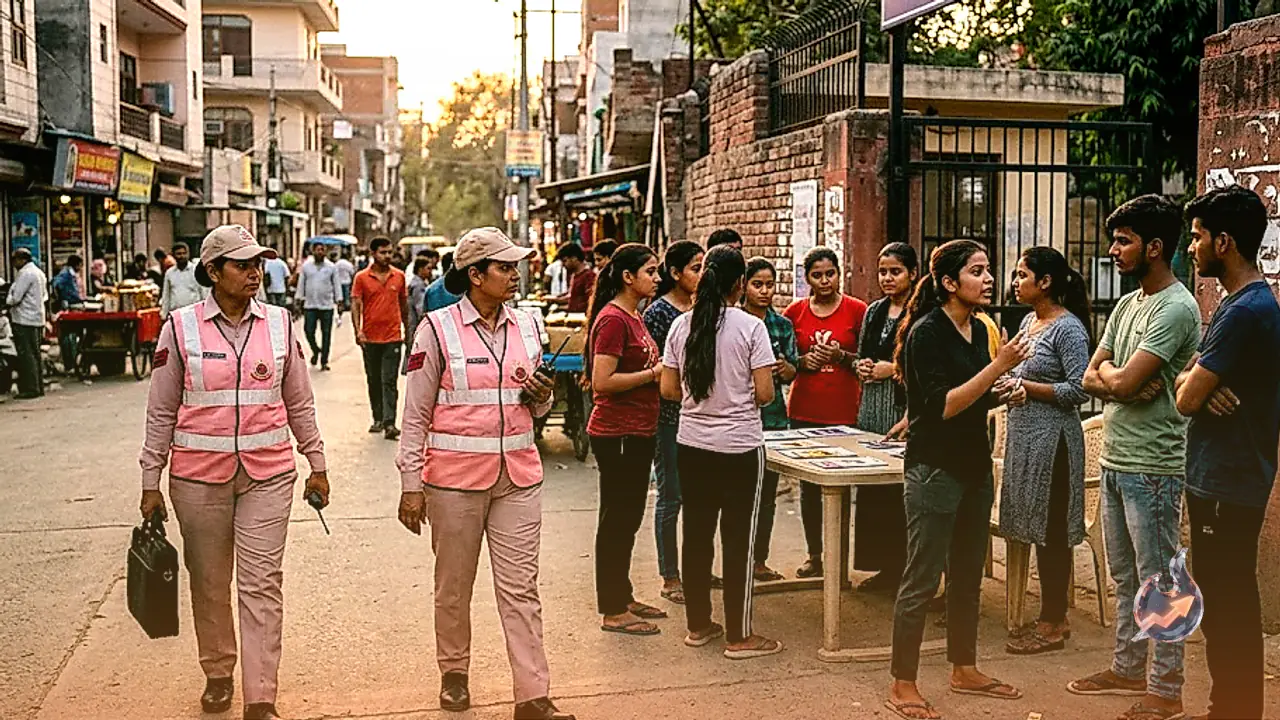
To bolster vigilance around vulnerable spaces, Delhi Lieutenant Governor Sadar TS Sandhu convened a high-level review meeting with top police officials. During the deliberation, instructions were issued to establish a specialized, woman-centric patrolling unit modeled after the trained female personnel of the Goa Police. This dedicated pink force is slated for strategic deployment across schools, colleges, metro stations, and other sensitive public hubs prone to harassment.
The initiative aims to enhance the visible presence of law enforcement in public spaces and ensure swift intervention when distress calls arise. Although an active security presence provides immediate relief, police surveillance cannot peer into the human mind or stop an assault before a predator decides to strike.
The Jamui Incident and Crackdown on Circulating Clips
The viral footage from Jamui, where a Class 10 student was targeted, brings the broader social reality into sharp focus. The girl had travelled on a scooter to Madwa Pahar alongside a classmate following their tuition classes. On their journey back, a group of young men intercepted the vehicle. The youths subjected the schoolgirl to lewd acts, molestation, and physical intimidation while filming the encounter on a mobile phone. Law enforcement subsequently arrested the primary suspect along with his accomplices.
Addressing the fallout of the incident, police issued a stern warning against the unauthorized dissemination of the assault recording. Authorities confirmed that anyone circulating or uploading the abusive footage across social networks will face strict legal prosecution under the provisions of the POCSO Act.
Shifting Scrutiny from Victims to Male Upbringing
Following instances of gender violence, societal instincts all too frequently gravitate toward questioning the survivor. People inquire about her clothing, interrogate her curfew hours, and criticize her choice of companions. The primary scrutiny, however, belongs entirely on the men who feel entitled to assert dominance over a woman's body and freedom. The fundamental lesson young boys must learn at home is that touching anyone without clear consent is unequivocally wrong.
Cornering an individual on a public road, passing vulgar remarks, or behaving indecently are not trivial misdemeanors; they are serious crimes that strip citizens of their dignity. Lasting safety cannot be achieved until families dismantle the culture of male entitlement that allows young boys to treat women as objects of convenience.
Balancing Strict Enforcement with Domestic Values
The fear of the law remains an indispensable deterrent against violent crime. Well-trained police contingents, swift arrests, and rapid prosecution by specialized units like anti-romeo squads and the pink force are vital for safeguarding public order. However, state force must be accompanied by conscious parenting at home and thoughtful guidance in classrooms. Genuine respect cannot be acquired simply by reading a chapter in a textbook; it is built through daily conduct, observed habits, and empathetic interactions.
If young boys are taught from early childhood that a woman's autonomy, space, and choices carry the exact same weight as their own, the foundation for meaningful societal transformation will be laid. External surveillance cannot replace internal moral boundaries.
A Shared Civic Obligation
Demanding prompt answers and accountability from political leadership and police commissioners after every tragedy is necessary. The state must maintain robust vigilance and deliver justice without delay. Yet society cannot absolve itself of complicity in perpetuating an atmosphere of disregard toward women. Both the road harassment in Jamui and the brutal park assault in Delhi prove that merely deploying more security forces will never resolve the root cause of gender-based violence.
A pink force can secure street corners, and an anti-romeo squad can intercept miscreants on the spot. But the conviction that women are fully equal, dignified human beings must be forged inside the home. The true battle against sexual violence is cultural, and it begins with reforming the collective mindset.