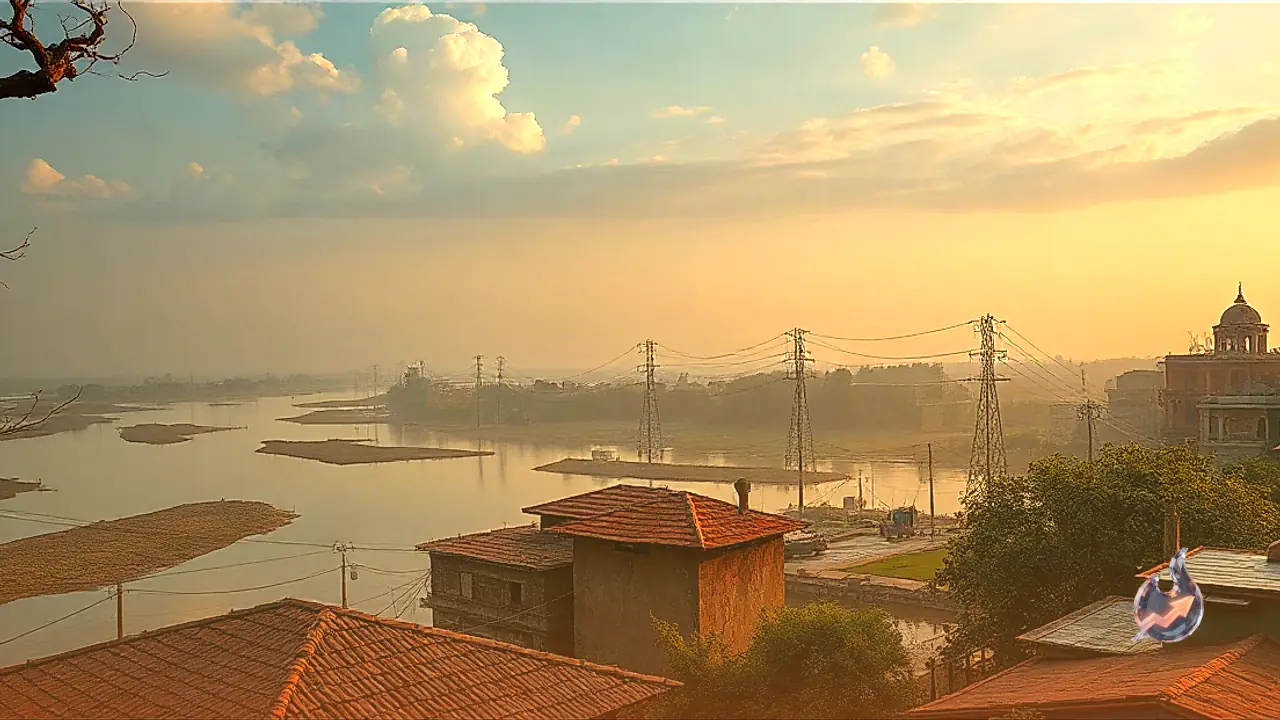




















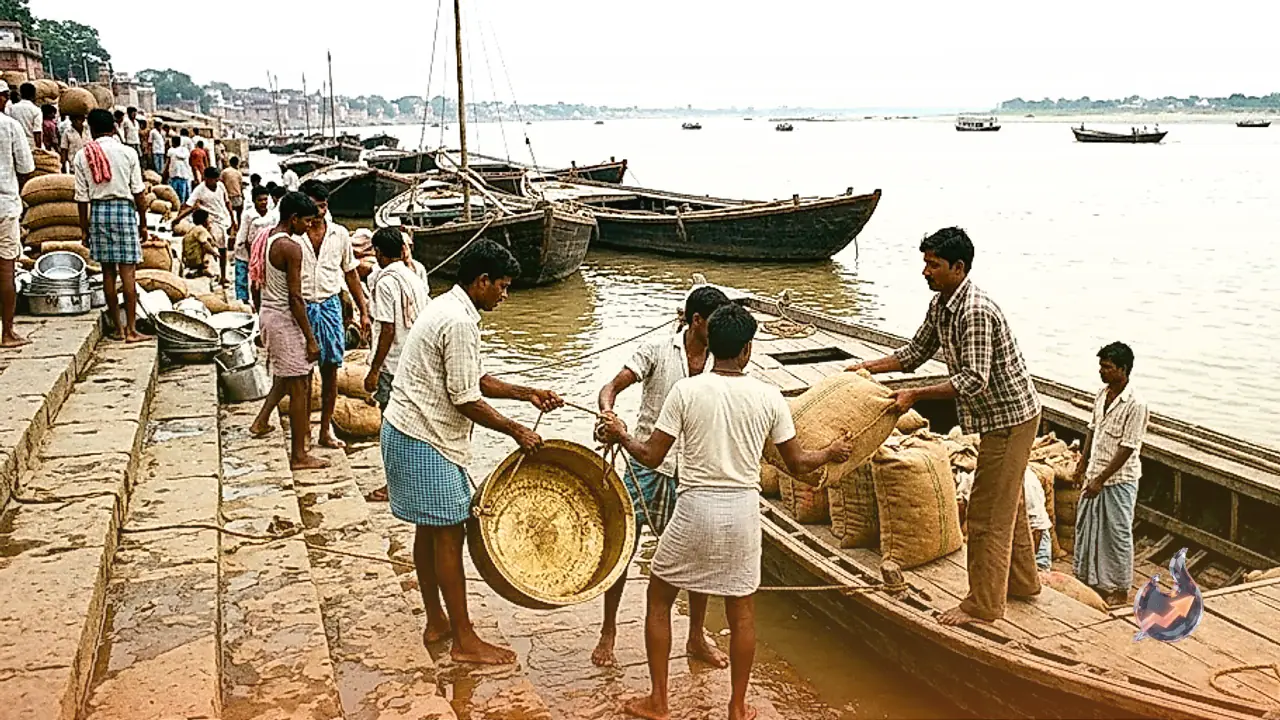

Nar Ghat, situated along the Ganga in the Mirzapur district of Uttar Pradesh, carries a legacy that extends far beyond its sacred riverbank identity. In ancient times, this historic riverfront functioned much like an organized river port, anchoring a large-scale commercial network that transported goods across multiple provinces. While economic shifts and modern logistics eventually diminished its role as an active trade terminal, the site retains immense spiritual and historical prominence. Numerous temples and shrines located across the riverfront continue to draw large gatherings of devotees for worship, while an ancient inscription preserved at the ghat documents its storied commercial past.
Carrying Brassware and Grains to Kolkata and Patna
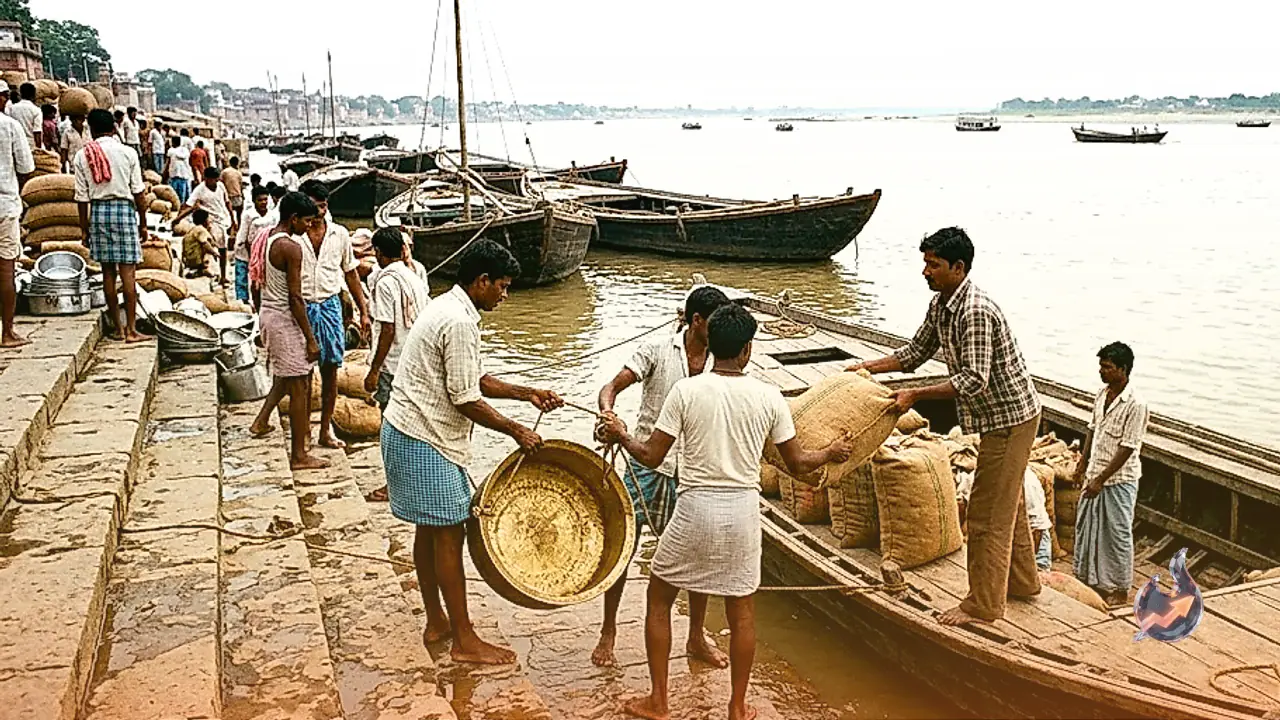
Historical accounts and local tradition confirm that Nar Ghat was originally developed to facilitate riverine commerce, operating effectively as an inland harbor. During its peak commercial era, between 30 and 50 large boats operated from the riverfront to transport heavy freight. These vessels carried consignments of locally crafted brass utensils, food grains, and various essential commodities. From Mirzapur, the cargo moved along the Ganga to major commercial hubs, including Varanasi, Patna, and Kolkata, where the products were sold in wholesale and retail markets. The stone inscription present at the location details these ancient business activities, standing as enduring evidence of its bustling mercantile heritage.
Transport of Coarse Grains and Local Produce
Munnu, a local boatman stationed at the ghat, shared recollections passed down by previous generations regarding the waterborne trade. According to these traditional accounts, a fleet of approximately 20 to 30 boats was regularly deployed to transport commercial shipments down the river. The primary cargo consisted of brassware, alongside substantial quantities of coarse grains and local produce such as jodhri. Consignments were systematically dispatched to regional commercial centers, primarily Varanasi, before reaching secondary distribution points. Although waterborne trade gradually disappeared over the decades, the memory of this thriving economic network remains deeply ingrained among the riverfront community.
Sturdy Vessels Built to Navigate Strong River Currents
The cargo boats operating from Nar Ghat were exceptionally long and heavily built, engineered specifically to endure strong waves and rapid currents in the Ganga. Operating such a large transport vessel required the coordinated effort of around four skilled boatmen. Once fully loaded at the riverfront, the boats set sail toward Varanasi, completing the river journey in roughly five to six hours. Upon reaching Varanasi, the merchandise was unloaded and sorted for further dispatch to various destination markets across different regions.
Transition to Modern Transport and Impact on Local Livelihoods
The eventual expansion of road transport networks and motorized vehicles steadily eroded reliance on traditional river routes. As overland logistics became faster and more accessible, freight transport via the Ganga gradually ground to a complete halt. This systemic shift delivered a significant blow to the local economy of the riverfront. Generations of boatmen, cargo handlers, and auxiliary workers whose daily earnings depended on loading and navigating the fleet saw their primary source of income disappear entirely, forcing many families to seek alternative livelihoods away from the historic trade ghat.