
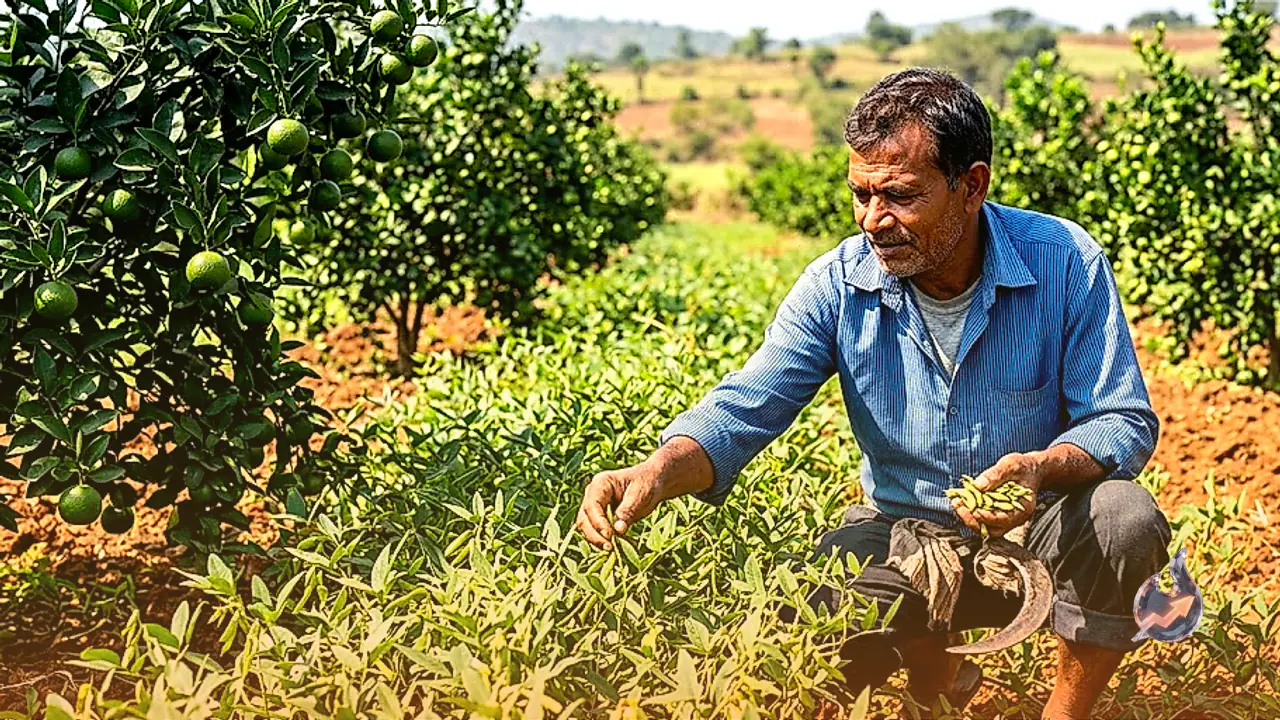



















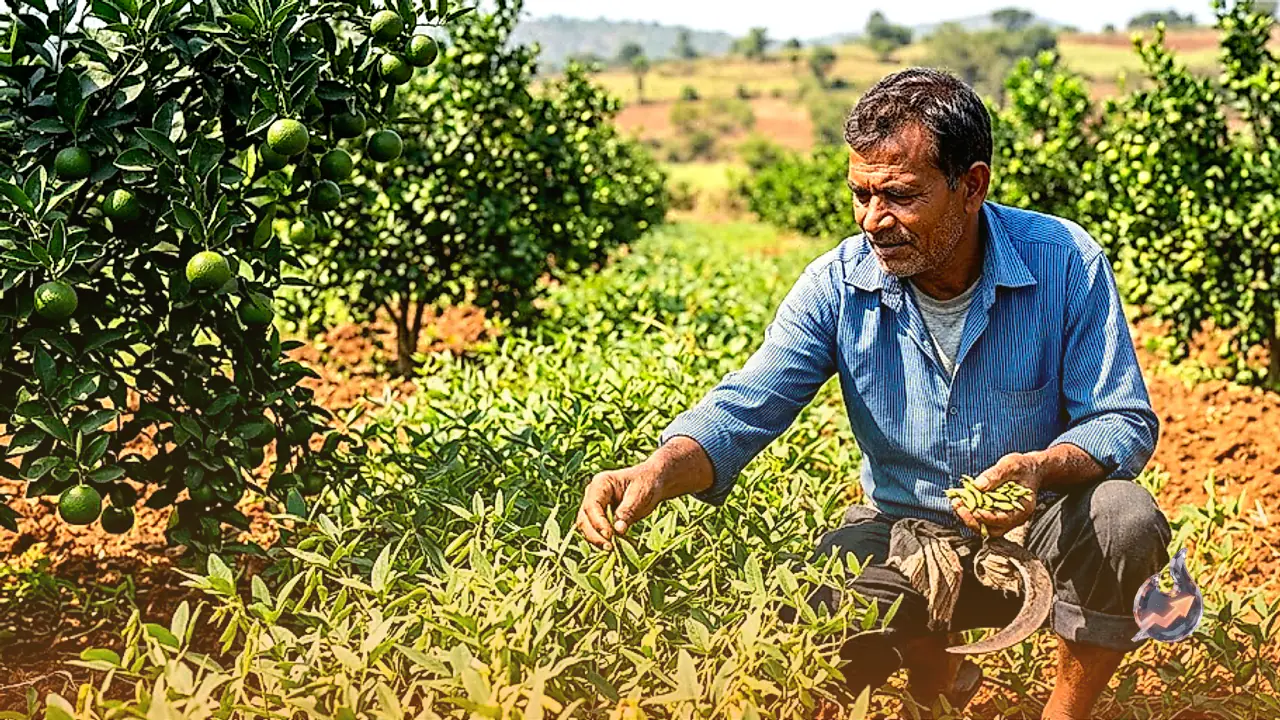

A practical demonstration of diversified farming has taken shape in Jharkhand's Palamu district, showing how orchard acreage can yield multiple returns without leaving arable soil idle. Progressive grower Satish Dubey has implemented integrated crop management by sowing horse gram inside his four-acre sweet lime grove. This intercropping strategy aims to utilize the uncultivated soil between fruit rows to harvest supplementary agricultural output and generate secondary revenue from existing farmland.
Optimizing Row Spacing Across Young Fruit Trees
Coming from a family with a long farming background, Satish Dubey established sweet lime saplings across approximately four acres of land. During planting, he maintained a uniform distance of roughly 10 feet by 10 feet between individual plants. Because the sweet lime saplings are still in their early growth stage and have not yet formed a dense canopy, substantial open ground remained exposed between the rows. Rather than letting that acreage sit barren, he planted horse gram directly into the intervening passages.
Controlling Weed Overgrowth While Adding a Short-Duration Harvest
Leaving the wide gaps between the fruit saplings unattended had initially triggered heavy weed and wild grass growth across the orchard. To resolve the infestation, the farmer plowed the open lanes and sowed horse gram seeds throughout the prepared field. This mechanical tillage and canopy cover substantially checked undesirable weed growth. Simultaneously, the intervention created an opportunity to harvest an extra pulse crop within an estimated two-month growth cycle.
Meeting Winter Fodder Demands for Milking Cows
The decision to grow horse gram delivers direct livestock benefits alongside standard agricultural returns. Satish Dubey maintains a herd of roughly 8 to 10 cows on his property, demanding a steady feed supply. The harvested crop and its fibrous dry husk serve as protein-rich feed for farm cattle, helping secure the herd's dietary intake across several consecutive months. Dry fodder of this profile is widely considered valuable for livestock sustenance during cold winter conditions.
Household Consumption and Commercial Pulse Sales
Beyond its feed utility, horse gram remains a widely consumed pulse across local culinary traditions. The progressive grower projects an estimated yield of nearly 10 to 12 quintals of horse gram from the four-acre intercropped orchard. This volume is sufficient to satisfy all domestic pulse needs for his household, leaving a marketable surplus that can be sold in local markets to generate clean supplementary profit.
Continuous Land Utilization With Planned Potato Rotation
The four-acre plot forms part of an intensive, year-round soil management schedule. Once the horse gram crop reaches maturity and is harvested after approximately two months, the grower does not intend to leave the lanes between the sweet lime trees open. Preparations are already in place to cultivate potatoes on the exact same beds immediately following the harvest. This systematic cycle ensures optimal resource utilization while maintaining multiple income streams across changing seasons.