





















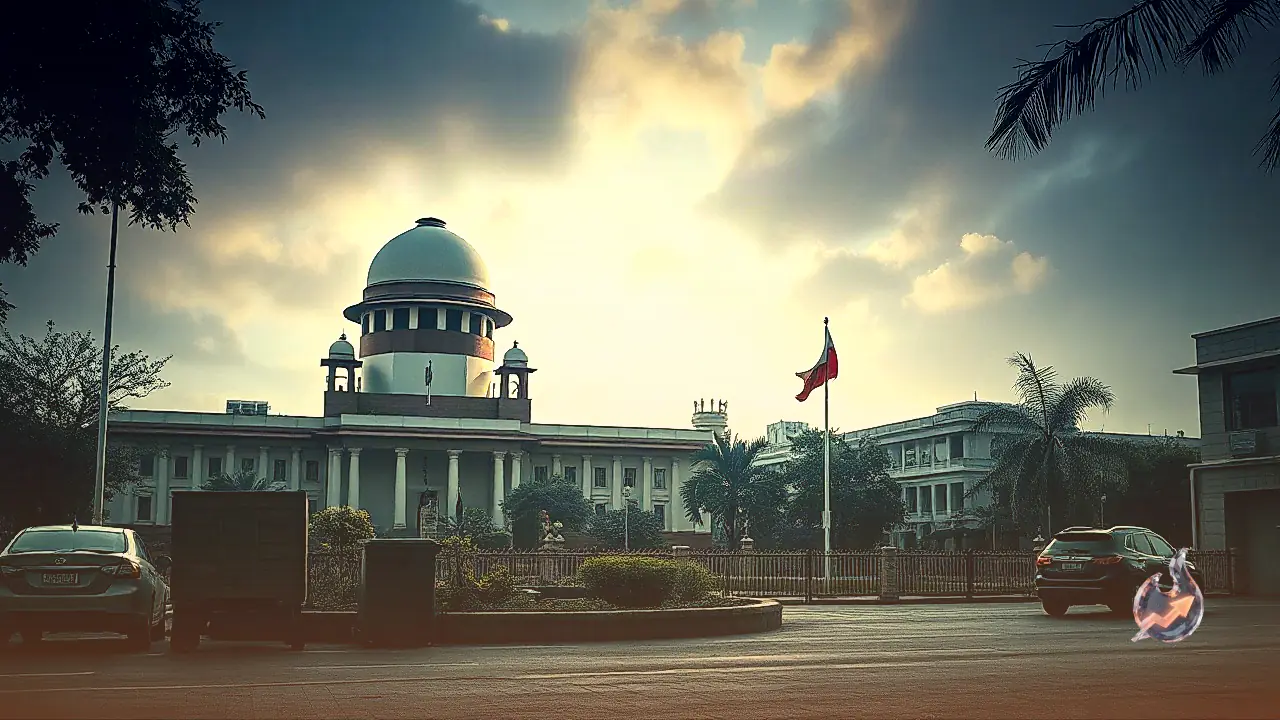

The Supreme Court has intervened significantly in the ongoing legal debate surrounding law enforcement searches at legal professionals' offices. The apex court has put a formal stay on the previous ruling delivered by the Delhi High Court, which had empowered investigation agencies to conduct searches at lawyers' workplaces if their involvement in any crime prima facie appeared.
Concerns Over Privileged and Confidential Documents
During the court proceedings, the bench comprising Justice Dipankar Datta and Justice Augustine George Masih raised crucial questions regarding the preservation of client confidentiality. The judges specifically inquired how investigating agencies intend to segregate confidential and legally protected documents shared between an advocate and their client during the course of a search operation.
Debate on Redaction and Authority
Presenting arguments on behalf of the authorities, ASG SV Raju suggested that sensitive material could be redacted and appropriately presented in the records. However, the bench challenged this approach, posing a fundamental question about who holds the ultimate authority to determine which specific pieces of material qualify as confidential or privileged, firmly noting that the agency itself cannot unilaterally make this call.
Arguments Regarding Search Justification
The ASG further submitted before the bench that the law does not strictly mandate establishing or disclosing a specific reason to believe prior to executing a search. Taking cognizance of the legal complexities involved, the Supreme Court issued formal notices in the matter and halted specific directions related to the execution of such searches.
Scope of the Interim Stay and Next Steps
The top court clarified that its current scrutiny is strictly limited to examining the fundamental legality of conducting such searches. Consequently, directions issued by the Delhi High Court concerning the cloning of data and related protocols will remain on hold. Meanwhile, the Supreme Court did not offer any observations regarding coercive actions and directed the petitioner to appear before the concerned official on Wednesday to respond to the issued summons.