
















In the history of Indian cinema, there have been a few writers who used the power of their pen to make everyday language immortal. One such extraordinary artist was the lyricist Anjaan, whose simple yet deep songs ruled the hearts of people for decades. Born in the soil of Banaras, this great poet's real name was Lalji Pandey. His journey from stepping into the dream city of Mumbai to reaching the pinnacle of fame was anything but easy. He had to undergo a grueling struggle to establish his identity, but with his unwavering dedication and unmatched writing style, he ultimately gave a new direction to Bollywood music.
The Journey from Odar Village in Banaras to BHU
Anjaan was born on October 28, 1930, in Odar, a small village located near Varanasi in Uttar Pradesh. His parents, Shivnath Pandey and Indira Devi, named him Lalji Pandey. The rural surroundings and the rich cultural environment of Banaras nurtured a deep interest in literature within him from a very young age. He completed his higher education at Banaras Hindu University (BHU), earning an M.Com degree. During his university years, his inclination toward poetry and shayari grew stronger. He began participating actively in local poetry symposiums, and his writings started appearing in various newspapers and magazines. Recognizing his literary talent, his close friends gave him the pen name 'Anjaan', which eventually became his permanent identity.
A Chance Meeting with Singer Mukesh and the Move to Mumbai
During a musical event organized at a local hotel in Banaras, Anjaan crossed paths with the country's celebrated playback singer, Mukesh. Anjaan recited some of his self-composed poems at the event. Deeply impressed by the depth and emotional resonance of his words, Mukesh recognized the hidden talent in the young poet. He offered him invaluable advice, suggesting that he should move to Mumbai to give his art the right platform. Encouraged by this, and carrying the dream of becoming a lyricist in his eyes, Anjaan headed to Mumbai in the year 1951.
The Initial Days of Struggle: Living in Local Trains and Under Staircases
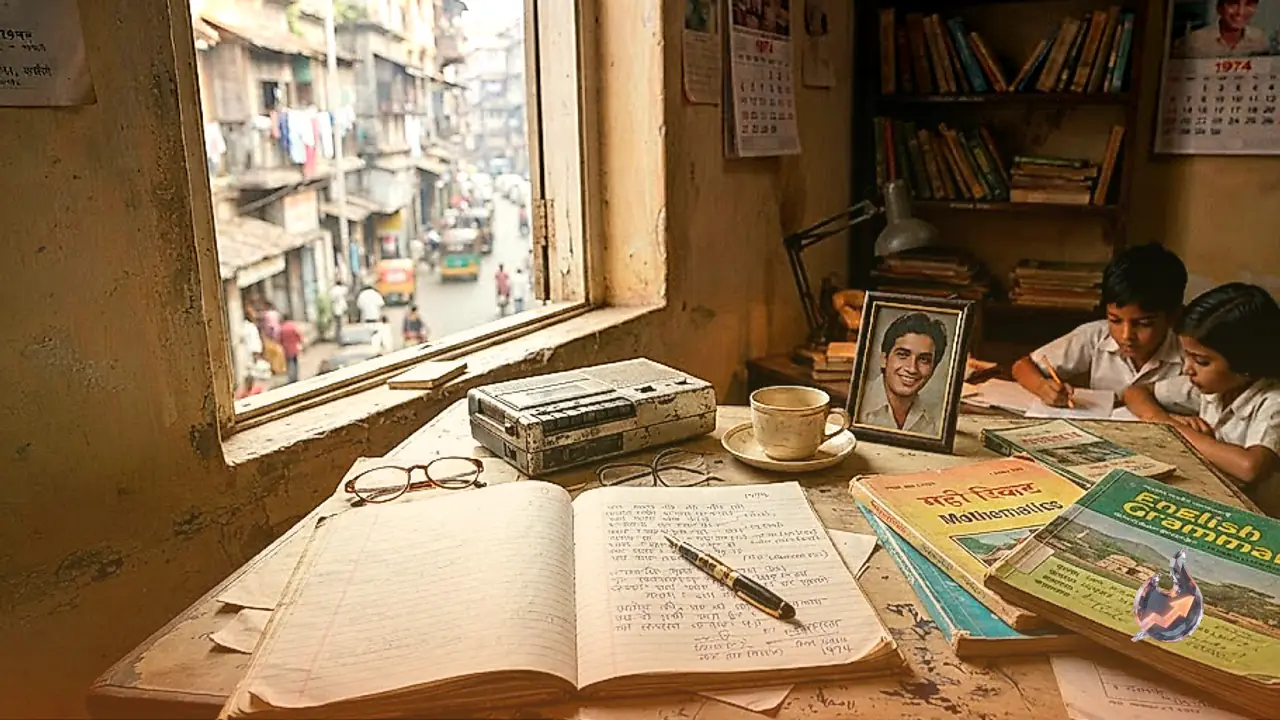
Upon arriving in the city of dreams, Anjaan was confronted with a harsh reality. Without a godfather or established connections, finding work in the film industry was incredibly difficult. Due to a severe financial crunch, he had to start teaching tuition to children to meet his daily expenses. Lacking a proper place to stay, he spent many nights traveling back and forth in local trains, or sleeping under the staircases of residential apartment buildings. Even during this grueling phase, he did not lose heart. In 1953, he secured his first opportunity to write songs for a film called 'Prisoner of Golconda', produced by Premnath Productions. For this project, he penned songs like 'Lehar Ye Dole Koyal Bole' and 'Shaheedo Amar Hai Your Story'. However, these early works failed to bring him the widespread recognition he desperately sought.
A Two-Decade-Long Wait and the First Taste of Success
It took Anjaan nearly 20 years of long and exhausting struggle to finally establish himself in the film industry. During this extended period, he continuously wrote lyrics for low-budget movies, small film projects, and non-film albums. In the 1960s, a song titled 'Mat Pooch Mera Hai Mera Kon Watan' from the film 'Lambe Haath', composed by GS Kohli, gained notable popularity and drew attention to his writing. Following this, in 1963, his song 'Chali Aaj Gori Piya Ki Nagaria' from the film 'Godan', which featured music composed by the legendary Pandit Ravi Shankar, brought him widespread acclaim. The success of this track accelerated his career, and there was no looking back after that.
Collaborating with Musical Giants and Contributions to Bhojpuri Cinema
Once he established his foothold, Anjaan became one of the busiest lyricists in the industry. He wrote the timeless track 'Aap Ke Haseen Rukh' under the musical direction of OP Nayyar for the film 'Baharen Phir Bhi Aayen'. Later, his song 'Bina Badra Ke Bijuriya Kaise Barse' from GP Sippy's film 'Bandhan' became a massive hit. He gradually became a preferred collaborator for legendary composers such as Kalyanji-Anandji, Laxmikant-Pyarelal, RD Burman, and Bappi Lahiri. Anjaan's creativity was not limited to Hindi cinema; he also made significant contributions to Bhojpuri cinema. The song 'Gorki Patarki Re', which he penned for the movie 'Balam Pardesia', turned out to be a blockbuster hit and remains popular even today.
The Landmark Association with Amitabh Bachchan and Final Days
Lyricist Anjaan achieved his greatest fame and commercial success through his associations with superstar Amitabh Bachchan's movies. He etched his name in history by writing the incredibly popular song 'Khaike Paan Banaras Wala' for the hit movie 'Don' starring Amitabh Bachchan. Additionally, he wrote brilliant and timeless tracks for blockbusters like 'Muqaddar Ka Sikandar', 'Laawaris', and 'Roti Kapda Aur Makaan'. Over a career spanning several decades, Anjaan penned more than 1500 songs for over 300 films. He was also the father of the well-known contemporary lyricist Sameer Anjaan. The official Instagram account of Sameer Anjaan serves as a dedicated archive preserving his father's memories and creations.
According to Sameer, his father's poetry always reflected the cultural essence, folklore, and ethos of Uttar Pradesh and the Bhojpuri language. This deep-rooted cultural connection was the reason he could naturally write classics like 'Khaike Paan Banaras Wala' or 'Bina Badra Ke Bijuriya' with such ease and authenticity. Among Anjaan's personal favorite creations were the songs from 'Badalte Rishtey', 'Apne Rang Hazaarn', and the legendary songs 'Mano To Main Ganga Maa Hoon Mano To Behta Paani' and 'Chal Musafir' from the film 'Ganga Ki Saugandh'. On September 13, 1997, the legendary lyricist passed away. Just a few months before his demise, his sole collection of poetry, titled 'Ganga Tatha Ka Banjara', was officially launched by Amitabh Bachchan.