





















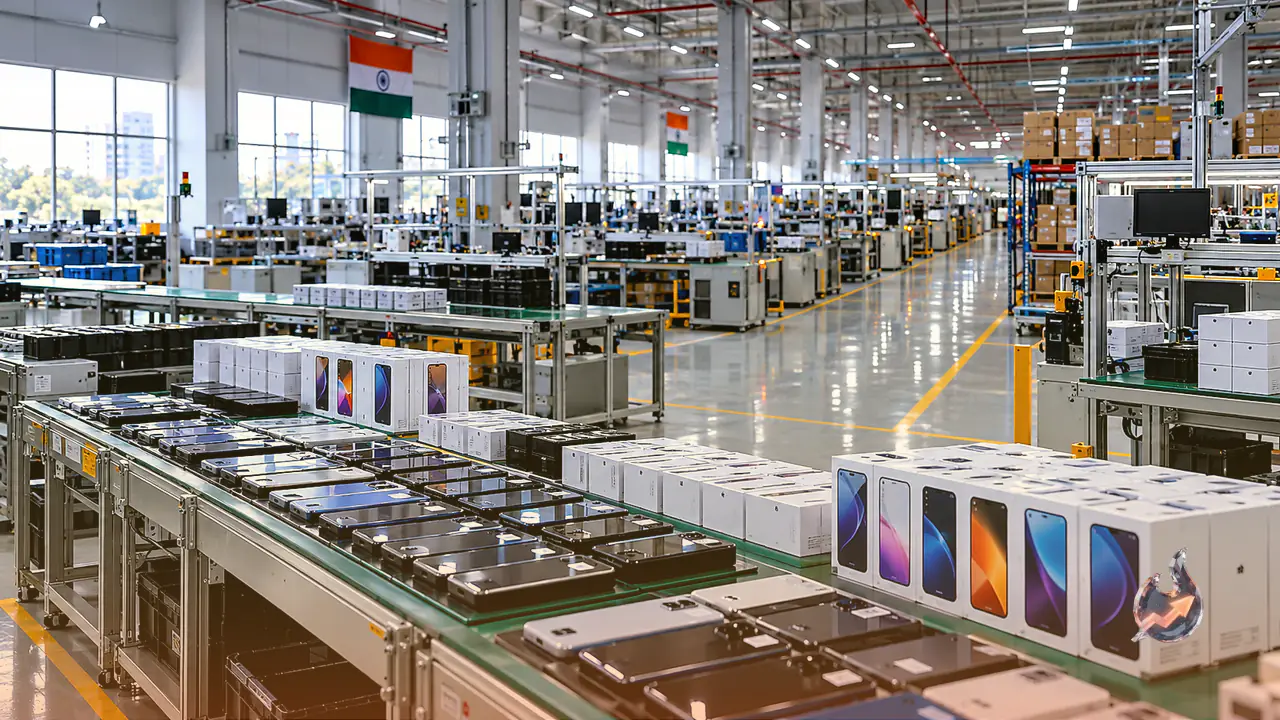

The Production Linked Incentive (PLI) initiative designed to energise electronic manufacturing across India has delivered substantial financial returns to the public exchequer. Initiated roughly five years ago, the central government disbursed Rs 19,000 crore in incentives to mobile phone manufacturers, generating an aggregate tax collection of Rs 3.25 lakh crore in return from the sector.
Tax Collections and Employment Growth Metrics
Union Minister for Electronics and Information Technology Ashwini Vaishnaw outlined the detailed financial outcomes on the social media platform X. Beneficiaries receiving the Rs 19,000 crore support package paid Rs 25,000 crore in direct taxes alongside Rs 3 lakh crore under Goods and Services Tax (GST).
Beyond fiscal returns, the expansion of manufacturing has generated large-scale employment across the production chain. Vaishnaw stated that the broader electronics manufacturing ecosystem currently employs 25 lakh individuals. Out of this total workforce, the mobile manufacturing industry accounts for 12 lakh jobs. He noted that focused execution could expand this employment pool significantly in coming years.
Refuting Public Criticism of State Subsidies
The minister presented these specific metrics in response to an online video questioning India's policy of deploying state subsidies to scale electronics assembly. The critical commentary argued that taxpayer-funded incentives for phone exports were counterproductive, alleging that spending on imported phone components exceeded outward export earnings. Vaishnaw dismantled that critique by presenting the comprehensive balance sheet of the program.
A Decade of Structural Shifts in Trade and Assembly
Official data published in March demonstrates the structural transformation achieved over the last decade. In the financial year 2024-25, India exported mobile phones valued at Rs 2 lakh crore. The country's dependence on foreign device shipments witnessed an unprecedented decline; while mobile phone imports catered to 75 percent of local consumer demand a decade ago, imported devices accounted for only about 0.02 percent of domestic demand during 2024-25.
Overall production metrics show a parallel expansion. Output across the electronics manufacturing spectrum stood at approximately Rs 1.9 lakh crore in 2014-15 before rising sixfold to nearly Rs 11.3 lakh crore in 2024-25. Mobile handset production alone advanced from roughly Rs 0.18 lakh crore to nearly Rs 5.5 lakh crore over the same decade. Total electronics exports expanded eightfold from Rs 0.38 lakh crore to approximately Rs 3.3 lakh crore in 2024-25.
Targeting Homegrown Smartphone Ecosystems by October 2028
To deepen domestic value addition, the government has introduced the Mobile Phone Manufacturing Scheme (MPMS) with an incentive corpus of Rs 62,500 crore. This fresh framework focuses on developing indigenous smartphones conceived, designed, and fully assembled within the country.
Ashwini Vaishnaw specified a firm deadline of October 2028 to establish these domestic smartphone brands. The strategic objective is to build competitive local hardware capable of contesting market share against established market leaders including Apple, Samsung, and Chinese consumer electronics corporations.