













The legendary voice of Lata Mangeshkar has enchanted listeners across generations and borders. Beyond Hindi, she lent her melodious voice to numerous regional tracks in Marathi, Bengali, and various other languages. Her renditions were celebrated not merely for their sweetness, but for the immaculate diction and deep emotional resonance she brought to every single word. However, many remain unaware that to master the delicate pronunciation of Urdu vocabulary in her songs, she undertook formal training in the language, prompted by an intriguing encounter with veteran actor Dilip Kumar.
Early Musical Beginnings and Family Roots
Lata Mangeshkar was born on September 28, 1929, in Indore. Music was an intrinsic part of her upbringing, as her father, Dinanath Mangeshkar, provided her with the foundational training in classical music. Through sheer perseverance, dedication, and her unmatched vocal talent, she eventually carved out a legendary space in the film industry that countless aspiring artists could only dream of achieving.
The 1947 Meeting with Dilip Kumar
Historical accounts note that in the year 1947, renowned music composer Anil विश्वास arranged a meeting between a young Lata Mangeshkar and Dilip Kumar. At that juncture, Lata was taking her initial steps into the professional music arena, whereas Dilip Kumar had already established himself as a prominent and recognizable face in cinema.
The Remark That Sparked a Change
During their interaction, when Dilip Kumar learned that Lata hailed from Maharashtra, he made a candid observation concerning her Urdu diction. He remarked that singers who lacked a native familiarity with the Urdu language often struggled to pronounce its distinct vocabulary with absolute authenticity. This blunt critique naturally stung the young singer.
Taking Matters into Her Own Hands
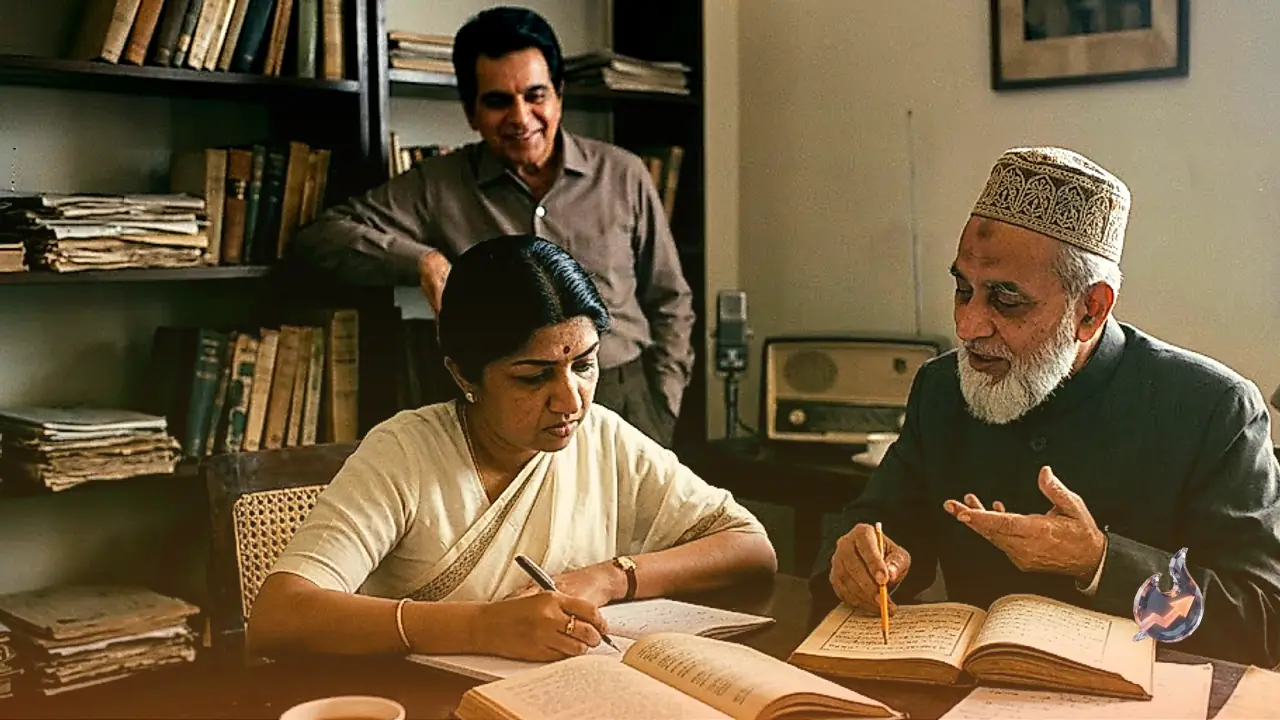
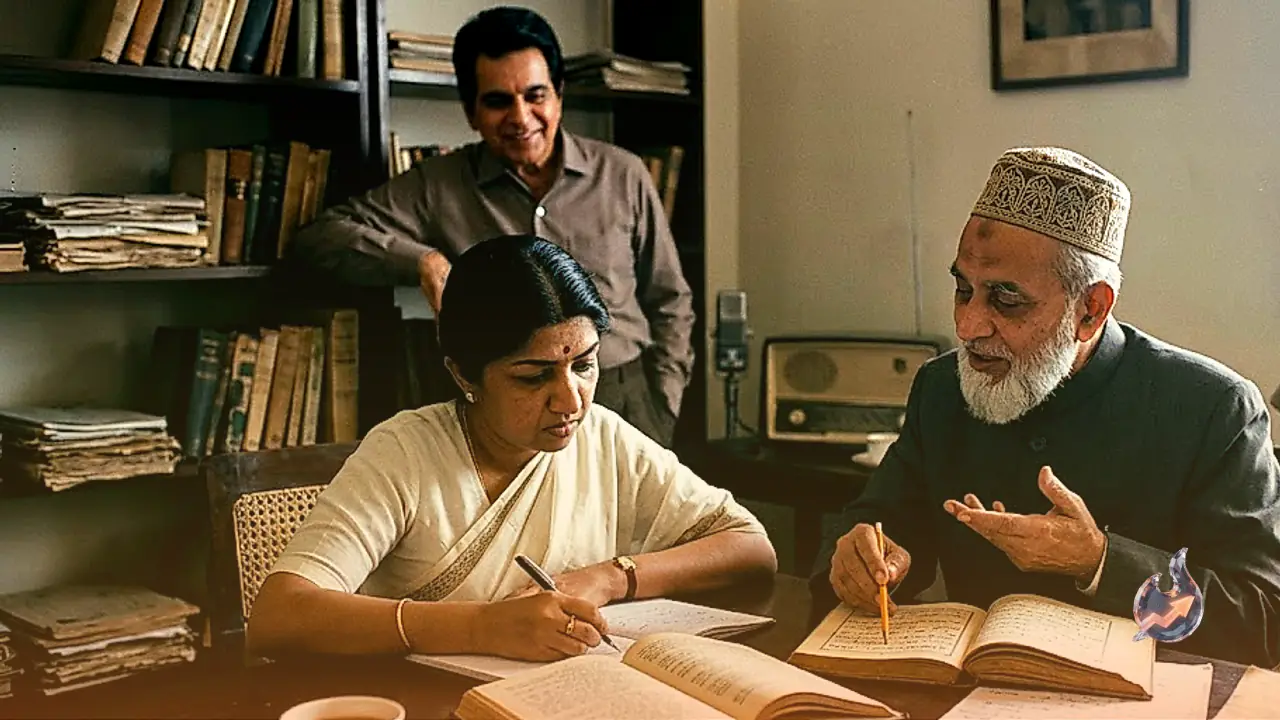
Instead of harboring resentment or letting the critique discourage her, Lata Mangeshkar decided to use it as fuel for self-improvement. Upon returning home, she resolved to learn Urdu properly and enlisted a learned maulana to give her formal lessons. She diligently practiced the correct articulation of words, paying meticulous attention to the subtle nuances and linguistic structures.
Reflections in Her Autobiography
For Lata Mangeshkar, this was not just about acquiring another language; it was about ensuring absolute perfection whenever she delivered Urdu lyrics in her playback singing. She later documented this chapter of her life in her autobiography, The Substance and the Shadow: An Autobiography, where she recounted the meeting with Dilip Kumar and her subsequent educational journey.
Turning Criticism into a Gift
Lata Mangeshkar later acknowledged that while the actor's initial words felt biting at the time, that very critique served as the ultimate catalyst for identifying and rectifying her shortcoming. She viewed the incident retrospectively as an unexpected gift. This unwavering commitment is precisely why her delivery of Urdu poetry and lyrics in songs remained exceptionally crisp, resonant, and flawless throughout her iconic career.