























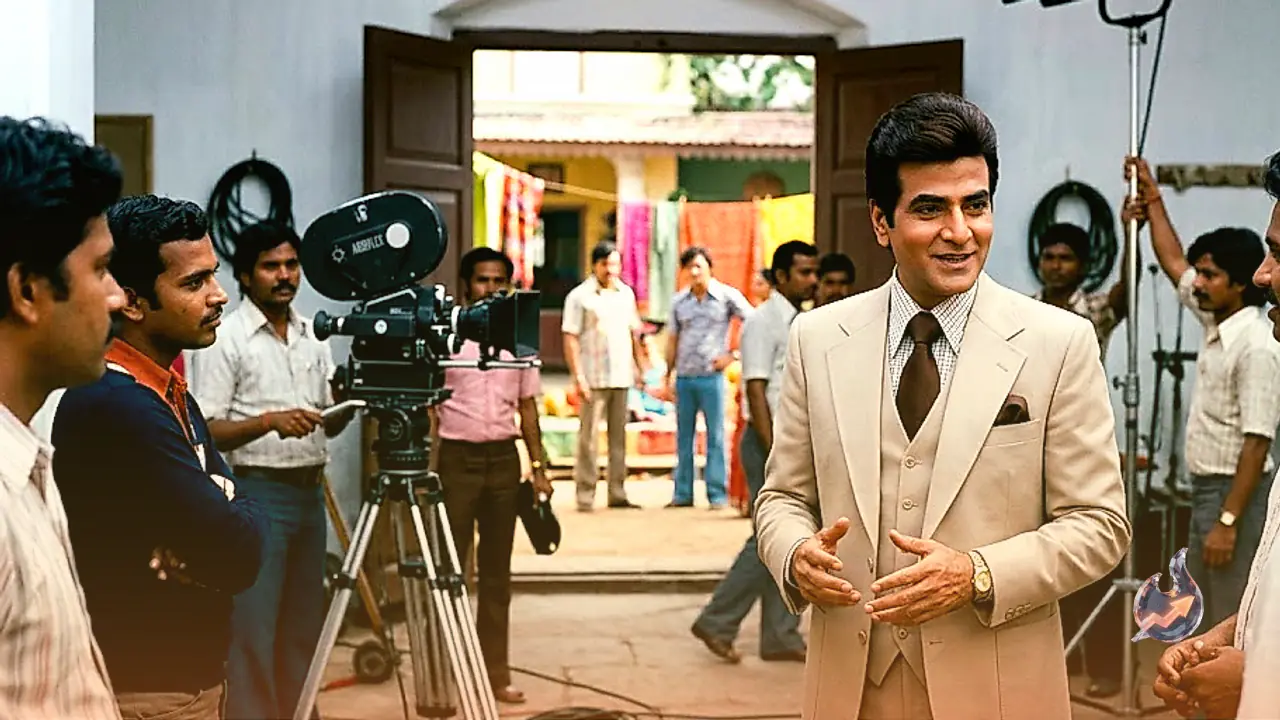

During the golden era of Indian cinema in the 1970s, the silver screen was locked in a fierce box office battle. Amitabh Bachchan and Vinod Khanna were engaged in a constant tussle for the number-one spot, with film magazines and gossip columns buzzing endlessly about their towering stardom. Amid this loud competition, Jeetendra chose an entirely different route. He neither chased the prevailing angry young man craze nor entangled himself in controversies. Instead, Jeetendra focused strictly on family-oriented, musical, and lighthearted dramatic features. This strategic quietness earned him a loyal audience base that guaranteed box office success every single Friday.
The Jumping Jack Persona and Family Appeal
Emerging from the late 1960s hit film ‘फर्ज’, Jeetendra earned the catchy moniker of the jumping jack. Throughout the 1970s, he turned this vibrant persona into his greatest asset. While the films starring Amitabh Bachchan and Vinod Khanna frequently leaned toward heavy action and violence that predominantly attracted younger crowds, Jeetendra's projects targeted the entire household. Female viewers and families eagerly awaited his cinematic releases. His timeless melodies, effortless acting style, and energetic dance moves kept theater halls consistently packed and lively.
Proving Versatility Across Genres
The 1970s witnessed Jeetendra successfully establishing his acting prowess across diverse genres. In the year 1971, Nasir Hussain's musical feature ‘कारवां’ shattered existing box office records. Following that, in cinematic classics directed by Gulzar such as ‘परिचय’ (1972) and ‘खुशबू’ (1975), he stepped far away from his conventional image to deliver deeply nuanced performances that genuinely amazed film critics.
Blockbuster Hits and Producer Reliability
The 1976 multi-starer fantasy thriller ‘नागिन’ proved to be an all-time blockbuster, earning tremendous praise from audiences for his screen presence. Subsequently, in 1977, Manmohan Desai's mega-hit movie ‘धरम वीर’ featured him alongside Dharmendra, and their dynamic pairing created a massive box office wave that made it one of the highest-grossing films of that year. For filmmakers and trade analysts of the 1970s, Jeetendra was widely regarded as a safe bet. While the projects of his top contemporaries required massive budgets and extended shooting schedules, Jeetendra was exceptionally well-known for his strict punctuality and ironclad discipline.
Work Ethics That Safeguarded Producers
Operating across multiple shifts on any given day, he ensured that his films were completed and distributed right on schedule. The budgets for his movies remained strictly controlled, protecting producers and distributors from ever suffering catastrophic financial losses. Because of this unwavering reliability, producers of all scales were eager to cast him in their ventures. The silent and solid foundation he laid throughout the 1970s ultimately empowered him to achieve unimaginable heights as a South Indian cinema remake king in the 1980s.