


















The iconic dialogue "Mumbai ka king kaun? Bhiku Mhatre!" remains etched in the history of Indian cinema. In the 1998 cult classic Satya, Manoj Bajpayee essayed the role of Bhiku Mhatre with such raw authenticity that the boundary between actor and character completely dissolved. His flawless Marathi mannerisms, walk, and accent were so convincing that many believed he was Maharashtrian in real life. Surprisingly, even the influential political leader Balasaheb Thackeray shared this belief. In a recent interaction with TrendKia, Manoj Bajpayee shared an amusing anecdote about how Thackeray was shocked to discover that the actor playing Bhiku Mhatre was actually from Bihar.
The Matoshree Invitation and a Surprising Revelation
Manoj Bajpayee, widely regarded as one of Bollywood's most versatile actors, is currently busy promoting his upcoming film Governor, which explores the 1991 economic crisis of India. While speaking to TrendKia about his craft, the actor discussed how he masters regional accents for his roles, including his use of a Tamil accent in Governor.
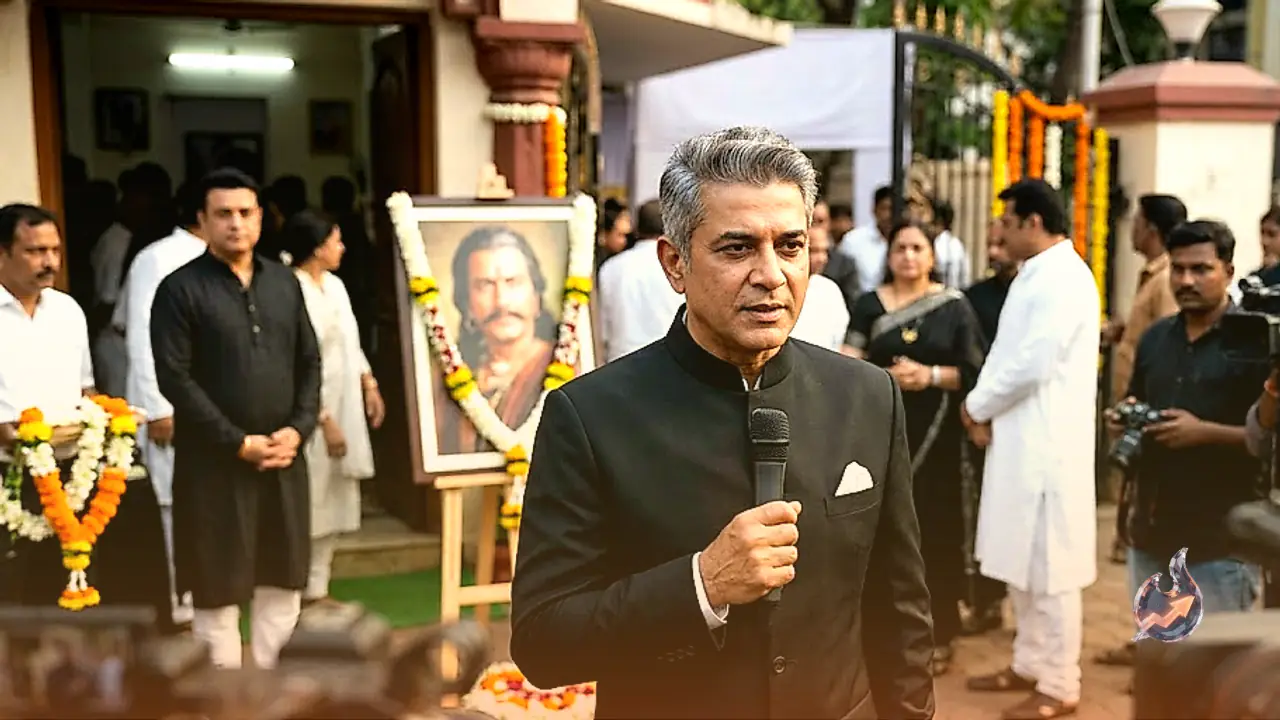
While reflecting on his vocal preparation, Manoj recalled a fascinating memory from the days of Satya. He laughed as he remembered how Balasaheb Thackeray invited him to his residence, Matoshree. Thackeray showered him with respect, but the atmosphere turned to surprise when he realized Manoj was not from Maharashtra but was a native of Bihar. Manoj shared that Thackeray was slightly disappointed that a young man who spoke such immaculate Marathi was not Maharashtrian. Thackeray then advised him to learn the Marathi language properly. Manoj described the meeting as wonderful, adding that the veteran leader blessed him for his future endeavors.
The Art of Perfecting Regional Dialects
During the conversation, Manoj highlighted the challenges of playing characters from specific regions. He emphasized that while an actor must pay close attention to the nuances of language and pronunciation, the accent should never overshadow the emotions of the dialogue. He noted that people from Tamil Nadu, Andhra Pradesh, or Kerala speak Hindi in distinct ways, and an actor's job is to capture those exact subtleties without disconnecting the audience from the narrative.
The Unlikely Box Office Triumph of Satya
Directed by Ram Gopal Varma, Satya is still celebrated as one of the definitive films on the Mumbai underworld. Manoj Bajpayee confessed that when he signed the project, he was struggling to survive in the film industry without any strong backing. The role of Bhiku Mhatre changed his career trajectory forever, cementing his place among the finest actors in Indian cinema.
Released on July 3, 1998, Satya initially faced a bleak outlook, with its creators fearing it would flop. However, a week after its release, a miracle occurred as the movie gained rapid momentum. While Pyar To Hona Hi Tha emerged as the second highest-grossing film of that year, Satya slowly built a massive legacy. Today, it is revered as a masterpiece in the crime genre. By the end of its theatrical run, Satya secured the sixth spot among the highest-earning films of 1998.
The star-studded cast of Satya featured Manoj Bajpayee, JD Chakravarthy, Saurabh Shukla, Paresh Rawal, Urmila Matondkar, Govind Namdev, Shefali Shah, Neeraj Vora, and Sushant Singh in pivotal roles. The film's soundtrack, composed by Vishal Bhardwaj, gave Indian audiences the evergreen dance track "Sapne Mein Milti Hai," which continues to be a favorite at parties and celebrations.