


















During the nascent dawn of Indian talkies, when synchronized sound was still an astonishing novelty, cinema witnessed a musical milestone that remains completely unparalleled in world history. Following closely behind India's first sound feature Alam Ara in 1931, the year 1932 saw the arrival of Indrasabha, a black-and-white musical romance of astonishing proportions. At a time when audiences sat spellbound through film runtimes stretching close to four hours without leaving their seats, this landmark production merged spoken dialogue, theatrical pageantry, and traditional melodies to set a musical benchmark that has never been equaled.
The Stage Origins and Madan Theatres' Bold Translation
The monumental feat was realized by Madan Theatres, a prominent theatrical and film production powerhouse based in Kolkata. Rather than crafting an entirely modern script, the filmmakers reached back into classical dramatic literature, bridging Parsi stage traditions with the cutting edge of sound motion pictures. The foundation of the work was written in 1853 by the renowned Lucknow poet Agha Hasan Amanat as an Urdu verse play. In that earlier century, it had been a celebrated highlight within the royal court of Nawab Wajid Ali Shah. Travelling Parsi theater troupes subsequently popularized the operatic drama across the breadth of the subcontinent. When technological advances allowed the silver screen to capture song, Madan Theatres mounted an ambitious cinematic adaptation of this revered dramatic treasure.
Celestial Romance and the Conflict of Two Realms
The central narrative unfolds inside the opulent court of Indra, the king of heaven, surrounded by joyous celebrations, swirling melodies, and the dances of celestial apsaras and fairies. The dramatic conflict ignites when a breathtaking celestial fairy falls deeply in love with an earthly mortal prince. Heavenly decrees strictly forbid romantic liaisons across the mortal divide, triggering divine anger and an arduous trial of devotion. What follows is an intricate saga of mythical stakes, celestial drama, and emotional endurance as love challenges otherworldly rules.
A Historic Repertoire Recognized by Guinness World Records
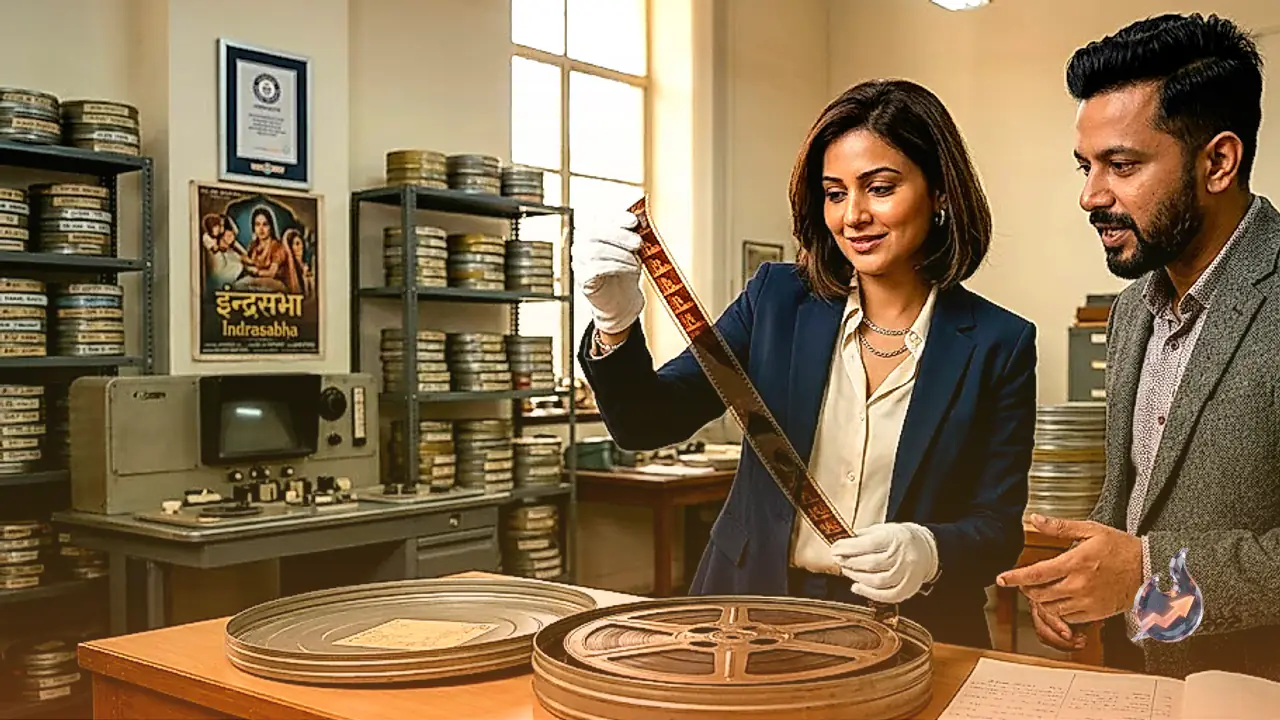
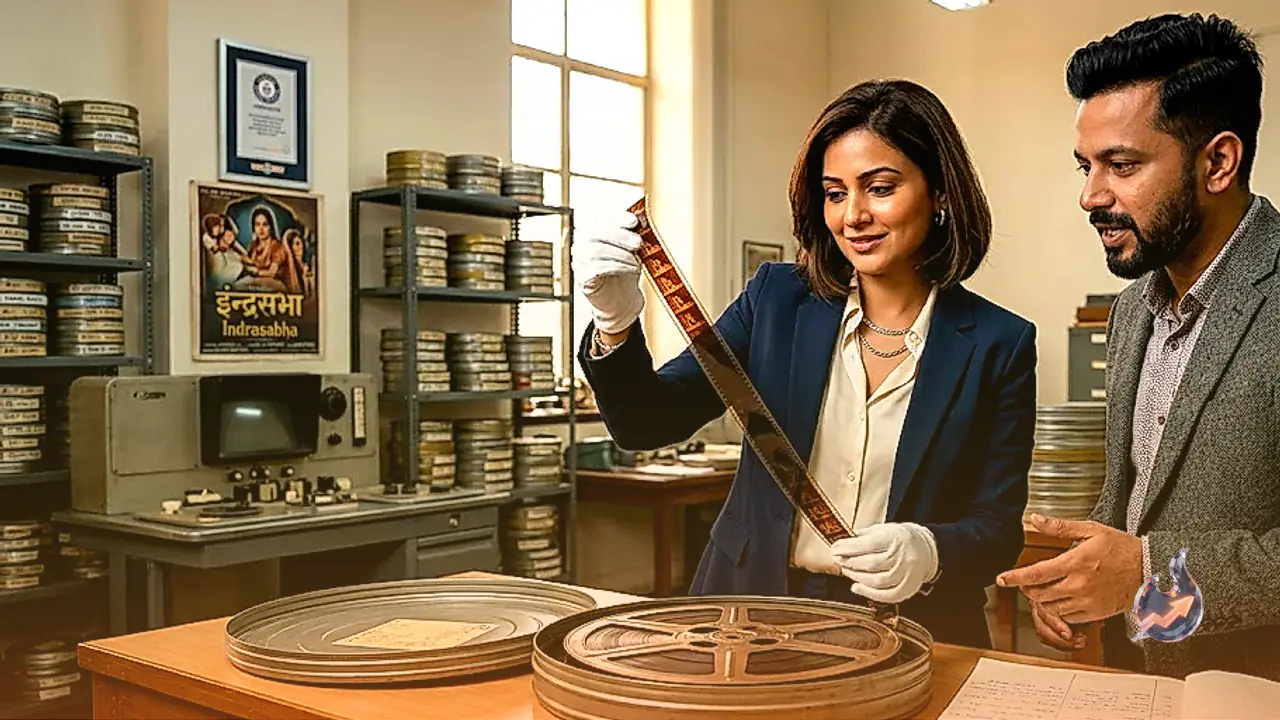
In modern filmmaking, a soundtrack featuring five or six numbers is routinely treated as a song-heavy feature. The 1932 adaptation of Indrasabha shattered all conventional boundaries by integrating an astounding 72 musical tracks into its storyline. This extraordinary feat earned the production an official entry in the Guinness World Records for the highest number of songs in a single film. Far from being repetitive, the musical composition boasted a rich variety of classical and semi-classical forms, incorporating 31 ghazals, 9 thumris, and 4 traditional Holi celebrations. Running for approximately 3 hours and 51 minutes, the film wove this massive tapestry of music directly into its overarching dramatic pacing, marking it as one of the most distinctive theatrical releases of its era.
The Stardom of Master Nissar and Jahanara Kajjan
Carrying the dramatic and musical weight of this grand production were two of early cinema's biggest stars, Master Nissar and the celebrated singer-actress Jahanara Kajjan. Kajjan was widely admired during this transformative decade for her vocal talent and commanding screen presence. Together, Master Nissar and Jahanara Kajjan formed a magnetic duo that captured the popular imagination, playing a foundational role in popularizing musical cinema among Indian audiences. More than nine decades after its premiere, their historic performance in this record-holding musical continues to stand as an enduring monument of early cinematic craft.