






















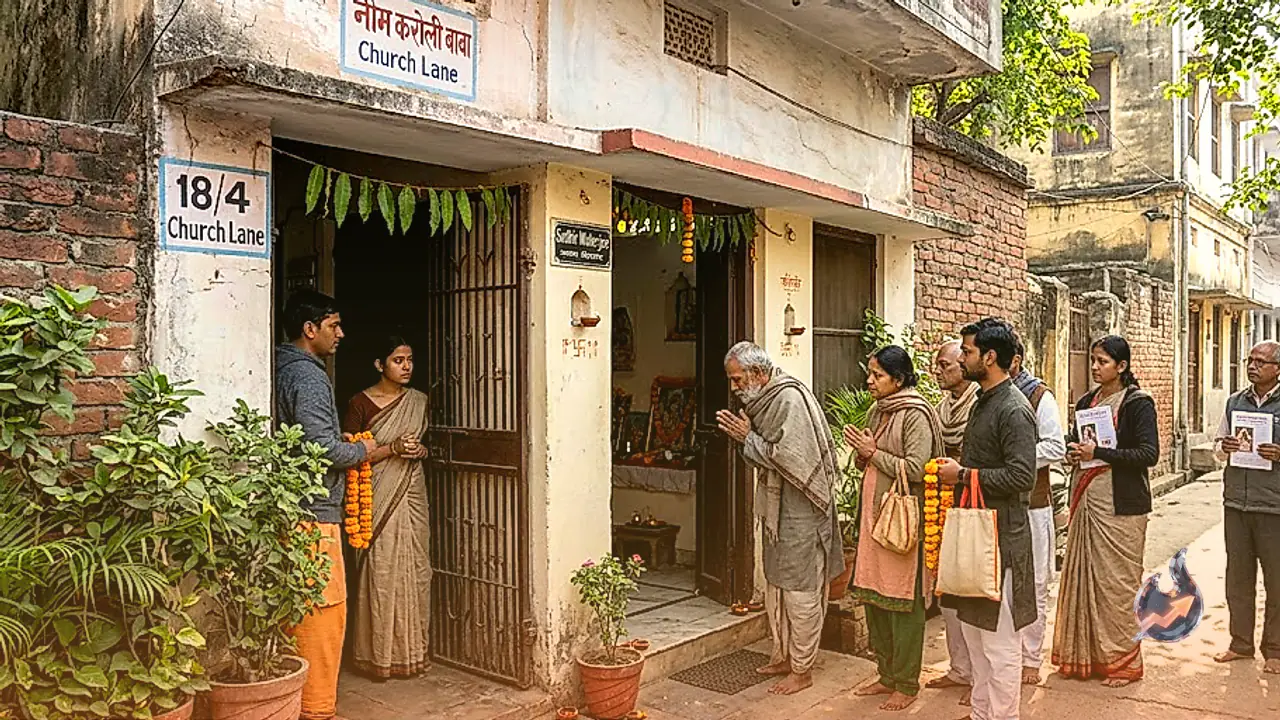

Even without an extensive publicity drive or massive commercial promotion, the feature film Hanuman Ansh has carved out a unique space in movie theatres and in the hearts of viewers. Centred on the revered life of spiritual luminary Neem Karoli Baba, the project has triggered a renewed wave of interest that is drawing visitors toward various geographical locations associated with his memory. Among these places, an extraordinarily unpretentious residential home in Uttar Pradesh has suddenly stepped into the public spotlight. Situated at 18/4 Church Lane in the historic city of Prayagraj, this ordinary address features no sprawling temple architecture, no installed stone idols, and no elaborate public rituals. Nevertheless, each passing dusk witnesses individuals gathering outside its threshold to quietly bow their heads in reverence.
Preserving Spiritual Presence in an Everyday Neighborhood
Tucked within a peaceful residential stretch of Church Lane, the property appears virtually identical to the neighbouring family homes that surround it. In spite of its modest facade, devotees regard the ground as sacred space. Men and women arrive each evening not for spectacle, but to pay homage to a sanctuary where Neem Karoli Baba once stayed during his earthly travels. The house originally belonged to Sudhir Mukerjee, who served as an economics professor at the University of Allahabad. Drawn by a deep bond with the academic, the spiritual figure made it a regular practice to visit the city once or twice a year, residing inside the professor's home during those stays.
Visiting Protocols and Contemporary Upkeep
While the actual film crew of Hanuman Ansh did not shoot scenes inside this residential building, the movie's portrayal of Baba's spiritual narrative rekindled widespread curiosity about real-world spaces touched by his presence. As word traveled, people began arriving at the residence in growing numbers. To manage the influx gracefully, the doors are kept open to visitors exclusively between 5:00 PM and 8:00 PM every evening. Monetary offerings, traditional tokens, and donations are strictly turned away, preserving an atmosphere centered solely on peaceful viewing. Upon completing their brief darshan, visitors receive traditional laddoos as prasad from Satya Pandey and her husband Indresh Prasad, the resident couple who care for the property.
A Hundred-Year Connection Traced to Dakshineswar
The relationship linking Neem Karoli Baba and Professor Sudhir Mukerjee spans an estimated historical timeline of nearly 100 years. Their initial encounter occurred in 1935 within the precincts of the renowned Dakshineswar temple in Kolkata. During that formative meeting, Baba bestowed a sacred mantra upon the young academic. The two crossed paths once again in 1950 in Allahabad, the metropolis now designated as Prayagraj. By that period, Sudhir Mukerjee had taken up his faculty appointment teaching economics at the University of Allahabad. Profoundly influenced by Baba's spiritual teachings and presence, the professor decided to construct his own family residence on Church Lane in 1956.
The Preserved Room and Daily Observances
Within the interior layout, the private chamber once used by Neem Karoli Baba remains carefully preserved in its authentic condition. Historical family accounts indicate that Baba utilized this particular room for quiet rest, meditation, and devotional prayer whenever he resided at the property. His original wooden cot (takht) and personal pillow are maintained with daily devotional care, accompanied by fresh floral tributes. To honour his legacy, the linen covering the bed is formally changed every Tuesday. The household also adheres strictly to Baba's culinary preferences: he was fond of simple bottle gourd curry, cooked moong dal, and flatbreads made from gram flour (besan ki roti). Freshly prepared portions of these identical dishes continue to be offered daily as consecrated food.
Spiritual Conviction and the Professor's Household Lineage
According to Satya, Neem Karoli Baba was revered as a devout servant and living manifestation of the deity Hanuman. She recounted that Baba had once revealed a vision of himself in the form of Hanuman directly to Professor Mukerjee. Despite this spiritual aura, Baba never promoted public miracles, frequently reiterating his belief that life events unfold naturally through divine will. As years passed, Satya became deeply integrated into the Mukerjee household. The professor and his wife had no biological children of their own, leading them to warmly embrace Satya as their daughter. Professor Mukerjee passed away in 1997, followed a few years later by the demise of his wife, Kamla. Family recollections record that Baba had once assured the professor that the residence was his own sanctuary and that his presence would remain there permanently, an enduring atmosphere that visitors and caregivers continue to feel today.