























A severe mid-air security scare forced an international passenger airliner travelling between Israel and Austria to abruptly change course and conduct an emergency landing in Bulgaria. The flight, operated by Austrian Airlines, was interrupted following a reported bomb warning that triggered high-level contingency protocols across regional aviation and defense networks. Air traffic controllers and military authorities coordinated rapidly to shepherd the civilian aircraft to safety on Sunday night.
Mid-Flight Diversion Over Romanian Airspace
The aircraft, an Airbus A320 serving Austrian Airlines Flight 82, had departed from Ben Gurion Airport in Tel Aviv during the evening hours, bound for Vienna. However, the routine journey across European skies was dramatically cut short while cruising over Romania. Flight tracking logs indicate that approximately three hours after leaving Tel Aviv, the aircraft was redirected away from its intended destination and headed toward the Bulgarian capital.
The critical decision to divert came roughly 30 minutes after the security alert was initially flagged to flight controllers. Rather than continuing toward Central Europe with an unresolved threat hanging over the passenger cabin, flight operations selected Sofia as the most accessible and prepared airfield to manage the developing emergency situation.
Fighter Jet Scramble and Ground Evacuation in Sofia
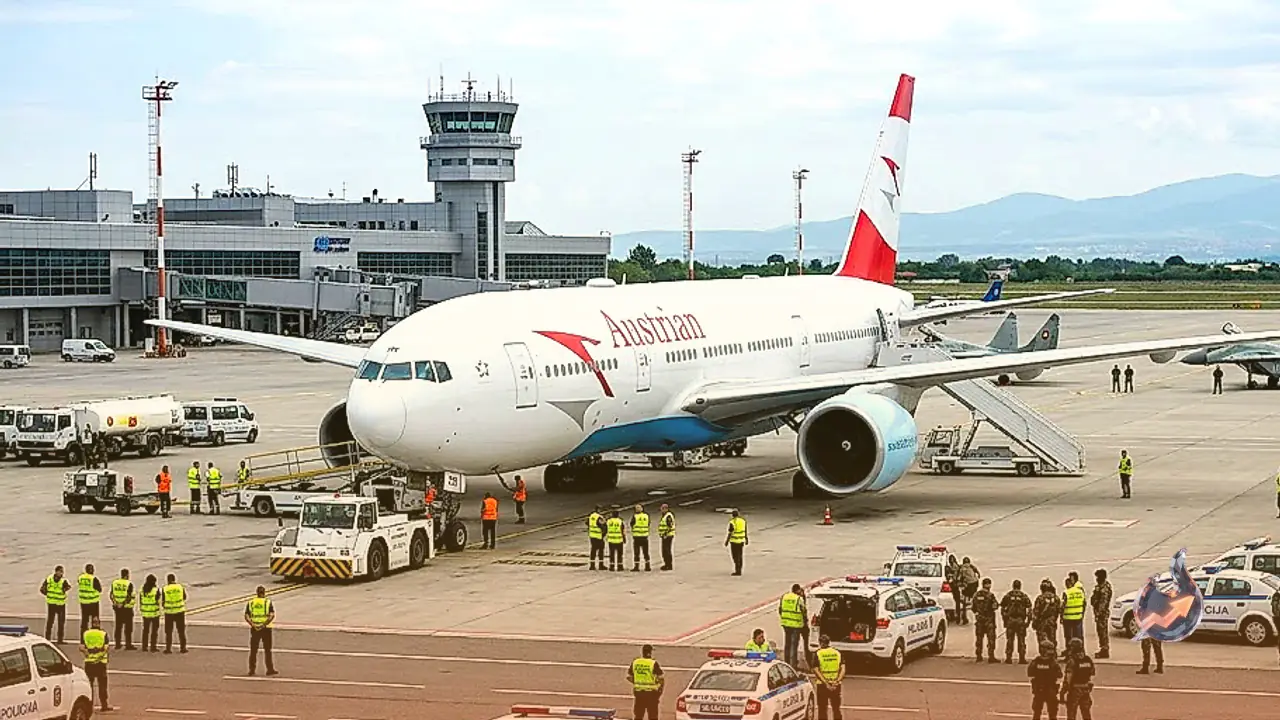
As the passenger jet crossed into Bulgarian airspace, defense authorities executed rapid response measures. The transport ministry in Bulgaria confirmed that the Bulgarian air force scrambled an armed MiG-29 fighter jet to intercept and escort the airliner through its descent. The military escort ensured clear coordination until the Airbus touched down safely at Vasil Levski airport in Sofia.
Immediately following the emergency touchdown, ground response units established a security perimeter around the aircraft and initiated an orderly evacuation. A spokesperson representing Austrian Airlines confirmed that a threat had been directed at the flight, though further operational specifics were withheld. The carrier stated that 51 passengers and six crew members were on board the twin-engine jet. Specialized security personnel launched an exhaustive screening of the cabin, baggage, and cargo hold. Authorities confirmed that no injuries occurred among the travellers or the flight team during the incident.
Heightened Vigilance Across European Skies
Official investigative bodies have initiated formal inquiries to uncover the source, credibility, and transmission method of the bomb threat. Austrian Airlines operates as a subsidiary of the aviation conglomerate Lufthansa, from which additional statements have been requested regarding the event. Media outlets in both Bulgaria and Israel verified that the intervention was triggered specifically by a suspected explosive alert delivered during flight.
The incident in Sofia is part of a series of acute security alarms that have disrupted commercial flights in the region over recent weeks. Only last month, a violent incident unfolded aboard a Flydubai service travelling toward Tel Aviv, where a pilot attempted to hijack the aircraft by attacking the flight captain. In that encounter, flight attendants and passengers successfully subdued the aggressor, allowing the airliner to divert and touch down safely in Saudi Arabia.
In another separate high-alert scenario just last week, an inadvertent transponder error triggered widespread military mobilisation. A commercial airliner routing from the Greek holiday resort island of Corfu to the German city of Nuremberg accidentally broadcast a hijacking signal. That accidental warning prompted both Croatia and Germany to scramble fighter jets to shadow the airliner until the false alarm was clarified. Sunday night's emergency landing in Sofia underscores the razor-thin margin for error and the swift defense mobilisations that accompany any reported danger in modern civil aviation.