
















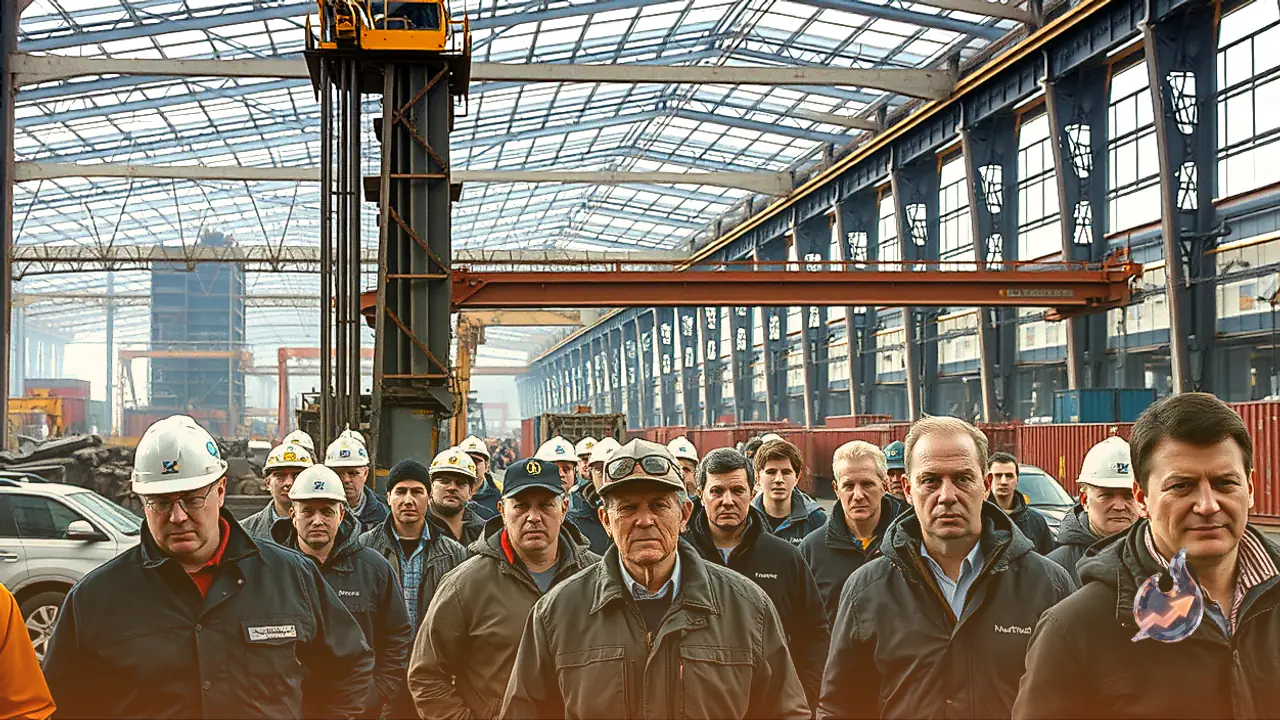

Trade protection policies recently enacted by the European Union to insulate domestic manufacturers from cheap foreign steel have triggered deep alarm across Ukraine's metallurgical sector. Yuriy Ryzhenkov, chief executive of Metinvest, Ukraine's premier steel manufacturer, has urged EU leaders to lift restrictions on Ukrainian metal, arguing that his war-devastated country has been mistakenly lumped together with major exporters like China that were the original target of the defensive measures.
Protective Measures Lower the Ceiling on External Metal Shipments
Steelmakers within the European trading bloc have encountered intense commercial headwinds in recent times, struggling to hold their ground against aggressive pricing from suppliers based in China and Turkey. To safeguard local jobs and manufacturing capacity, European officials revised their steel safeguard policies, introducing a hard ceiling on tax-free steel entering the territory. Under the new terms, tax-exempt steel shipments to the bloc have been restricted to 18.3 million tonnes annually, marking an abrupt 47 percent plunge compared to levels recorded in 2024.
While the revised policy does allocate country-specific quotas to certain trading partners, the ultimate objective of the mechanism remains a drastic contraction of overall inbound supply. A bilateral free-trade agreement remains in effect between the EU and Ukraine, yet the terms of that pact do not prevent European authorities from enforcing separate commercial defense mechanisms. As an unintended consequence, Ukrainian metal manufacturers found their exports subjected to the same overarching trade barriers.
Metinvest Condemns Identical Treatment During Wartime
Ryzhenkov argued that applying standard trade defense tools to Ukraine fails to consider the extreme wartime environment under which the nation currently operates. Describing the recently applied duties as unfair, he stressed that European regulators acted without taking into account the existential struggle Ukraine faces against Russian aggression. The chief executive stated that the European Commission should grant at least a targeted carve-out that preserves Ukrainian metal access to European buyers.
Given that access to the European market represents a vital lifeline for the survival of the Ukrainian steel sector, Ryzhenkov pointed out that restrictive trade measures instituted in Brussels are directly harming an industry under siege. Treating Ukraine identically to every other foreign importer disregards the destruction around its mills. Projections compiled by Ukrainian metal producers indicate that steel exports heading into the European Union could shrink by 50 to 60 percent under the full weight of these restrictions.
European Commission Defends Policy Balance
Responding to concerns raised by the manufacturer, a spokesperson for the European Commission maintained that Brussels did not overlook Ukraine's delicate circumstances when constructing its steel framework. The Commission noted that the allocated country-specific quota ensures Ukrainian metal maintains guaranteed access into the bloc, although officials conceded that the permitted export volumes are undeniably lower than amounts shipped in prior years.
The EU spokesperson emphasized that despite the immense pressures of the ongoing conflict, Ukraine continues to be a key source of steel for member states. Furthermore, the European Commission stated that it had put forward compensation packages to its primary metal partners, a group that explicitly includes Ukraine. Nevertheless, Ukrainian executives maintain that compensatory measures cannot substitute for open border trade.
Devastating Infrastructure Damage and Production Halts
Prior to Russia launching its full-scale invasion in 2022, the metallurgical and mining sectors formed the bedrock of the Ukrainian national economy. Together, these industries generated roughly 10 percent of the nation's total income and represented a third of its overall foreign export value, with the European Union functioning as the single largest buyer of Ukrainian metal goods.
That foundational industry has faced relentless physical destruction from Russian strikes. Every single Ukrainian steel mill has sustained bombardment at various stages of the conflict, with Ryzhenkov noting that targeted attacks have escalated significantly in recent periods. The disruption reached unprecedented levels during September, when for a brief spell, not a single tonne of steel was produced anywhere in Ukraine, an event that had not occurred in nearly 150 years.
Heavy Human Toll and Looming Winter Headwinds
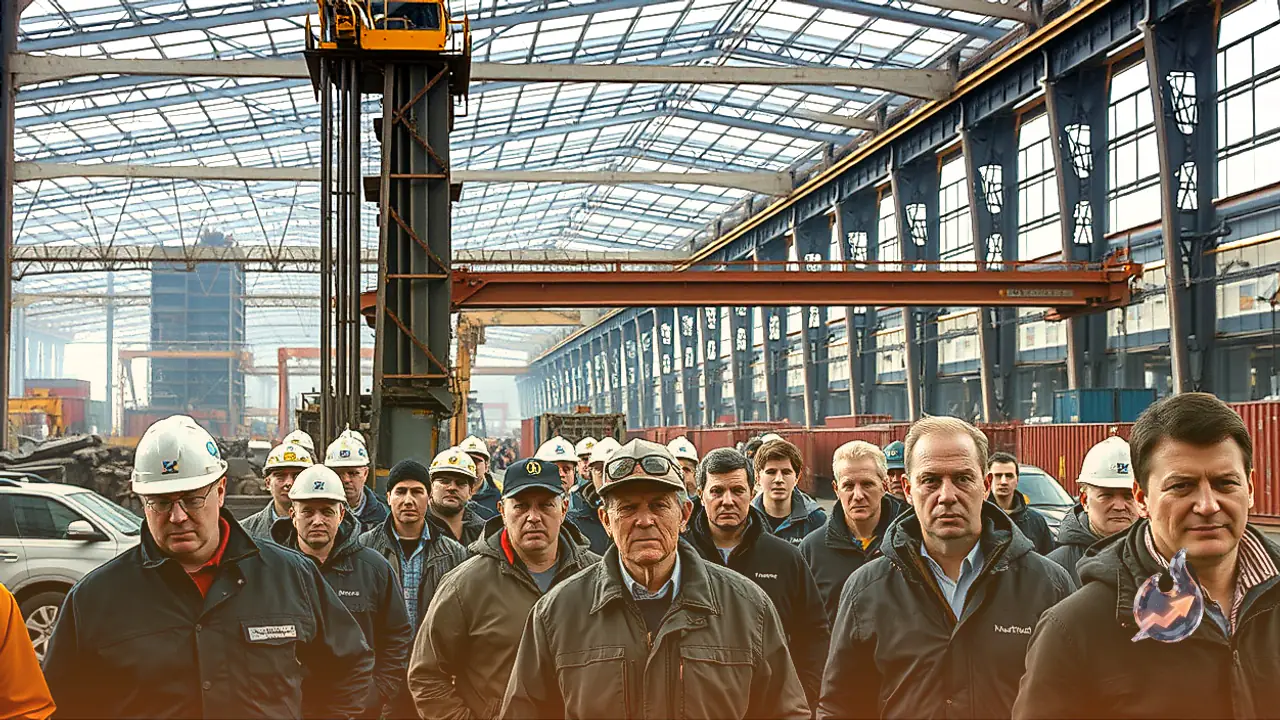
Beyond battered industrial machinery, the war has exacted an immense human toll on the metallurgical workforce. Nearly 800 Metinvest employees have lost their lives since the outbreak of hostilities in 2022. In response to the persistent danger, management has upgraded reinforced underground shelters across its operating mills, giving factory personnel safer retreats whenever air raid alerts sound.
Ryzhenkov remarked that plant leadership can only establish rigorous safety protocols and demand strict compliance to mitigate danger, acknowledging the impossibility of shielding an entire heavy industrial facility from missile impacts. Looking ahead, he warned that the approaching winter season looms as one of the most perilous in the country's modern history. With frontline logistics severing access to alternative export destinations worldwide, the EU remains Ukraine's sole realistic trade outlet. Cutting that remaining market by up to 60 percent leaves the country's foundational industry fighting for its very existence.