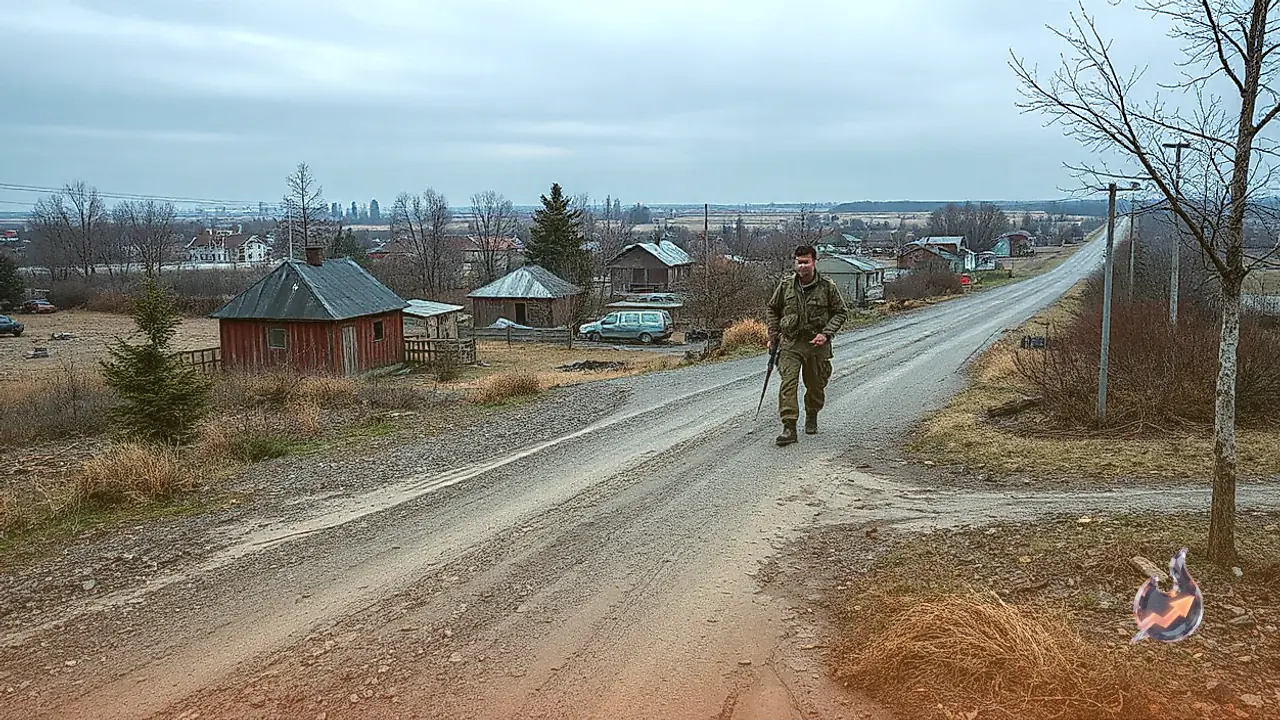

























A coordinated wave of cyber intrusions disrupted civilian warning networks in Ukraine and Russia on Sunday night, pushing fabricated emergency alerts to mobile devices across both nations. The unauthorized transmissions warned users of severe imminent threats, ranging from chemical contamination and active urban warfare to catastrophic nuclear strikes. The breaches prompted immediate official denials and operational suspensions as emergency agencies moved to contain potential public panic.
Ukraine Faces Red-Level Alarms and Ground Combat Fabrications
The security incident began when Ukraine's national air raid notification platform suddenly initiated red-level emergency protocols nationwide. Residents in several major metropolitan areas, including Kyiv, observed alarming notifications on their mobile screens detailing localized radiation hazards, chemical weapon deployments, and armed street clashes. After four and a half years of continuous full-scale war, Ukrainian citizens have grown accustomed to nightly warning sirens signaling Russian missile and drone activity, prompting some individuals to deactivate the alerts entirely due to routine alert fatigue.
For those still relying on the digital network, the alarming nature of the fabricated messages caused sharp distress. Olena, a resident of Kyiv, recounted that her immediate reaction was complete shock, noting that while she felt prepared for wartime power blackouts, severed central heating, and disrupted municipal water supplies, she was wholly unprepared for a nuclear strike. The nature of the breach quickly became evident when her husband received secondary alerts describing active street fighting within Kyiv that were written in the Russian language. Because authentic notifications from the Ukrainian platform are distributed strictly in Ukrainian, the linguistic discrepancy instantly revealed external interference.
Official Reassurances and Technical Suspension in Ukraine
Following the breach, the Ukrainian Air Force moved swiftly to address the public through official communication channels, urging citizens to disregard the mobile notifications. In a statement published to Telegram, the military authority clarified that the Air Alarm software had likely experienced hostile tampering, emphasizing that no radiation hazard existed and advising residents to monitor verified updates on official channels.
Ukrainian administrative authorities subsequently placed the alert application into an offline maintenance status to isolate the compromise. Oleksander Merezhko, who serves as the chair of the foreign affairs committee in the Ukrainian parliament, observed that the intrusion failed to spark broad civil panic. Oleksander Merezhko noted that the population in Kyiv has become hardened to near-constant warning sirens, and the presence of Russian text served as an immediate tell that exposed the deception. Characterizing the incident as an unwelcome reality of modern cyber warfare, he stated that the public understands these digital threats and remains prepared for recurring disruptions.
Counter-Breach in Russia Targets Emergency Alert Systems
A parallel digital assault struck the Russian warning infrastructure only hours later. Russian emergency authorities confirmed that a domestic air raid notification system fell victim to a massive cyberattack aimed at circulating false information. Details of the intrusion emerged publicly when Atesh, a pro-Ukrainian partisan organization active inside occupied territories, published digital records of the altered Russian broadcast on Telegram.
The rogue Russian alert made extreme claims, telling recipients that nuclear warheads affixed to Ukrainian P1-Suns attack drones had been launched against all Russian regions. Interspersed with offensive language, the message bluntly cautioned users that circumstances were about to escalate sharply, directing civilians to shelter immediately and amass three weeks of emergency provisions. Despite the severe claims, the hoaxes did not trigger visible public panic across Russian municipalities on Monday morning, receiving minimal coverage across domestic state media outlets.
Kremlin Points to Expanding Threat Landscape
Addressing the cyber intrusion, Kremlin spokesman Dmitry Peskov refrained from discussing the specifics of the application breach, instead framing the occurrence as part of an enduring digital assault against Russian administrative infrastructure. Dmitry Peskov remarked that Russian governmental digital portals face round-the-clock interference, pointing to non-stop cyber incursions targeting the official presidential website. He further asserted that the rapid development and widespread availability of artificial intelligence tools are accelerating the frequency and scale of contemporary network attacks.
Separately, Russia's emergencies ministry released an operational update on Monday indicating that technical teams would achieve full restoration of the application's capabilities before the conclusion of the day. Officials stressed that the intrusion remained confined to the mobile client and did not compromise the overarching national warning grid.
Digital Attribution and Frontline Realities
While state-backed agencies on both sides possess formidable digital arsenals, security analysts observed that the informal tone, irregular phrasing, and profanity within the alerts point toward ideologically aligned hacktivist factions rather than formal state-directed military units. Cyber specialists suggested that the actors behind the Russian platform breach likely retained the requisite network access for an extended duration, deliberately timing the deployment to mirror and retaliate against the disruption of Ukraine's system.
Herbert Lin, a senior research scholar specializing in cyber policy and security at Stanford University, emphasized the unprecedented nature of the incident, noting that this marks the first verified compromise of an official Ukrainian public advisory application, while cautioning that subsequent breaches remain probable.
The digital incident unfolded during the closing minutes of a fragile, localized humanitarian ceasefire in the southern Kherson region. Established on the preceding Tuesday through diplomatic mediation that included US First Lady Melania Trump, the pause was intended to permit civilian evacuations from the occupied settlement of Oleshky. Despite that localized arrangement, kinetic combat persisted across other operational sectors; just days earlier, an attack on a railway passenger platform in Dnipro claimed 15 lives. The cyber exchange highlights how digital psychological operations continue to shadow conventional battlefield operations since Russia initiated its full-scale invasion in February 2022.