























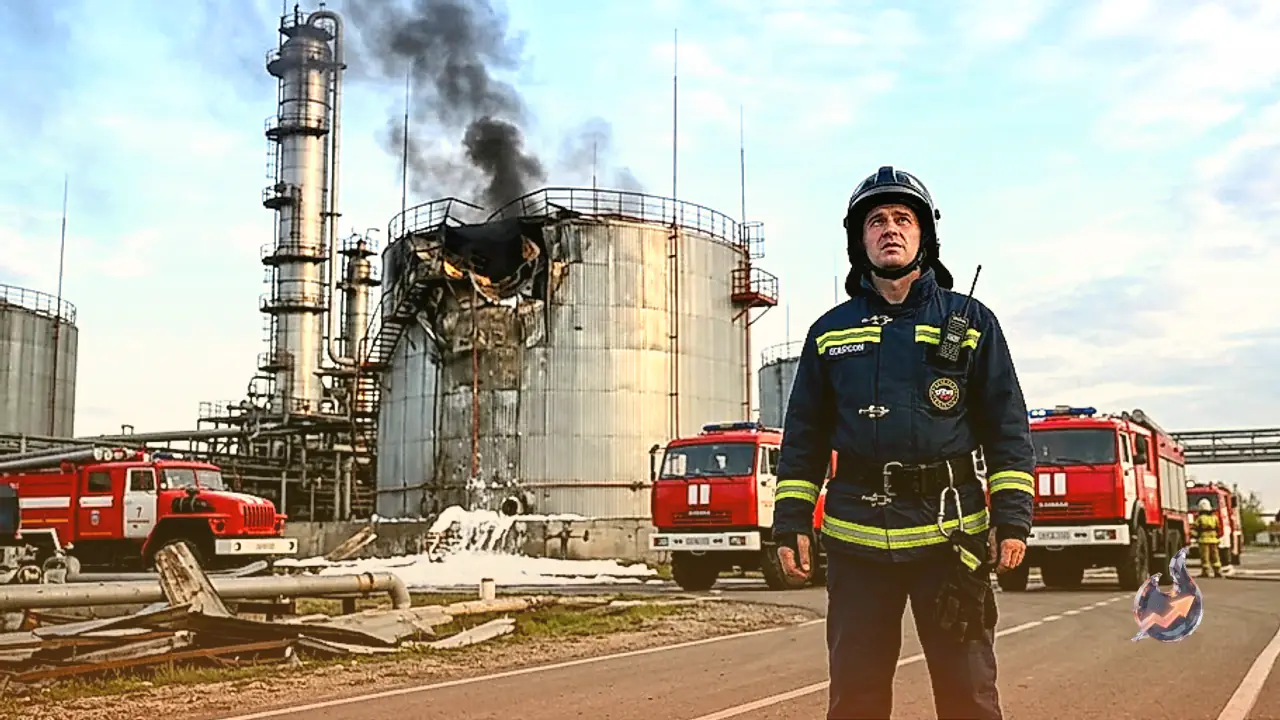

In a significant escalation of long-range aerial warfare, Ukrainian forces launched a series of high-impact overnight drone strikes deep inside Russian territory, hitting crucial military and energy facilities. The targeted infrastructure included the strategically vital Engels airfield and a major commercial oil refinery located in the Saratov region. Ukrainian President Volodymyr Zelensky characterized these deep-strike operations as targeted long-range sanctions engineered to dismantle the financial and logistical pillars powering Moscow's military efforts. Conversely, Russian official channels reported eight fatalities across several administrative regions alongside the interception of hundreds of incoming Ukrainian unmanned aerial vehicles.
Ukrainian Deep-Strike Operations Target Russian Infrastructure
The primary focus of Ukraine's overnight aerial campaign was concentrated in the Saratov region, a territory situated approximately 600 kilometers, or roughly 373 miles, away from the Ukrainian border. Nestled within this zone is the Engels airfield, long recognized as a core operational hub for Russia's strategic aviation command. According to statements released by the Ukrainian military, this airbase is routinely utilized by Tu-95MC and Tu-160 strategic heavy bombers to orchestrate and launch long-range missile strikes against Ukrainian urban centers and critical grid infrastructure. The latest drone assault successfully triggered a major blaze across the airfield facility, inflicting notable disruption on bomber operations.
Simultaneously, Ukrainian long-range strike units targeted a major oil processing refinery situated in Saratov. The coordinated wave extended further into the Kaluga region, where an active oil storage depot was struck, as well as the Bryansk region, where a dedicated Russian drone launching facility was engaged. By focusing firepower on fuel storage and processing hubs, Ukrainian strategists aim to constrict the supply of refined petroleum products reaching frontline military units while eroding Russian state energy revenues. President Volodymyr Zelensky underscored in a public message that targeting such strategic facilities remains central to degrading Russia's long-term war financing capability.
Casualty Reports and Regional Damage Breakdown
Russian air defense networks engaged in widespread interception efforts throughout the overnight barrage. Official reports released by Moscow indicated that Russian defense systems successfully downed or neutralized 635 Ukrainian drones across multiple administrative sectors using kinetic weapons and electronic warfare counter-measures. Despite these high interception tallies, incoming warheads and falling debris caused substantial structural destruction and civilian casualties in several distinct territories, resulting in a total reported death toll of eight individuals.
Saratov Regional Governor Roman Busargin acknowledged that drone strikes caused visible damage to civilian infrastructure across both Saratov and Engels, later confirming that two residents lost their lives during the emergency. Separately, local authorities in the Belgorod region, directly adjacent to the Ukrainian border, reported three fatalities stemming from cross-border shelling and drone activity. Further inland, in the Udmurtia region, a targeted Ukrainian drone strike on a civilian motor vehicle led to three additional deaths. The geographic distribution of these casualties illustrates how aerial warfare continues to impact locations far removed from active ground combat zones.
Escalation of Attacks on Commercial Logistics and Retail Supply Chains
Beyond traditional energy and defense installations, both warring nations have increasingly directed precision strikes toward commercial logistics networks and digital retail infrastructure. In Russia's Samara region, a large-scale strike struck a major fulfillment warehouse belonging to Wildberries, Russia's largest e-commerce enterprise, starting a massive fire throughout the complex. Samara Governor Vyacheslav Fedorishchev labeled the incident another act of terrorism by Ukrainian forces while reporting that no casualties occurred at the site. Ukrainian military analysts have repeatedly classified Wildberries logistics hubs as valid targets, asserting that the retail network is utilized by Russian forces to aggregate and transport micro-navigation equipment, drone components, and tactical supplies.
Wildberries, widely referred to as Russia's Amazon, maintains a workforce of approximately 48,000 employees and forms the backbone of the domestic retail economy. Sustained disruptions to its logistics nodes have created ripple effects across small and medium-sized enterprises relying on the platform for commerce. In tandem, Russian military forces have systematically targeted Ukrainian distribution networks, focusing on facilities operated by the Nova Poshta postal service and major online marketplace Rozetka. Overnight, Russian drones struck Rozetka's primary fulfillment hub, causing structural damage but resulting in no worker injuries, according to company statements.
Black Sea Operations and Frontline Infrastructure Strikes
In response to Ukrainian long-range raids, the Russian Defense Ministry announced retaliatory maritime and aerial strikes executed overnight. Russian naval units targeted two key Ukrainian port facilities located along the Black Sea coast alongside two commercial vessels docked in the area. These operations represent a continued effort by Russian forces to interdict Ukrainian maritime shipping routes and restrict sea-based logistical corridors vital to Ukraine's economic survival and military resupply.
Further inland, Ukrainian authorities reported a deadly Russian strike targeting a major postal terminal located near the north-eastern city of Kharkiv. The strike resulted in one fatality and severe damage to civil mail distribution infrastructure. The persistent targeting of postal terminals and commercial shipping infrastructure underscores how essential civilian distribution services have become prime battlegrounds in the broader war of attrition, severely affecting daily civilian life and emergency supply distribution.
Static Frontlines and Stalled Diplomatic Mediation
This sharp acceleration in mutual deep-strike operations across major metropolitan centers, energy depots, and retail hubs coincides with a period of operational stagnation along the actual ground combat lines. The extensive front line stretching across eastern and southern Ukraine remains virtually static, with neither side achieving decisive territorial breakthroughs despite heavy casualties. Since Russian President Vladimir Putin initiated the full-scale invasion of Ukraine in February 2022, the conflict has progressively evolved into an intense technological and economic war of attrition.
The lack of progress on the battlefield is compounded by an ongoing deadlock on the diplomatic front. International mediation attempts, including efforts led by the United States to negotiate a ceasefire framework or bring both parties to the bargaining table, have failed to produce a viable breakthrough. With formal peace talks stalled and ground forces locked in position, both Kyiv and Moscow appear increasingly reliant on long-range strategic strikes to sap the economic resilience, military logistics, and political resolve of their opponent.