






















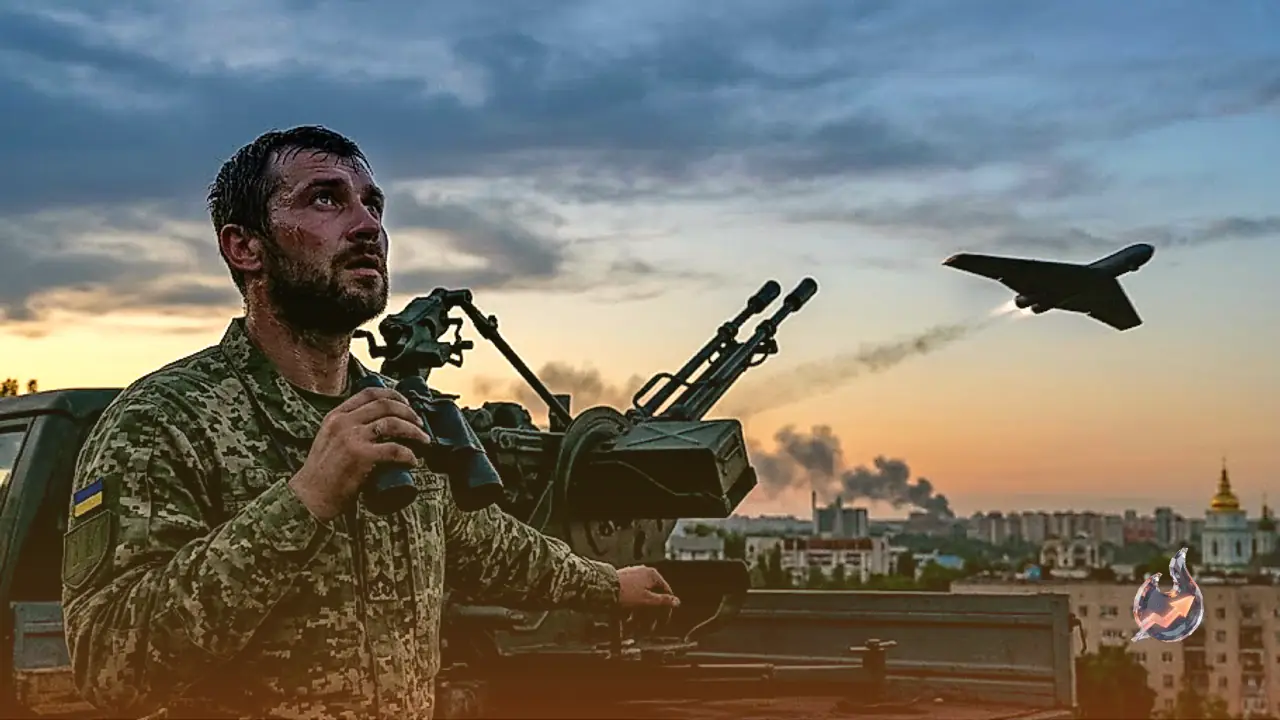

Russia has significantly stepped up its aerial campaign against Ukraine by integrating advanced, rapid jet-powered drones into its daily military operations, according to an analysis of Ukrainian Air Force data. Throughout the month of August, Moscow deployed these upgraded Geran drones on a daily basis for the first time, prompting Ukrainian President Volodymyr Zelensky to strongly condemn what he described as a mounting catastrophe unfolding over the skies of Kyiv.
Surging Frequency and Scale of Drone Strikes
Ukrainian military officials reported a dramatic escalation in jet-propelled drone assaults, noting that monthly figures climbed from 350 incidents in June to 1,600 in July and an overwhelming 2,800 in August. During five separate nightly raids in August, these high-speed munitions actually outnumbered the older, slower drone models typically launched by Russian forces.
The Tactical Advantage of Jet Propulsion
Dr. Marina Miron, a military technology expert at King's College London, explained that the strategic shift toward jet-powered drones stems from their superior velocity, which makes interception exceptionally difficult for Ukraine. These upgraded munitions are capable of cruising at speeds exceeding 300mph, vastly outstripping legacy models and pushing well past the maximum operational speed of Kyiv's current interceptor aircraft. Powered by turbojet engines—some of which Ukrainian military intelligence indicates originate from China—these systems represent a formidable tactical hurdle.
Economic Motivations and Missile Parity
John Hardie from the Foundation for Defense of Democracies highlighted that Moscow also held compelling economic incentives to invest heavily in jet-powered platforms. He noted that the enhanced speed and manoeuvrability blur the traditional lines separating one-way attack drones from much costlier cruise missiles, effectively serving as an affordable alternative for long-range strikes. However, the analytical group Conflict Armament Research cautioned that these jet drones still lag behind traditional cruise missiles in overall sophistication, featuring shorter operational ranges, considerably smaller warheads, and higher vulnerability to electronic jamming countermeasures.
Infrastructure Expansion and Local Production
Satellite imagery reveals that Moscow is actively redesigning and expanding its military infrastructure to accommodate the new fleet, featuring extended launch rails at a newly established base in Tsymbulova within the Oryol region, located approximately 109 miles or 175 kilometres from the Ukrainian border. This facility has rapidly transformed into a core hub for drone operations, contrasting sharply with pre-September 2024 reports where the region was rarely cited. Meanwhile, Ukrainian officials disclosed that four domestic companies have begun testing specialized interceptor missiles to target the Geran models, with newly appointed Defence Minister Yevhenii Khmara directing manufacturers to ramp up production to thousands of units rapidly.
Complex Combined Assaults and Declining Interceptions
Analyst Michael Bohnert from the RAND think tank observed that Russia is now executing complex, multi-layered weekly assaults that combine decoy systems, jet-powered drones, and ballistic missiles, utilizing over 15 times more drones per attack than four years ago. This tactical complexity, compounded by a global shortage of advanced air defence systems driven partly by international conflicts in the Middle East, has severely impacted Kyiv's interception capabilities. While data reflected a steady decline in ballistic missile interceptions through July, Ukrainian authorities largely halted the public release of these interception metrics starting in August.