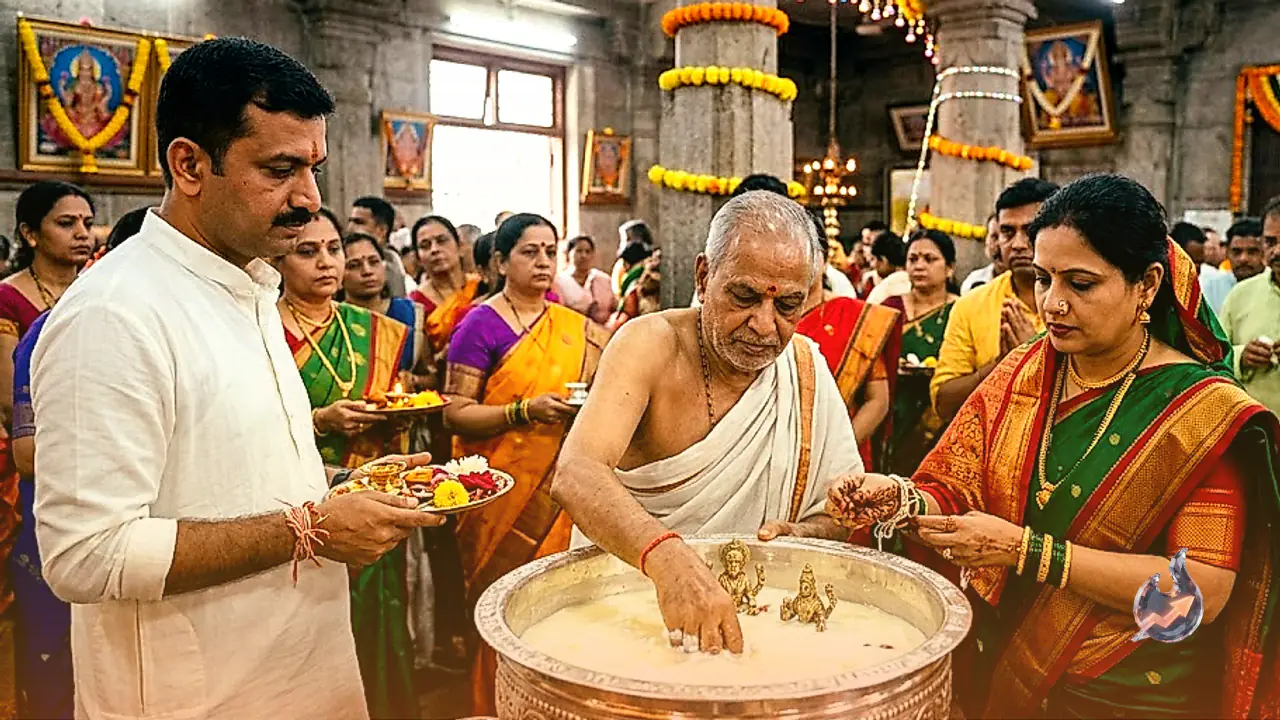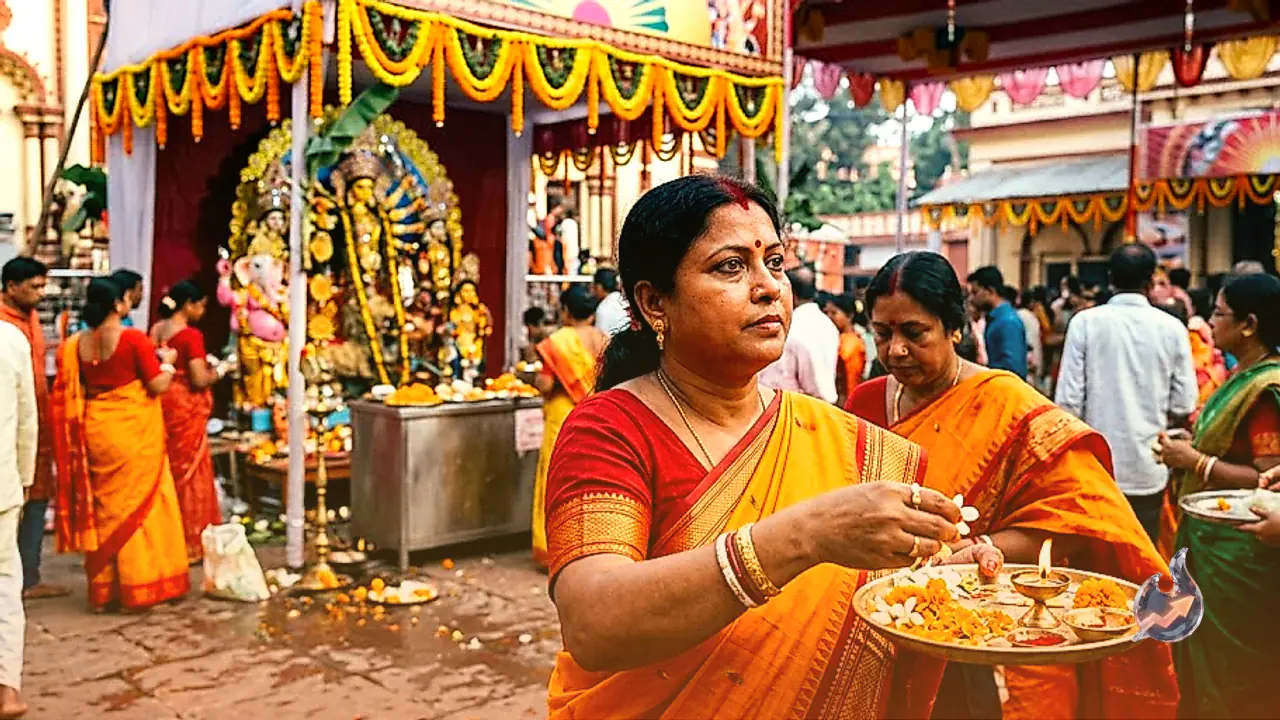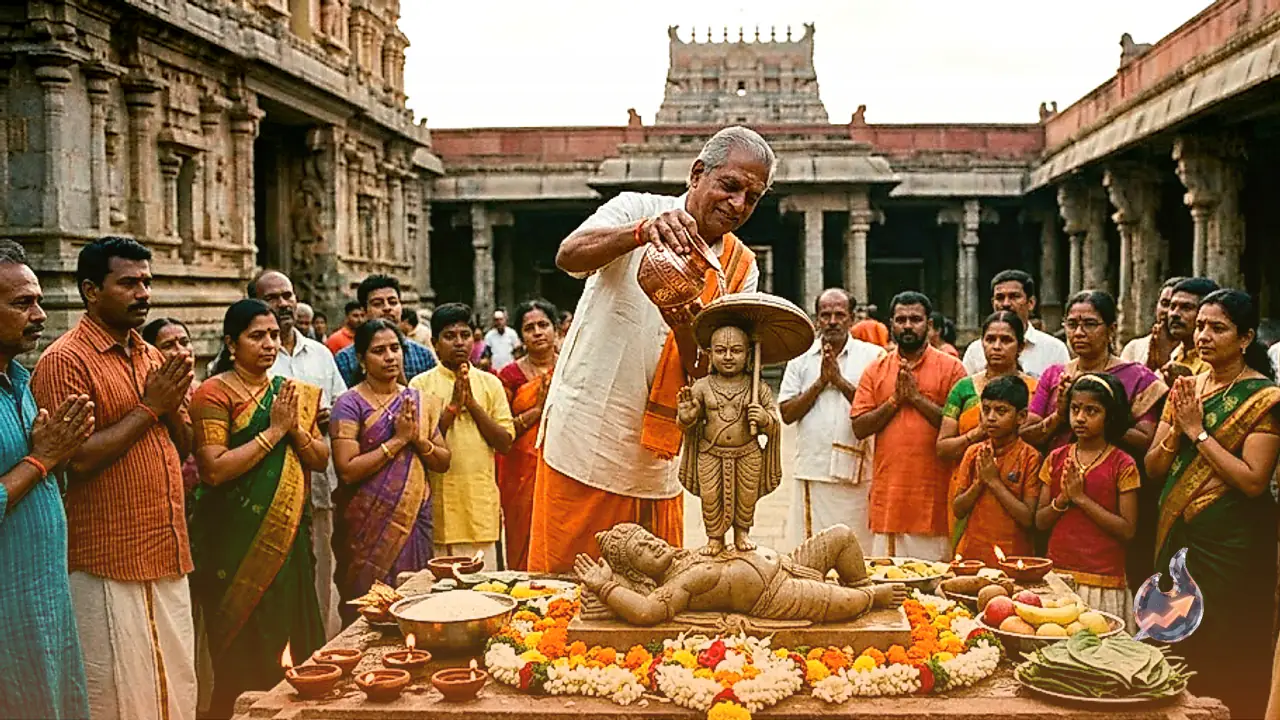

























The ten-day festivities of Ganeshotsav culminate with deep devotion on Anant Chaturdashi through the sacred immersion ceremony. The Shukla Paksha Chaturdashi date of the Bhadrapada month falls on Friday, September 25, marking the day when households prepare to bid adieu to their beloved deity. Traditional customs emphasize that conducting the immersion with complete rituals, heartfelt prayers, offerings, and arti brings lasting prosperity, positive energy, and peace into domestic life. Before moving the idol toward water bodies, adhering to time-honored spiritual procedures remains vital.
Significance of Uttara Puja Before Commencing the Farewell Procession
Prior to lifting the idol from its sanctified altar, family members gather closely around Lord Ganesha to perform the concluding farewell prayer. Devotees present fresh blooms, sacred durva grass, seasonal fruits, and consecrated naivedya before conducting a reverent arti to seek divine blessings. Following individual family traditions, these departing rites must be observed with calm and undivided attention.
A critical liturgical step before shifting the deity from the ceremonial pedestal is the performance of Uttara Puja, or the formal farewell observance. This ritual signifies gratitude for the divine presence throughout the festival and marks the formal conclusion of the worship cycle. Completing all residential farewell customs inside the home before stepping outside ensures that the journey begins smoothly and respectfully.
Preparing the Farewell Platter and the Sacred Travel Potli
A dedicated platter can be assembled to house all final offerings, avoiding the clutter of carrying essential ceremonial items separately. The idol itself is adorned with fresh flowers and tasteful decorations for its last journey, while devotees chant devotional songs and raise joyous chants along the path. A deeply symbolic custom involves tying a small bundle made of clean red or yellow cloth to accompany the idol.
This sacred farewell potli traditionally includes six specific symbolic elements
- Modaks or Laddus: Included as the revered sweet offering dearest to Lord Ganesha.
- Durva Blades: Fresh green grass sanctified exclusively for Ganesha worship.
- Turmeric Knot: A natural bulb signifying continuous auspiciousness, good health, and family prosperity.
- Betel Nut (Supari): Placed as an emblem of wholeness, resoluteness, and the completion of ritual pledges.
- Akshata: Unbroken grains of rice symbolizing completeness and enduring spiritual abundance.
- Coins or Dakshina: Small monetary tokens representing sincere devotion and humble respect.
Auspicious Muhurat Windows for Immersion on September 25
Observing the immersion during favorable planetary hours and planetary segments ensures spiritual alignment. Devotees can choose from several auspicious slots throughout the designated day
- Morning Auspicious Window: Commences at 06:12 AM and lasts until 10:42 AM.
- Abhijit Muhurat: Spans from 11:48 AM to 12:36 PM.
- Chara and Labha Segment: Operates between 12:15 PM and 03:18 PM.
- Most Recommended Immersion Slot: The premier duration spans from 06:12 AM through 12:36 PM.
Devotional Observance, Ecological Care, and Public Safety
Surrounded by pulsating drumbeats, melodic hymns, and resonant chants of Ganpati Bappa Morya, worshippers guide the deity toward the water, steadfast in their belief that the Lord will return the following year. While enthusiasm runs high, safety and environmental responsibilities remain paramount.
For smaller household idols, immersion can be safely conducted inside a large tub, suitable vessel, or dedicated artificial water tank within residential premises. If stepping out to public immersion sites, devotees should strictly use designated civic tanks or artificial ponds created by municipal authorities. The idol should be carried with utmost tenderness, preventing any bumps, tilting, or unintentional disrespect during transit.
To minimize ecological harm, citizens are encouraged to embrace eco-friendly alternatives that avoid plaster of Paris and chemical pigments. Floral offerings, dried leaves, and residual ceremonial items (nirmalya) must not be cast directly into natural water bodies; instead, place them inside earmarked collection bins. Furthermore, guardians must keep young children at a secure distance from open riverbanks, lakes, or coastal surf, maintaining disciplined conduct and total adherence to municipal regulations.