
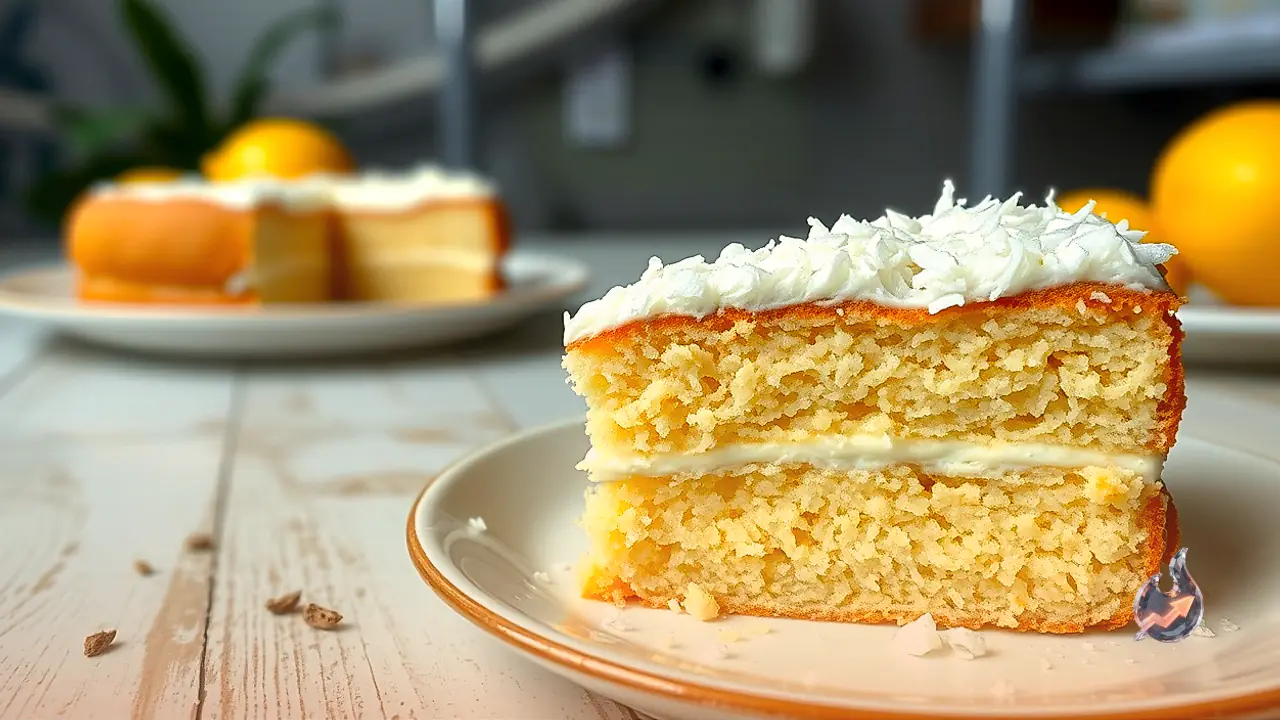






















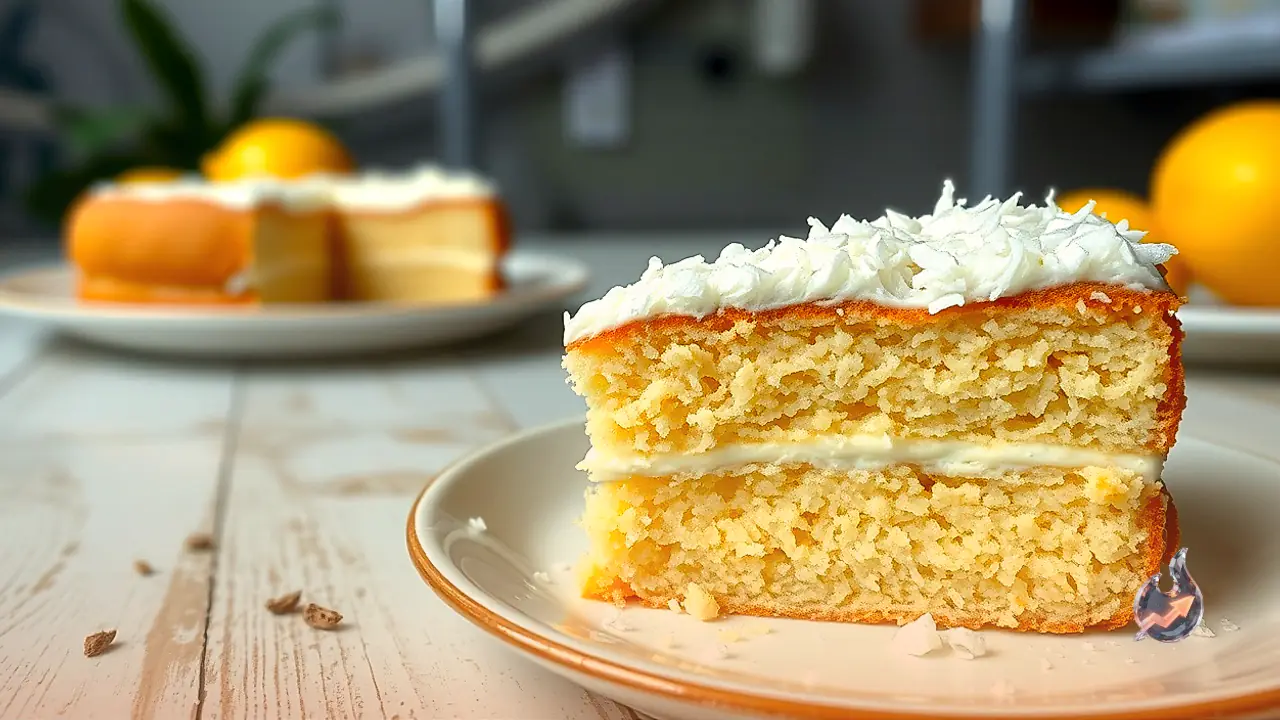

When looking for a baked treat that pairs delightfully with a hot cup of tea or coffee, this Australian lemon coconut slice cake stands out as an exceptional choice. Rather than being a towering, multi-layered confection, this style leans toward a thin, buttery sheet cake that is sliced into neat, handheld squares. What makes it uniquely suited for gatherings, school bake sales, and packed lunches is its distinct lemon icing. Unlike runny glazes that drip down the edges or sticky buttercreams that smudge at the slightest touch, this topping sets with a firm outer crust. That stable surface makes each portion exceptionally clean to wrap in parchment, stack inside storage tins, and carry on travels without making a mess.
The Tradition of the Australian Slice Cake

This distinct baking style has long been a staple in Australian coffee shops, community gatherings, and tuckshops, eventually becoming so widespread that packaged supermarket variations are now commonly found across the country. While frequently referred to simply as a lemon slice, it differs fundamentally from standard lemon bars. Traditional fruit bars and curd slices are built upon a firm shortbread or biscuit base and blanketed with a thick cooked curd. In contrast, this preparation is a genuine sponge cake baked into a thin sheet. The addition of finely shredded coconut throughout the crumb provides a gentle texture while performing a vital culinary role, locking in moisture so the cake never dries out during storage.

Essential Ingredients for the Cake Base

Achieving the proper rise and delicate crumb requires standard baking staples measured with care to ensure the balance of acidity, fat, and leavening is maintained.

- Fresh Lemons: One very large lemon or two medium lemons are required. The cake batter calls for one tablespoon of finely grated zest and two tablespoons of freshly squeezed juice. Another seven to eight teaspoons of juice are reserved strictly for the topping. The essential aromatic oils reside within the yellow skin, delivering genuine citrus fragrance, while the juice provides the necessary tart contrast.
- All-Purpose Flour: One level cup of standard plain wheat flour. Self-raising flour should be avoided here, as its preset leavening ratios differ from what this flat slice requires.
- Desiccated Coconut: Three-quarters of a cup of unsweetened, finely shredded coconut resembling coarse breadcrumbs. Wide coconut flakes or powdery flours will not blend into the batter correctly.
- Baking Powder: Exactly one level teaspoon of fresh, active baking powder to provide a gentle, uniform rise. Baking soda is not a suitable swap, as it forces the center to crown excessively, whereas a flat top is essential for even slicing.
- Unsalted Butter: 125 grams (equal to 8 tablespoons) of butter brought to ambient room temperature so it creams smoothly without separating.
- White Sugar: Three-quarters of a cup of caster or superfine sugar, which dissolves quickly during beating, though regular granulated sugar also functions well.
- Whole Eggs: Two large eggs, weighing roughly 50 to 55 grams each, fully brought to room temperature before beating.
- Milk: Half a cup of full-cream whole milk, strictly at room temperature to protect the emulsified fats.
- Flavor Enhancers: One teaspoon of pure vanilla extract alongside one-eighth of a teaspoon of cooking salt to elevate the natural sweetness and citrus tang.

Components for the Crusting Lemon Glaze

The crown of this slice requires no whipping cream or melted butter, coming together with just three simple elements

- Soft Icing Sugar: Two cups of sifted confectioners' sugar. Soft icing sugar blends smoothly and retains a pleasant bite without turning rock-hard like pure royal icing.
- Fresh Lemon Juice: Precisely 7 to 8 teaspoons of strained lemon juice. While this small volume seems insufficient for two cups of powdered sugar, patience and firm mixing transform it into an opaque, spreadable glaze.
- Garnish: Two tablespoons of desiccated coconut scattered across the wet glaze before it begins to set.

Key Rules: Ingredient Temperature and Equipment

Two practical guidelines govern the success of this batter. First, the milk and eggs must never be added directly from refrigeration. Cold liquids immediately shock the creamed butter, causing milk fats to seize into hard droplets scattered across the bowl. This curdling ruins the emulsion, yielding greasy pockets and hindering proper oven rise. Second, avoid utilizing large stationary stand mixers. Because the volume of this single-layer batter is modest, mixer paddles fail to reach the bottom efficiently, requiring constant stopping to scrape the bowl. An electric handheld mixer provides complete control and thorough blending in a fraction of the time.

Step-by-Step Batter Preparation

Bringing this batter together relies on a standard creaming technique punctuated by gentle folding to preserve tenderness.

- Preparation: Preheat the oven to 180°C or 350°F (160°C in a fan-forced or convection oven). Grease a 20-centimeter (8-inch) square baking pan and line the interior with baking paper, leaving an overhang for easy lifting later.
- Dry Blend: Whisk together the plain flour, desiccated coconut, baking powder, and salt in a medium mixing bowl, then set aside.
- Creaming: In a separate mixing bowl, combine the softened butter and white sugar. Beat with a handheld electric beater on low speed to prevent sugar from flying, then increase to high speed for approximately two minutes until the mixture turns pale, light, and airy.
- Emulsion: Incorporate the room-temperature eggs one at a time, beating until fully absorbed. Pour in the vanilla extract, lemon zest, and two tablespoons of lemon juice. While the acidity may cause the batter to appear slightly curdled at this moment, the structure restores itself as soon as the dry flour is introduced.
- Alternating Additions: Add one-third of the flour mixture into the bowl and beat on the lowest speed just until the flour vanishes. Pour in half of the milk, mixing minimally to incorporate. Repeat with another third of the dry ingredients, followed by the remaining milk, and finish with the final portion of flour. Shut off the beaters the moment no dry patches remain. Overworking the batter develops gluten, creating a tough, heavy cake.
- Final Sweep and Baking: Use a flexible rubber spatula to scrape the sides and base of the bowl, ensuring no unmixed pockets remain. The finished batter should have the density of softly whipped cream with visible coconut texture. Spread it evenly into the lined 20 cm square pan and bake for 30 minutes, or until an inserted wooden skewer emerges clean from the center.

The Inverted Cooling Technique

Once baked, allow the cake to settle in its metal pan for five minutes. Afterward, invert the cake directly onto a wire cooling rack and leave it completely undisturbed upside down. Cooling the cake inverted ensures that the pan bottom becomes the new top surface. Because the base of the baking pan is perfectly flat, smooth, and free of any oven doming, it serves as an ideal canvas for spreading the thick glaze evenly from corner to corner. The cake must reach ambient room temperature entirely before icing is applied.

Mixing the Firm Glaze and Finishing

Creating the signature crusting glaze requires perseverance. Place the two cups of sifted icing sugar into a wide bowl along with the 7 to 8 teaspoons of fresh lemon juice. Using a sturdy spatula, smear and press the liquid firmly into the dry sugar. Initially, the mixture appears crumbly and dry like a stiff dough, but continuous friction dissolves the sugar crystals, transforming the mass into an opaque paste matching the consistency of smooth peanut butter. If the paste remains stubbornly unspreadable, introduce additional lemon juice strictly in half-teaspoon increments. Adding too much liquid too quickly causes the icing to liquefy, ruining its ability to sit proudly on top of the slice. Smooth the thick glaze evenly across the flat surface of the cooled cake, scatter the extra desiccated coconut immediately while the surface is damp, and let it rest for one full hour until the glaze forms a firm, dry crust before cutting into 16 uniform squares.

Shelf Life, Moisture Retention, and Storage

A notable advantage of this cake is its remarkable ability to remain fresh and soft for up to a week. Conventional bakers often rely on oil, sour cream, yogurt, or buttermilk to combat staling, but here the desiccated coconut provides continuous moisture naturally throughout the crumb. On the second day, the slice often tastes superior, as the bright citrus notes and mellow coconut flavors meld together while moisture redistributes through the crumb. Store the sliced squares inside an airtight container kept in a cool, shaded pantry. In warm climates, refrigeration is advisable, though portions should always be returned to room temperature before serving, as cold temperatures harden butter fats and diminish flavor perception.

Gluten-Free Testing and Citrus Variations

Bakers needing to avoid gluten can swap the all-purpose flour for a high-quality commercial gluten-free 1:1 baking blend. When tested with reliable gluten-free blends, the cake produces an identical citrus flavor with only a minor increase in crumb fragility when sliced, making it fully manageable for handheld eating. Furthermore, while lemons provide the quintessential bright tang, fresh limes work equally well as a direct substitute. Sweeter citrus fruits such as oranges may be used, though their milder acid profile results in a softer flavor impact compared to the zesty bite of lemon.