























With the arrival of early winter chills, household breakfast preferences naturally shift toward warm, wholesome meals. Crisp flatbreads crafted from fresh green fenugreek leaves serve as an ideal choice during this pleasant time of the year. Beyond offering a delightfully savory bite, these piping hot griddled flatbreads provide internal warmth to combat chilly weather while promoting smooth digestion. Best of all, they come together rapidly using regular kitchen staples.
Essential Ingredients and Pantry Spices
Preparing flaky, aromatic fenugreek parathas requires no exotic or expensive shopping list. The primary foundation rests entirely on standard whole wheat flour and finely chopped fresh fenugreek greens. Flavor enhancement comes from minced green chillies, aromatic carom seeds, half a teaspoon of turmeric powder, half a teaspoon of red chilli powder, and salt adjusted to taste. A single tablespoon of cooking oil is introduced for shortening, accompanied by sufficient water for kneading and ghee or refined oil for shallow frying on the skillet.
Technique for the Perfect Dough
Preparation begins by thoroughly inspecting and cleaning the leafy greens. Coarse stems are trimmed away so that only the tender leaves remain, which are subsequently rinsed two to three times under clean water to remove any lingering soil or grit. Once dried slightly, the greens are cut into tiny fragments. A wide mixing basin is then utilized to sift the whole wheat flour.
The minced fenugreek, green chillies, hand-crushed carom seeds, turmeric, chilli powder, and salt are added directly to the dry flour. A spoonful of oil is mixed in by rubbing the ingredients together thoroughly so the moisture and spices distribute evenly. Gradually pouring in measured water, the mixture is worked into a dough that strikes the right balance, neither overly stiff nor excessively sticky, remaining soft, smooth, and pliable.
Pan-Frying for Flaky and Crispy Texture
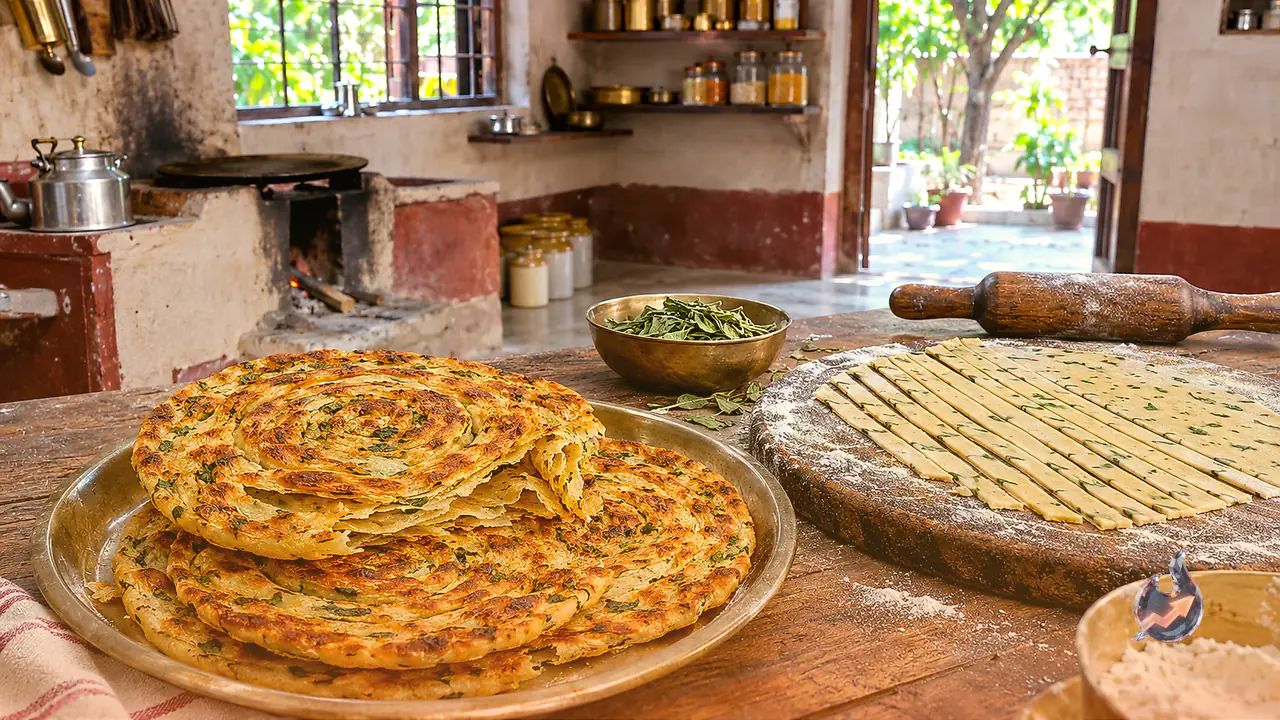
Once the dough settles, it is divided into even, medium-sized spherical portions. Dusting each portion with dry flour prevents sticking as a rolling pin gently shapes it into a neat round disk. Simultaneously, a flat griddle is placed over the burner to heat properly.
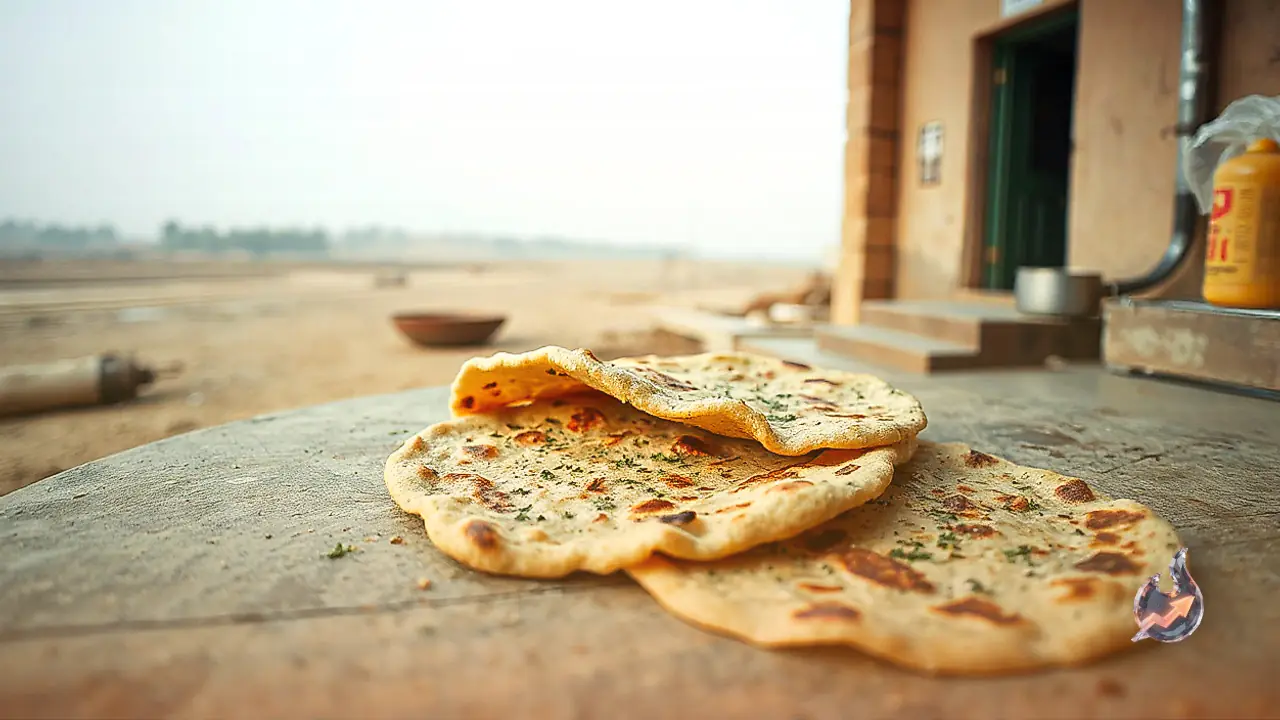
The rolled dough is transferred onto the hot griddle and flipped after the bottom side shows faint preliminary browning. Small amounts of desi ghee or edible oil are applied across both surfaces, cooking the paratha over medium heat until golden brown blisters develop and the outer layer turns crisp. Repeating this sequence finishes the batch, which can then be immediately served hot alongside fresh curd, tangy pickle, or zesty green chutney.