





















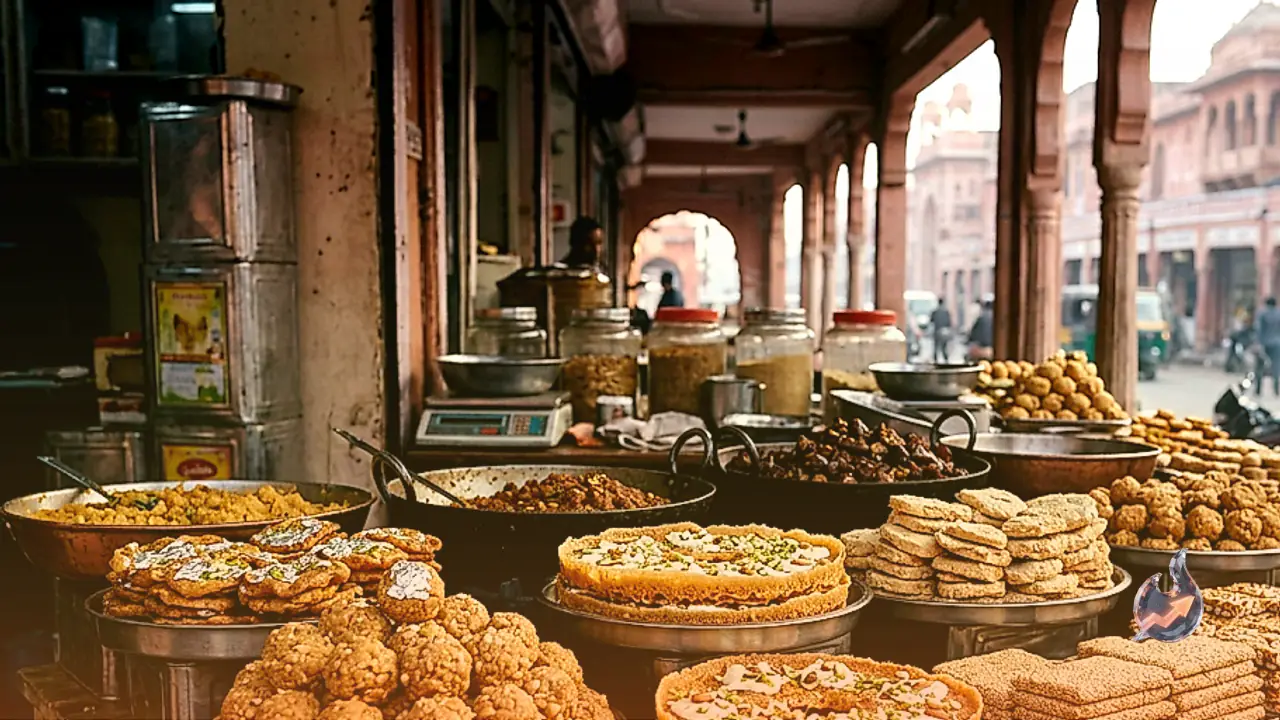

With the arrival of winter, traditional sweet markets across Rajasthan have seen a lively resurgence centered around seasonal specialties. Among the various winter offerings, the crispy gajak made from white sesame seeds and jaggery holds a prominent and long-standing reputation in the city of Bikaner. Loved for its melt-in-the-mouth texture, this regional sweet owes its renown to a unique craft of preparation. While modern production methods have gradually made inroads, the traditional treat continues to enjoy unwavering popularity among sweet lovers.
The Precise Ratio and Careful Roasting Technique
Achieving the authentic balance of flavor and crispness requires meticulous preparation and exact proportions. Sweet maker Pappu Joshi explains that the process begins a day in advance when the white sesame seeds are carefully roasted to develop their nutty profile. The next step involves heating the jaggery to an exact consistency before combining the ingredients. Craftspeople maintain a specific ratio of approximately 1.25 kilograms of roasted white sesame seeds for every one kilogram of jaggery. This mixture is cooked slowly over a gentle flame using specialized blending techniques so that the jaggery coats the seeds evenly without burning.
From Manual Hammering to Mechanical Production
Traditionally, crafting the signature crispness was an intensive, entirely manual trade. Once the hot mixture was blended, artisans used heavy hammers to strike and knead the batch repeatedly. This prolonged physical beating was essential, as it folded air into the warm candy, producing delicate internal layers and a distinctive crumbly texture. After the hammering was complete, the sweet was shaped into classic round cakes known locally as chakki. In recent years, mechanical equipment has largely replaced manual hammer work across most production units. While mechanization has streamlined output to meet rising commercial requirements, older patrons still fondly recall the nuanced texture once achieved solely through artisan hand labor.
Modern Variations From Elegant Rolls to Chocolate Infusions
Consumer tastes and gifting habits have prompted artisans to introduce diverse presentations and newer flavor profiles. Alongside the conventional circular cakes, workshops now craft neat gajak rolls that appeal to modern presentation standards. Makers have also introduced variations enriched with pure desi ghee, as well as chocolate-infused gajak tailored to children and younger buyers. Even with these contemporary innovations entering the display shelves, the classic version prepared purely with white sesame and jaggery remains the undisputed favorite.
Daily Sales of 40 Kilograms and Nutritional Value
As the winter chill intensifies, retail sales climb rapidly across the region. During the peak cold spell, an individual shop often prepares and sells up to 40 kilograms of crispy jaggery gajak every day. The retail market price for this traditional delicacy currently stands at around 460 rupees per kilogram. Beyond immediate household consumption, buyers frequently purchase large quantities to dispatch as winter gifts to relatives and acquaintances living in distant cities.
From a dietary perspective, combining sesame seeds with jaggery makes this confectionery a nutritious staple during cold months. Sesame seeds provide a rich source of calcium, iron, protein, and dietary fiber, while unrefined jaggery serves as a natural energy booster that helps the body cope with low temperatures. However, because the primary binding ingredient is jaggery, people with diabetes are advised to enjoy this sweet cautiously and in strictly regulated portions.