


















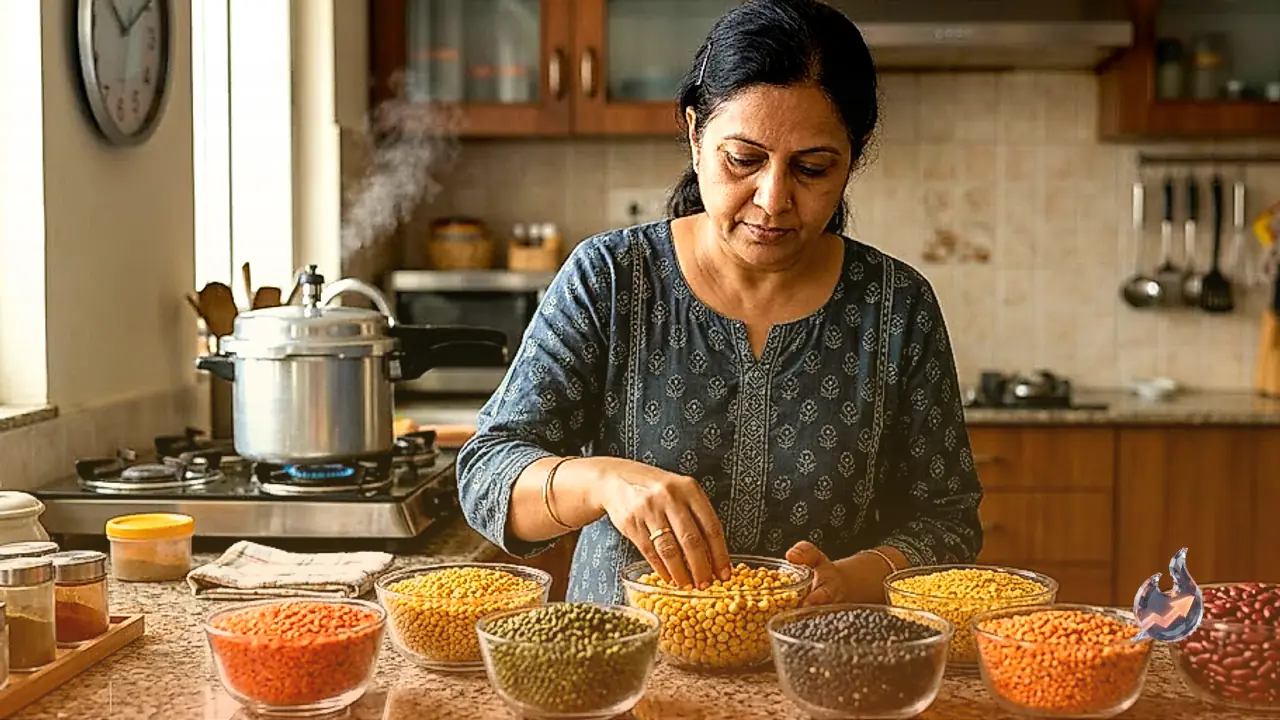

Lentils, or dal, show up on Indian dinner tables almost every single day, yet plenty of home cooks still end up with a pressure cooker batch that's either undercooked or boiled down into a watery mush. Every variety of lentil has its own texture, and that difference decides how long it needs to soak and how many whistles it needs on the stove. Getting the soaking time and whistle count right for each type means a perfectly cooked pot every time.
Toor (Arhar) Dal: Soaking Sets Up the Right Texture
Toor dal, also known as arhar dal, is one of the most widely used lentils in Indian kitchens and turns up on the menu several times a week in most homes. Washing it well and letting it soak for 15 to 20 minutes before cooking helps it cook faster and more evenly. Cooks who like a thicker consistency should use less water in the cooker, while those who prefer a thinner dal can add a little extra water.
Masoor Dal: The Fastest Lentil to Cook
Masoor dal is counted among the quickest lentils to cook and does not even need to be soaked beforehand. The right ratio is about 2.5 to 3 cups of water for every 1 cup of dal. Because it breaks down so fast, it is best to avoid giving it too many whistles in the cooker, or it can turn completely mushy.
Moong Dal: Light and Easy to Digest
Both yellow moong dal and split, skinned moong dal are considered light and easy on the stomach, which is why they are commonly fed to children and to people recovering from illness. When making khichdi or cooking dal for children, letting it cook a little softer than usual works well and gives it a smoother texture.
Urad Dal: Slower to Cook, Needs More Water
Urad dal goes into popular dishes like dal makhani, but it takes noticeably longer to cook than most other lentils. It needs 3 to 4 cups of water for every 1 cup of dal. Whole urad dal cooks best when it is soaked for 4 to 6 hours beforehand, which cuts down on the number of whistles needed and lets it cook through properly.
Chana Dal: Soaking Brings Out Better Flavour and Texture
Chana dal has a distinct flavour and texture compared to other lentils, and soaking it before cooking is considered the best approach. Soaking it for 1 to 2 hours ahead of time means it cooks faster in the cooker and needs fewer whistles.
Rajma Isn't Technically a Dal, But It's Cooked Like One
Rajma is not technically classified as a lentil, but it is very often cooked and served alongside dals. It needs to be soaked overnight to soften properly, and only then does it cook through evenly in the pressure cooker.
A Few Extra Tips for the Perfect Pot of Dal
Washing dal thoroughly before cooking improves both its taste and quality. Once the cooker whistles, it is best to let the pressure release on its own instead of forcing the lid open. Older stock of lentils can also take longer to cook and may need extra whistles. Adding salt at the start or after cooking does not make much difference to how the dal cooks, but adding sour ingredients like tomatoes too early can slow down the softening process, so it is better to add them later.