






















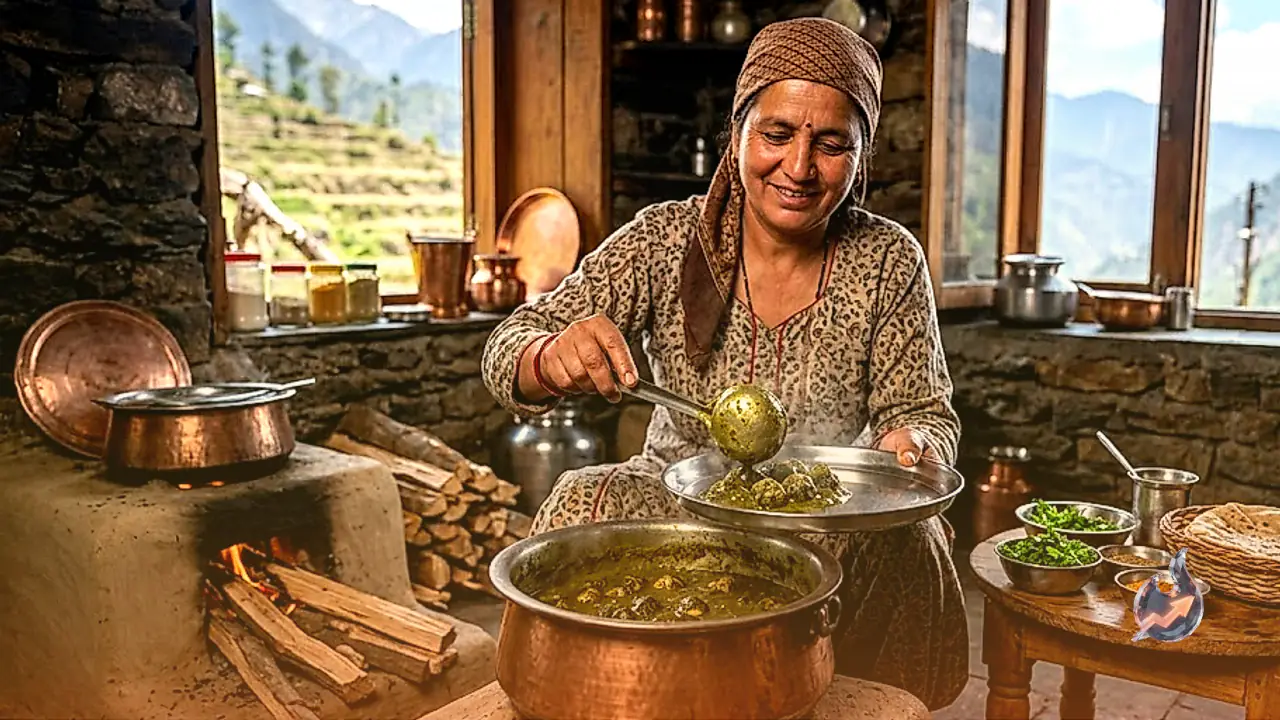

Daily household lunches can easily feel repetitive when the same standard lentils and dry vegetable dishes appear on the dinner table afternoon after afternoon. While basic home-cooked meals are undoubtedly healthy, monotonous flavors often lead family members and kids to ask for something distinct and exciting. Bringing variety to the table without compromising on nutritional value can be a everyday challenge. In such moments, Himachali Sepu Vadi serves as an outstanding traditional alternative. Made with soft split black gram (urad dal) dumplings simmered in a velvety, spiced spinach and yogurt gravy, this regional specialty offers a memorable harmony of textures and flavors.
The Cultural Legacy and Balanced Flavors of Sepu Vadi
Sepu Vadi holds a treasured position in the traditional cuisine of Himachal Pradesh. It is a star delicacy frequently served during festive occasions, wedding feasts known as Dham, and special family gatherings. The defining characteristic of this recipe is its gentle balance of spices. Neither overly fiery nor excessively oily, the mild heat paired with the natural creaminess of whisked curd and fresh spinach puree makes it a crowd-pleaser across all age groups. Celebrated chef Ranveer Brar has also highlighted a simplified version of this iconic dish, enabling home cooks to recreate authentic Pahadi flavors using accessible everyday ingredients without long prep times.
How to Craft Soft and Fluffy Urad Dal Dumplings
The core secret to a sublime Sepu Vadi lies in achieving the perfect dumpling texture. The process begins by grinding soaked split black gram with a pinch of salt into a thick, fine paste. Next, finely chopped green chillies, grated ginger, fresh coriander leaves, turmeric powder, red chilli powder, asafoetida (hing), and cumin seeds are stirred into the batter. The mixture is then vigorously whipped by hand or whisk until it becomes light and airy. Incorporating air into the batter is crucial, as it ensures that the dumplings turn out exceptionally soft and pillowy once cooked.
After whipping, lightly grease your palms with oil and shape the batter into small round or oval dumplings. Bring a pot of water to a rolling boil with a pinch of salt and a few drops of oil. Carefully drop the shaped dumplings into the boiling water and let them cook on medium-high heat for about 7 to 8 minutes. Once the dumplings float to the surface, they are fully cooked from within and can be slotted out onto a plate.
Building the Creamy Spinach and Yogurt Gravy
To prepare the gravy, lightly fry the boiled dumplings in a pan with a little oil until they develop a pale golden crust. This frying step preserves their structure and prevents them from disintegrating inside the simmering gravy. Using the same hot boiling water, blanch fresh spinach leaves for exactly 30 seconds before transferring them instantly to cold water. This shock method locks in the bright green color of the greens. Process the blanched spinach in a blender to obtain a velvety smooth puree.
Heat mustard oil in a heavy-bottomed kadhai until it reaches smoking point. Temper the oil with whole dried red chillies, a cinnamon stick, black cardamom, a pinch of asafoetida, and fennel seeds (saunf) until fragrant. Turn down the heat and pour in well-whisked yogurt, stirring continuously to prevent the curd from splitting under sudden heat. Once smooth, integrate the spinach puree along with turmeric, degi red chilli powder, coriander powder, salt, and a small pinch of sugar to balance the acidity. Simmer the gravy for nearly 10 minutes. Adjust the consistency with a splash of water, fold in the fried dumplings, cover, and let everything cook together for 3 to 4 minutes so the dumplings absorb the aromatic juices. Turn off the flame once oil gently separates on top.
Serving Ideas and Nutritional Value
Steaming hot Himachali Sepu Vadi tastes best when paired alongside plain boiled basmati rice or aromatic jeera rice. However, it also pairs wonderfully with freshly made phulkas or tandoori rotis. Garnish with chopped coriander before serving for a burst of fresh herbal aroma. From a nutrition perspective, this dish packs high-quality plant protein from urad dal, essential iron and dietary fiber from spinach, and natural probiotics and calcium from yogurt. Introducing this classic recipe into your weekend menu is a foolproof way to transform ordinary lunch routines into a wholesome culinary experience.