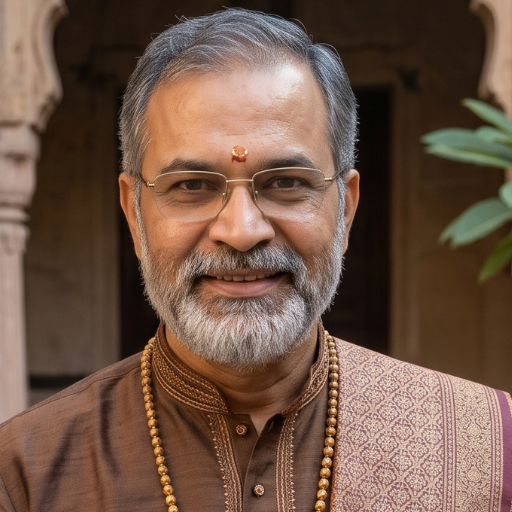
























For generations, science taught us that the universe is built from fundamental atoms containing electrons, protons, and neutrons acting as isolated point particles. However, string theory fundamentally challenges this classical framework, establishing instead that these subatomic entities are actually tiny, vibrating filaments of energy. The brilliant mind who helped shape and validate this complex framework is none other than India's celebrated physicist, Ashoke Sen. Despite his monumental contributions to theoretical physics, his name remains relatively unfamiliar to the general public because he deliberately avoids public attention and media glare.
His groundbreaking work earned him the prestigious Fundamental Physics Prize, one of the most lucrative scientific awards in the world. The prize carried a massive cash award of roughly twenty-seven and a half crore rupees, an amount nearly three times larger than a standard Nobel Prize. Yet, true to his remarkable humility, the veteran scientist continues to commute to his research institution in Prayagraj on a humble bicycle. Born in Kolkata in 1956, Sen grew up in an academic household where his father served as a physics teacher at Scottish Church College. Early biographical accounts suggest he was not viewed as an extraordinary child, but rather as someone driven by an intense, lifelong curiosity about how things work.
His formative schooling up to the eleventh grade was conducted entirely in Bengali, and his grasp of English during his early years was minimal. It was only upon reaching the eleventh grade that he first learned about the prestigious Indian Institutes of Technology, prompting him to dedicate serious effort toward mastering the English language. He subsequently completed his Bachelor of Science degree from Presidency College in Kolkata before moving on to IIT Kanpur for his Master's degree. This transition proved to be a turning point in his life, sharpening his intellectual capabilities and allowing him to make a lasting mark in academic research.
Following his studies at IIT, Sen secured a scholarship to pursue higher education abroad, earning his PhD from Stony Brook University in the United States. He subsequently conducted advanced postdoctoral research at top-tier global laboratories including Fermilab and Stanford University. Although he had lucrative career opportunities and could easily have chosen a comfortable, high-paying life in America, his deep attachment to India pulled him back. By the late 1980s, he returned to India and joined the Tata Institute of Fundamental Research in Mumbai, before eventually moving to the Harish-Chandra Research Institute in Prayagraj in 1995 to teach and conduct research.
Inside the campus in Prayagraj, Professor Sen leads an extraordinarily austere lifestyle, regularly commuting to work on a bicycle. He maintains no presence on any social media platforms, shows zero interest in media fame, and wears simple attire. When a phone call in 2012 informed him that he had been selected for the inaugural Breakthrough Prize in Fundamental Physics, which at the time carried a sixteen-crore-rupee award, many assumed his lifestyle would change. Instead, he remained completely grounded, continuing his daily bicycle commutes. He has since accumulated numerous international awards alongside the prestigious Padma Bhushan conferred by the Government of India.
To understand the significance of Professor Sen's discoveries, one must look at the two foundational pillars used to explain the universe: Einstein's theory of relativity for large-scale gravitational forces, and quantum mechanics for subatomic particles. String theory attempts to unify these two conflicting paradigms into a single mathematical framework, frequently earning the moniker Theory of Everything. Traditional physics teaches that matter consists of minute particles like electrons and quarks, but string theory proposes that probing deeper reveals tiny vibrating strings of energy. Professor Sen stands globally as one of the most respected authorities in this field, having revolutionized our understanding of string theory.
The untold journey of his academic life has drawn widespread appreciation, highlighting how a modest upbringing in Kolkata paved the way for groundbreaking global research. Shubham Mishra wrote on X detailing his academic progression from Presidency College to Stony Brook University and his dedication to theoretical physics.
During the early 1990s, string theory existed in five distinct and competing versions, leaving researchers puzzled over which formulation was correct. Professor Sen introduced the concept of S-Duality, demonstrating conclusively that these seemingly disparate theories were actually different facets of the same underlying reality. This pivotal breakthrough cleared the mathematical pathway for the eventual development of M-theory. Furthermore, he played a crucial role in explaining how string theory can be utilized to calculate the entropy of black holes.
Professor Sen also conducted extensive investigations into tachyon condensation, a phenomenon widely recognized in the physics community as the Sen conjecture. This theoretical framework further cemented his status as a titan in modern theoretical physics, bridging critical gaps in our comprehension of quantum fields and cosmic structures.