





















If you are growing tired of making the same everyday breakfast items and want to try something refreshing, the traditional Maharashtrian Ghavan makes for a wonderful option. Prepared primarily using rice flour, this dish turns out exceptionally thin and lacy, featuring crispy edges and a soft center when cooked properly. The best part about this recipe is that it does not require an extensive list of ingredients. All you need is some readily available rice flour, salt, water, and a little bit of oil from your kitchen pantry.
Across numerous households in Maharashtra, Ghavan is frequently prepared as a light morning meal or an evening snack. Despite its simple flavor profile, it tastes remarkably good when paired with coconut chutney, green chutney, or ketchup. If your children are often fussy about eating the same breakfast repeatedly, you can easily try this quick recipe to please their palates. Achieving the right consistency for the batter and maintaining the correct temperature of the griddle are the two most crucial steps in getting this dish right.
Ghavan holds a prominent place as a traditional Maharashtrian delicacy crafted mainly from rice flour. At first glance, it might remind you of a regular dosa, but the batter preparation and cooking technique are entirely different. The batter is kept quite runny, and upon hitting the hot pan, it naturally spreads out to form a distinct lacy pattern. The specialty of Ghavan is that it demands neither heavy spices nor hours of prior preparation, making it a lifesaver on busy mornings when you need to whip up something fast.
Although it is prepared in both sweet and savory variations across different regions, this particular guide focuses on the easy savory style. To make this recipe, you will need one cup of rice flour, roughly two to two-and-a-half cups of water, salt to taste, and some oil or ghee to grease the pan. While mixing the batter, it is always advisable to add water gradually rather than all at once to prevent the formation of lumps in the flour.
Start by taking a large mixing bowl and adding the rice flour to it. Pour in the water little by little while whisking continuously to ensure a smooth blend. The batter should be kept thin enough to flow easily over the griddle, maintaining a consistency similar to buttermilk. Stir in the salt according to your taste preferences and let the batter rest for a short while. Meanwhile, heat a flat griddle properly over a medium flame. Ensure the pan is not excessively hot, otherwise, the batter will stick or cook too quickly without developing the desired lacy texture.
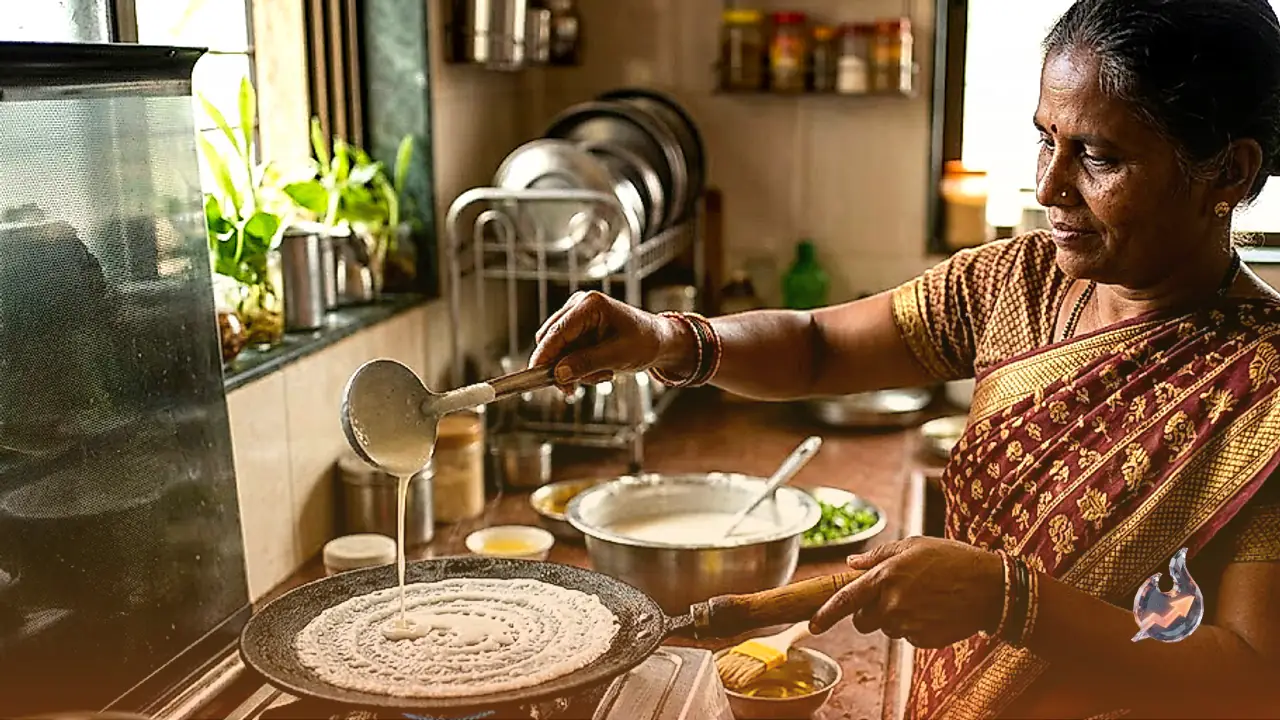
Once the griddle is heated adequately, apply a light coat of oil or ghee on its surface. Make sure to stir the batter thoroughly right before pouring, as the rice flour tends to settle down at the bottom if left undisturbed. Take a ladle full of the batter and pour it starting from the outer edges of the pan, moving in a circular motion. Avoid making the Ghavan too thick, as thinness is key to its texture.
After pouring the batter, drizzle a little oil around the edges and let it cook on medium-low heat. Once the top surface appears dry and the edges turn lightly golden and crispy, you can gently flip it to cook the other side as well. Keeping the flame too high will cause the outer layer to cook too fast while leaving the inside undercooked. If you are preparing Ghavan for the very first time, it is a good idea to test out one small piece first to gauge the heat of the pan and the thickness of the batter, adding more water if necessary.
Serving piping hot Ghavan alongside fresh coconut chutney is widely considered the best combination. Spicy coriander and mint chutney also pair wonderfully with it, while children usually enjoy dipping it in tomato ketchup. If you prefer, you can brush a little ghee over the top before serving. The greatest advantage of this recipe is its flexibility, allowing you to keep it plain for a light snack or serve it alongside accompaniments like curd and sabzi when you want a more filling meal.