





















When regular breakfast routines of fried pakoras or simple puris begin to feel monotonous, regional Indian culinary traditions offer deeply satisfying alternatives. One standout dish from Jharkhand is dhuska, a traditional staple that delivers a delightful contrast of textures. Featuring a crisp golden exterior and a light, airy, and soft interior, it is customarily paired with a flavorful and spicy potato-black gram curry known as ghugni. While its distinctive name often leads first-time cooks to assume it requires advanced kitchen techniques or lengthy preparation, the recipe is straightforward when approached with the right method and simple kitchen ingredients.
The biggest convenience of this recipe is that it relies almost entirely on staples routinely stocked in Indian pantries. Raw rice, lentils, and everyday aromatic spices come together to create an authentic regional feast. If you want to replicate this authentic flavor in your own home, following a structured preparation process ensures consistent success.
Selecting Ingredients and Blending the Perfect Batter
The foundation of a properly puffed and crispy dhuska lies in the proportion and consistency of its batter. The primary components are raw rice, split Bengal gram (chana dal), and split black gram (urad dal). To enhance the aromatics and build heat into the base mixture, fresh ginger, garlic cloves, and green chilies are incorporated directly into the grind. The seasoning is rounded out with turmeric powder, red chili powder, whole cumin seeds, and plain salt according to taste.
Begin the process by thoroughly rinsing the raw rice, chana dal, and urad dal under clean running water until the liquid runs clear. Place them in a bowl with ample water and allow them to soak undisturbed for approximately 3 to 4 hours. Once the grains and pulses have softened sufficiently, strain out all the excess soaking water. Transfer the drained mixture into a blender jar alongside the peeled ginger pieces, whole garlic cloves, and chopped green chilies. Grind everything together, adding small splashes of water gradually as needed. Take care to monitor the moisture level so the batter remains balanced, avoiding a watery blend while ensuring it does not turn into an overly dense paste.
Whisking the Mixture and Allowing Rest Time
Transfer the finely ground paste from the blender into a wide mixing bowl. Sprinkle in the turmeric powder, red chili powder, whole cumin seeds, and the measured salt. Using a broad spoon or a wire whisk, beat the batter vigorously in a single direction for roughly 2 to 3 minutes. This continuous whisking step is essential because it incorporates tiny air pockets into the mixture, making the overall structure light. This trapped air is what allows the dhuska to expand generously and develop a soft crumb when dropped into hot cooking oil.
Once whisked, cover the bowl and allow the batter to rest quietly for about 10 to 15 minutes. After this resting window, check the thickness again. Because the soaked pulses continue to absorb moisture, the mixture may thicken slightly. If it feels too stiff to drop smoothly, stir in a tiny splash of water to restore the correct pouring consistency.
Cooking the Spicy Potato and Chickpea Ghugni
The classic accompaniment that elevates dhuska to a wholesome meal is spicy ghugni. To prepare this side dish, keep boiled black chickpeas and boiled potatoes ready ahead of time. Heat an adequate quantity of mustard oil in a pressure cooker until it reaches a faint smoking point. Temper the oil by adding whole cumin seeds, a bay leaf, and your preferred whole spices.
Add finely chopped onions to the hot oil and sauté over medium heat until they take on a soft, light golden hue. Next, incorporate diced tomatoes, turmeric powder, red chili powder, and salt. Continue cooking the mixture until the tomatoes break down completely and release their oil along the edges of the pot.
Once the masala base is thoroughly cooked, introduce the boiled black chickpeas and lightly crush the boiled potatoes by hand before tossing them into the cooker. Sauté the chickpeas and potatoes together with the spice paste for 1 to 2 minutes so they absorb the underlying flavors. Pour in the required volume of water to create a semi-thick gravy, then secure the pressure cooker lid. Cook on medium flame until 2 to 3 whistles sound, then switch off the burner. Allow the residual steam pressure to subside completely before opening the cooker, and finish the curry with a sprinkle of garam masala and finely chopped fresh coriander leaves.
Frying Dhuska to Golden Perfection
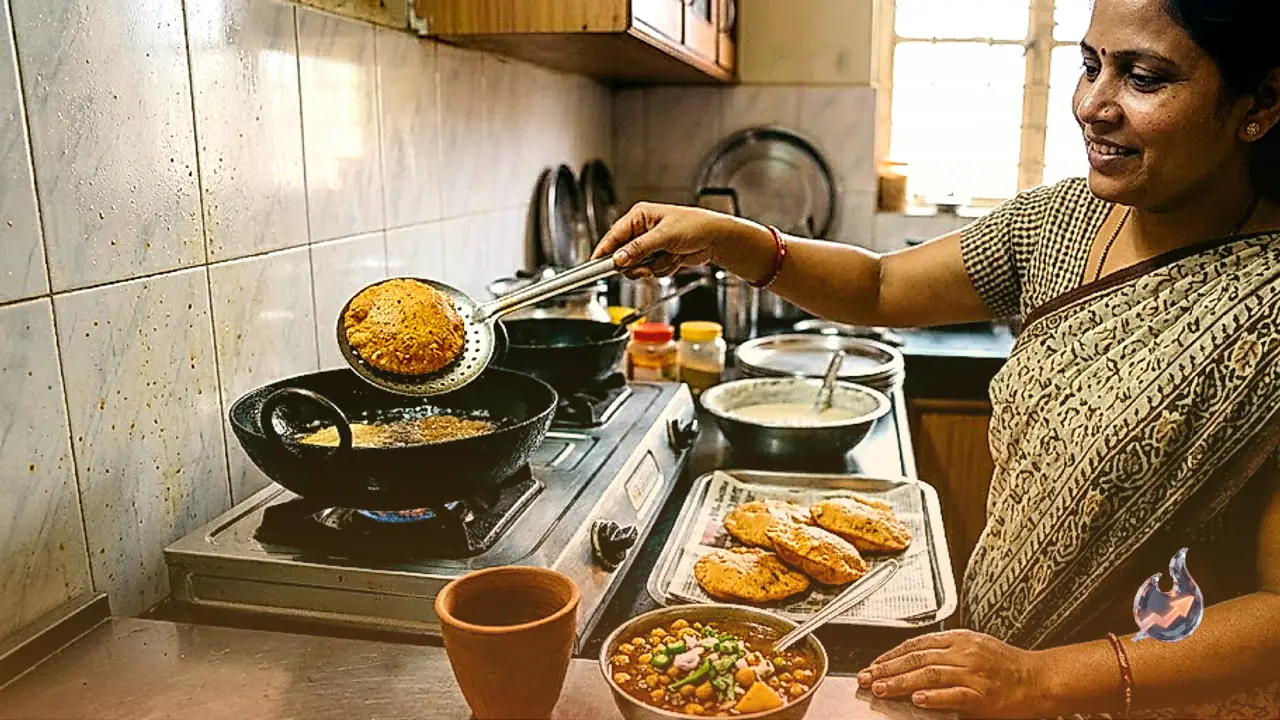
With the ghugni ready, turn your attention to deep frying the dhuska. Pour sufficient cooking oil into a deep pan or kadhai and bring it to a steady heat. Before ladling, give the rested batter a gentle stir. Fill a deep ladle with the batter and pour it steadily into the center of the hot oil. Almost immediately upon hitting the oil, the mixture will begin to rise toward the surface and puff up.
Maintain the cooking flame on medium throughout the process. Frying at a moderate temperature ensures the exterior develops a golden crunch while the core cooks through evenly without staying raw or doughy. Once the underside turns crisp and lightly colored, flip it over gently. Allow both sides to attain a uniform light golden finish before removing the fried dhuska with a slotted spoon to drain excess oil.
Serving Suggestions and Critical Tips
Serve the piping hot dhuska immediately alongside generous bowls of spicy chickpea and potato ghugni. The platter can be garnished with freshly chopped onions, sliced tomatoes, and a wedge of lemon to add freshness and zest. The crisp outer shell combined with the airy, soft center dipped into robust ghugni turns a regular morning meal into a memorable feast.
For those preparing this dish for the very first time, temperature control and batter viscosity remain the two most important factors. A batter that is too runny will disperse messy droplets into the oil, while oil that is excessively hot will burn the outer crust before the interior cooks. Keeping the batter at a pouring consistency and frying steadily over medium heat guarantees the ideal texture every time.