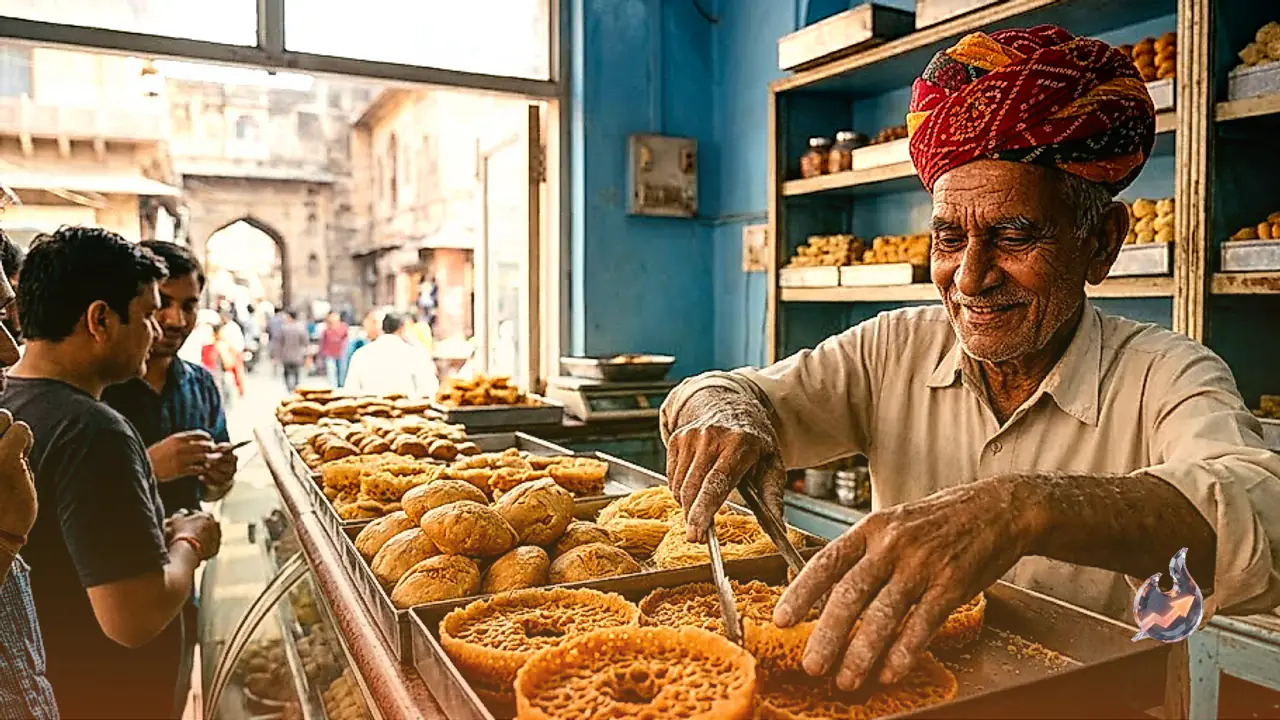























With the arrival of Sawan and the festive occasion of Raksha Bandhan, the rich aroma of traditional sweets begins to fill homes across North India and Rajasthan. Among these festive delicacies, ghewar holds a special significance. While many prefer purchasing it from sweetshops, making this crispy sweet at home using pure ingredients elevates the festive celebrations. Garnished with creamy rabri, chopped almonds, pistachios, and aromatic cardamom, ghewar offers an irresistible taste. Although people often assume that crafting ghewar requires a specialized deep mold, it can be easily prepared using ordinary kitchen utensils found in every household.
Selecting Utensils and Essential Ingredients
Before beginning the preparation, gathering the right ingredients and equipment is essential. The recipe requires all-purpose flour (maida), pure ghee, ice-cold water, a few drops of lemon juice, and sufficient oil or ghee for deep frying. For sweetness and garnishing, one-string sugar syrup, chilled rabri, sliced almonds, pistachios, and cardamom are prepared. In place of a traditional ghewar mold, a deep round steel vessel or a small heat-safe steel bowl (katori) can be placed inside a deep frying pan (kadhai) to shape the sweet safely in hot oil.
Preparing the Honeycomb Batter Step by Step
The key to achieving the signature texture of ghewar lies entirely in its batter. To prepare it, take pure ghee in a large mixing bowl, add ice-cold water, and whisk thoroughly until it transforms into a smooth, creamy texture. Next, gradually incorporate all-purpose flour while continuous whisking to ensure no lumps are formed. Slowly pour in more cold water to achieve an extremely thin and smooth consistency, finishing with a few drops of lemon juice. The batter must be significantly thinner than standard fritter batter, as this fluidity enables it to splatter immediately upon contacting hot oil, creating the iconic honeycomb network.
Frying Technique Using a Household Bowl
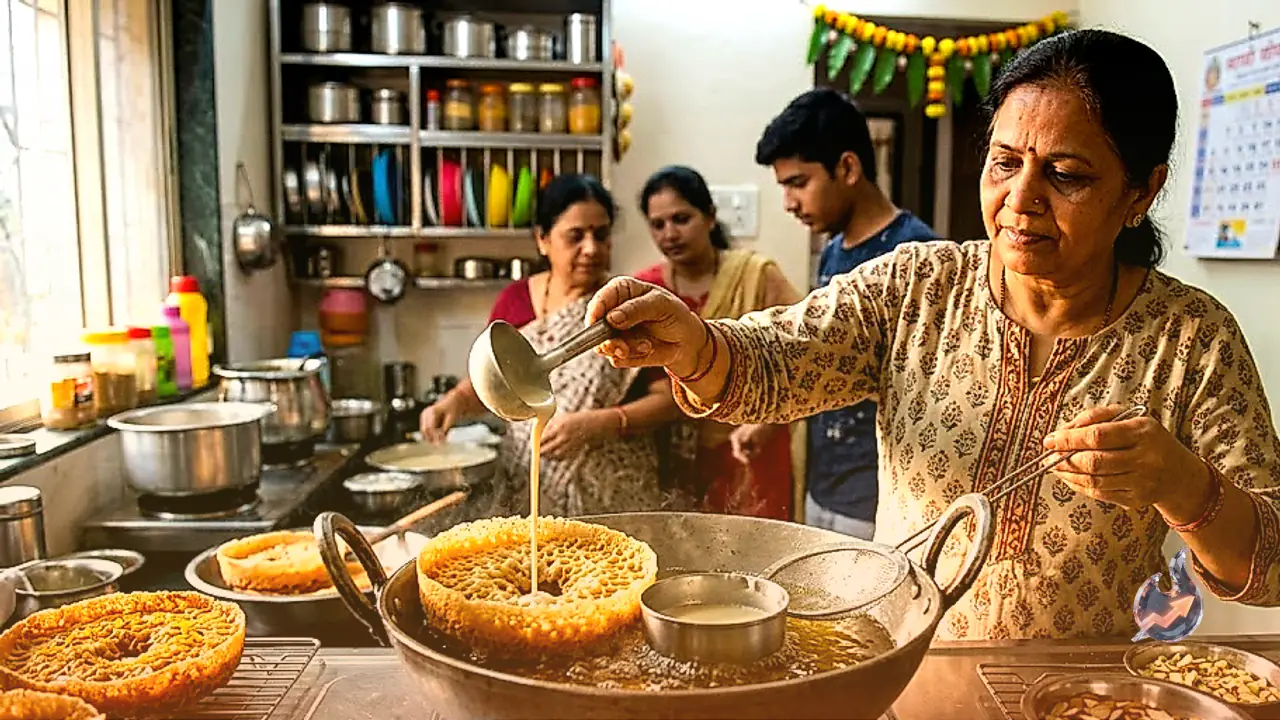
Heat oil or ghee in a deep kadhai over the stove. Place a clean, heat-safe small round steel bowl in the center of the kadhai to act as a mold while managing the oil temperature. Holding the container slightly higher above the pan, pour the batter into the center of the bowl in a very thin, steady stream. Dropping the batter from a height allows it to spread rapidly across the hot oil and form a porous, delicate layer. Once the initial layer firms up, pour another thin stream of batter directly over it, repeating the process to build multiple thin layers. If needed, use a thin steel spoon or a skewer to maintain the central hole. Fry until the ghewar turns golden brown and crispy, then carefully extract it and let the excess oil drain completely. Finish by coating it with light or one-string sugar syrup and topping it with chilled rabri, pistachios, almonds, and cardamom.
Crucial Precautions for Temperature and Texture
Maintaining proper oil temperature throughout the frying process is vital for success. The thinner the batter, the finer the resulting honeycomb structure will be. If the oil is excessively hot, the batter layers shrink instantly upon contact, ruining the network structure. On the other hand, if the oil is insufficiently heated, the ghewar will fail to become crispy and will absorb excessive oil instead. Therefore, maintain the flame strictly between medium and medium-high heat while adding the batter gradually in small quantities. Following these precise steps ensures a delicious, sweetshop-quality crispy ghewar at home without needing specialized equipment.