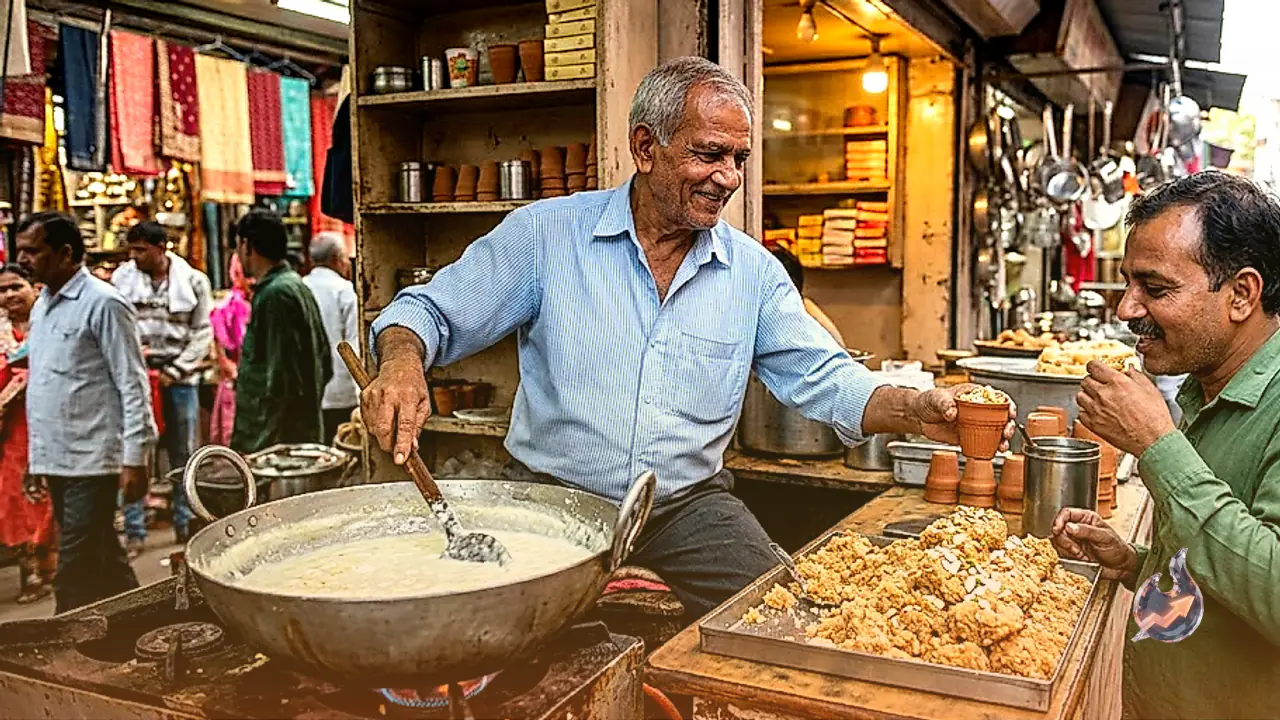





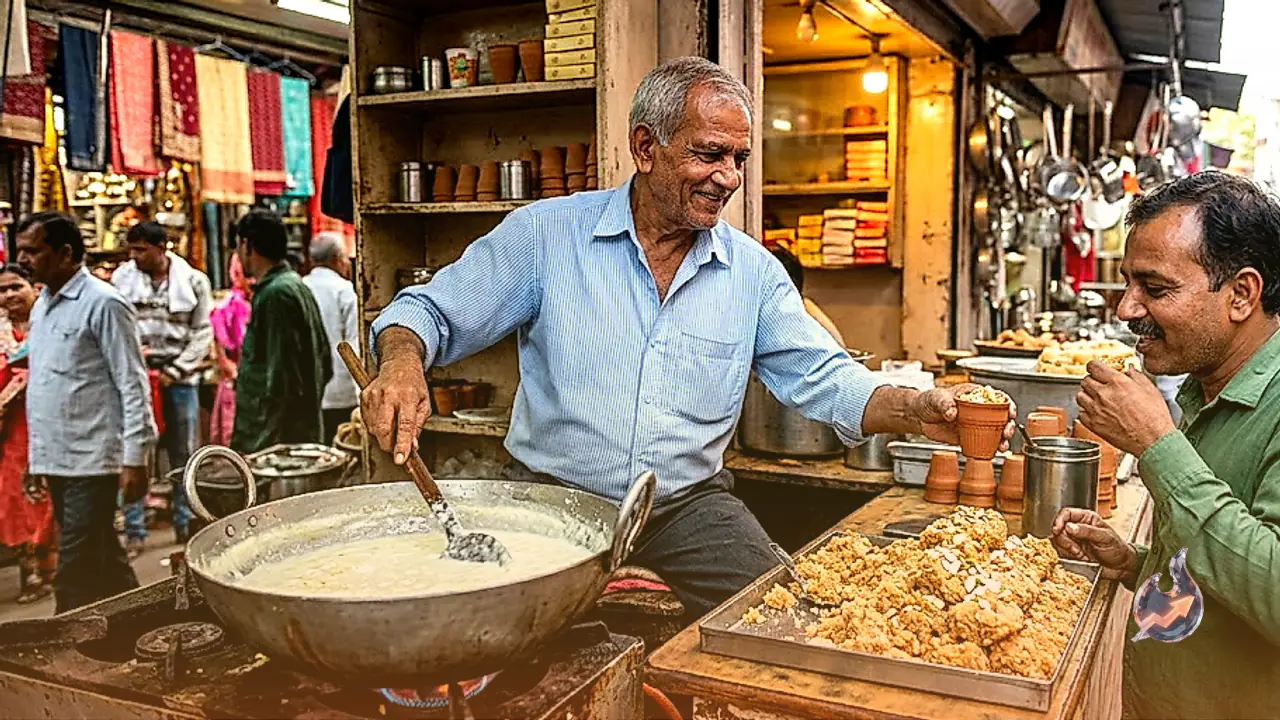
















The festival of Rakshabandhan, celebrating the deep bond of love and affection between brothers and sisters, is fast approaching. On this special day, there is a cherished tradition of sweetening the brother's mouth right after the sacred thread of rakhi is tied. If you want to avoid purchasing sweets from the market this time and instead prepare something special right at your home, traditional Rajasthani Ghevar stands out as an exceptional choice. Crispy on the outside while remaining light and spongy on the inside, Ghevar is a quintessential festive treat. Let us explore the easy method to prepare authentic Rajasthani Ghevar at home.
Ingredients Needed For Making Ghevar
To craft this wonderful sweet, you will need a specific set of components. The core ingredients include 2 cups of all-purpose flour, 4 to 5 tablespoons of ghee, 4 to 5 ice cubes, and 4 cups of chilled water, along with adequate ghee or oil designated for frying. For the sugar syrup, you will require 1 cup of sugar and half a cup of water. To garnish and elevate the taste, you can utilize cardamom powder, chopped almonds, pistachios, and a little bit of mawa.
Step 1: Preparing The Smooth And Thin Batter
The foundation of a great Ghevar lies in its batter. First of all, take a large mixing bowl and whisk the ghee and ice cubes together thoroughly until the mixture takes on a light and creamy appearance. Once it achieves this texture, introduce the all-purpose flour gradually. Keep pouring in the cold water little by little to achieve a runny batter. The batter must neither be excessively thick nor contain any lumps. It needs to be wonderfully fluid and flowing freely, as this specific consistency creates the signature honeycomb texture of Ghevar.
Step 2: Making The Sugar Syrup
Place a pan over medium heat and cook the sugar and water together. Once the sugar dissolves completely, let it simmer for a few more minutes. The syrup for Ghevar should not be made overly thick. Turn off the heat source and set the finished syrup aside to cool.
Step 3: Frying Technique In Hot Oil Or Ghee
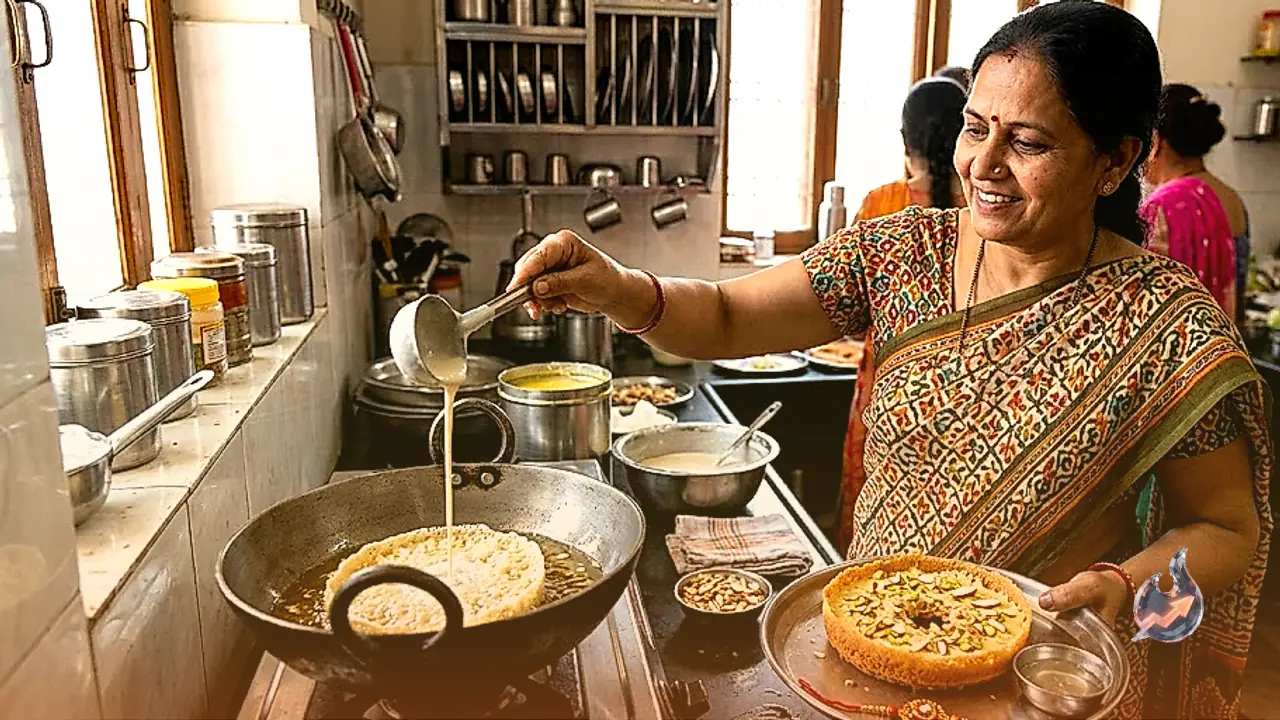
Take a deep and heavy-bottomed vessel and heat the ghee or oil. The oil must be sufficiently hot, though it should not smoke excessively. Using a small glass or ladle, pour a small stream of batter right into the center of the hot fat from a little height. Exercise caution while pouring the batter, as the hot oil can splatter. Leave a small open space in the middle to maintain the characteristic central hole. After a few seconds, you can pour a little more batter. Continue this routine to build up the intricate layered lattice work. Once the Ghevar turns golden brown and crisp, carefully lift it out and allow any excess oil or ghee to drain off completely.
Step 4: Garnishing And Finishing Touches
Allow the freshly prepared Ghevar to cool down slightly. Afterward, drizzle the sugar syrup evenly over it, making sure not to oversaturate it so that the crunch is preserved. Finally, adorn the sweet with mawa, chopped almonds, pistachios, and aromatic cardamom powder.
Key Tips For Perfect Results
While making Ghevar, always keep in mind that the batter should remain cold and thin, while the frying medium must stay very hot. Do not pour an excessive amount of batter into the pan all at once. If you are attempting this recipe for the very first time, crafting smaller-sized Ghevars will prove much easier to handle. Celebrate this Rakshabandhan by enjoying homemade crispy Rajasthani Ghevar with your brother and family.