





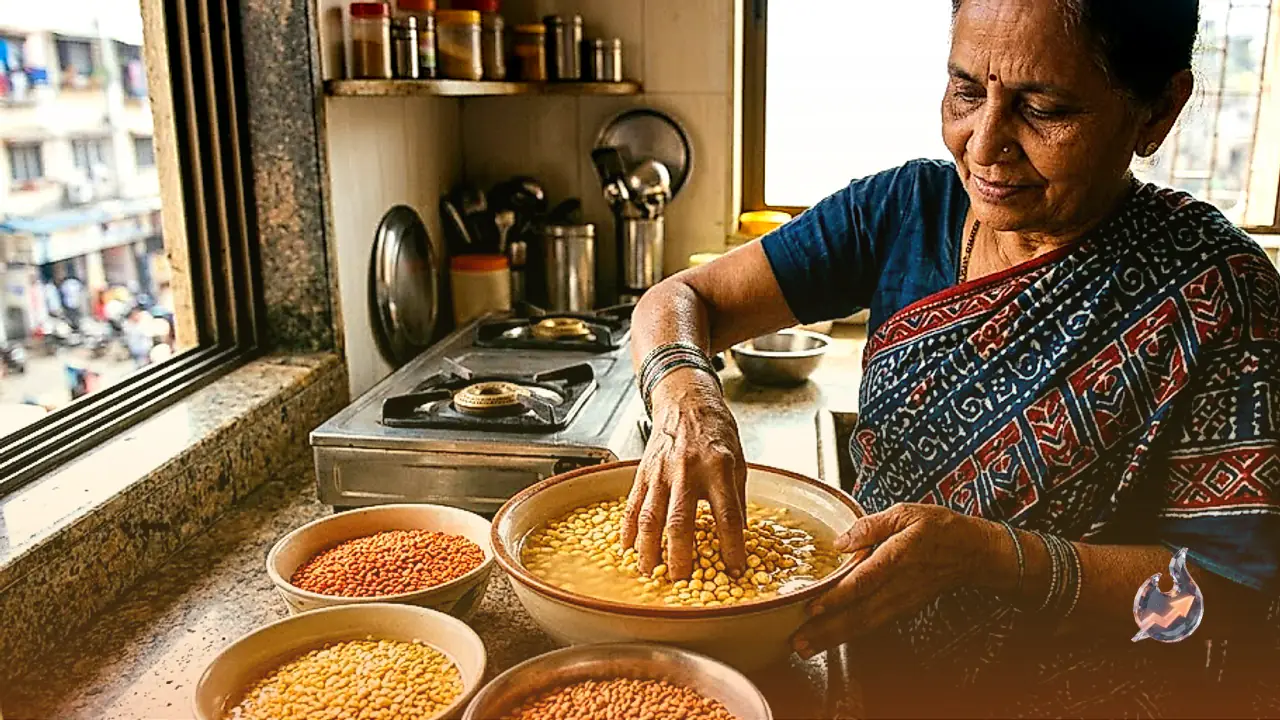

















Before a pot of dal goes on the stove, most home cooks face the same question, how long should this particular lentil actually sit in water. Some soak every lentil overnight out of habit, while others skip soaking altogether, but the truth is that each dal has a different size, texture and outer skin, so the soaking time needed for it is different too.
Why soaking a lentil actually helps
Soaking isn't just about saving cooking time. A soaked lentil cooks faster, turns softer once cooked, and becomes easier for the body to digest. Some of the compounds in the lentil dissolve into the water during soaking, which is part of why soaked dal is gentler on digestion, especially for people who find heavier meals harder to process. This is why washing and soaking dal is usually recommended as the first step, even though the exact duration is not the same for every variety.
Yellow moong needs almost no soaking, whole moong needs a little
Yellow split moong dal is counted among the fastest cooking lentils, so it does not need to sit in water for hours before going into the pot. Whole green moong, on the other hand, has a thin skin on it, which is why soaking it for a few hours works better and lets it cook through evenly. Anyone sprouting moong at home also needs to soak it well first, since that soaking is what actually kicks off the sprouting process.
Masoor dal rarely needs an overnight soak
Masoor dal is another lentil that cooks quickly without much soaking, so there is no real need to leave it in water overnight in everyday cooking. If someone wants it to turn out extra soft, a short soak can help, but it is not a mandatory step and daily cooking works fine without it.
Soaking chana dal cuts down the cooking time
Chana dal is noticeably harder than several other lentils and holds its shape even after it is cooked. Soaking it for a few hours lets the grains soften all the way through, so it cooks faster and more evenly on the stove. That head start from soaking is what brings down the overall time chana dal spends cooking.
Why whole urad dal needs several hours in water
Whole urad dal has a noticeably tougher outer skin compared to other lentils, which is why soaking it for several hours before cooking is considered beneficial. It is also soaked for a long stretch when preparing idli or dosa batter at home, since that soaking makes the dal easier to grind and helps the batter ferment properly afterwards.
So does every dal really need soaking
The short answer is no. There is no single rule that applies to every lentil. Washed, smaller lentils cook comfortably even without soaking, while whole and larger-grained lentils take longer to cook and do need to be soaked in advance. A simple way to remember it is that the bigger and harder the lentil, the longer it needs to soak. It also helps to know which lentil you are cooking before you start, since that makes it easier to soak it for the right amount of time instead of over soaking or under soaking it. Once the lentil has soaked, it is better to cook it in fresh water rather than the water it soaked in, since that keeps both the taste and the nutritional quality of the dal intact.