






















With growing health awareness across the country, people are increasingly incorporating millets alongside wheat into their daily diets. Among these ancient grains, ragi, also known as finger millet or madua, has emerged as a popular choice due to its high nutritional value. In Khandwa, Madhya Pradesh, a group of women has started an initiative called Aarambh Multigrain to serve traditional coarse grain meals while showcasing how nutritious ragi rotis can be made easily at home without crumbling.
The Rise of Aarambh Multigrain in Khandwa
The Aarambh Multigrain initiative was launched by a collective of women in Khandwa dedicated to promoting traditional healthy food. Smita Baroule stated, "During COVID, I felt that people should return to the nutritious foods of earlier times." Driven by this vision, she began preparing multigrain rotis by combining jowar, maize, bajra, and ragi. A standout feature of Aarambh Multigrain is that the women handle every step of the process themselves, from grinding the flour to rolling and cooking the rotis by hand. The effort received an enthusiastic response right from the start, attracting senior citizens, young professionals, and health-conscious residents daily.
Nutritious Multigrain Thali Offered for 100 Rupees
Aarambh Multigrain serves a complete, wholesome thali priced at 100 rupees. The meal includes fresh ragi or multigrain rotis accompanied by seasonal vegetables, dal, and rice. Customers also have the option to choose rotis made exclusively from jowar, maize, or bajra. Rahul Pawar said, "Making ragi rotis at home feels difficult, so coming here gives me a great opportunity to eat them." In addition to rotis, the kitchen prepares popular breakfast items like ragi idli, while ragi flour can also be used to make dishes such as dosa and cheela.
Health Benefits and Nutritional Profile of Ragi
Ragi is widely recognized as a nutritional powerhouse packed with essential dietary components. It contains rich amounts of fiber, calcium, and protein, which contribute to bone strength, improved digestion, and sustained energy levels throughout the day. While pre-packaged ragi flour is readily available in commercial markets, many health-conscious individuals prefer preparing pure ragi flour at home to make fresh, additive-free rotis.
Steam Method for Preparing Ragi Dough at Home
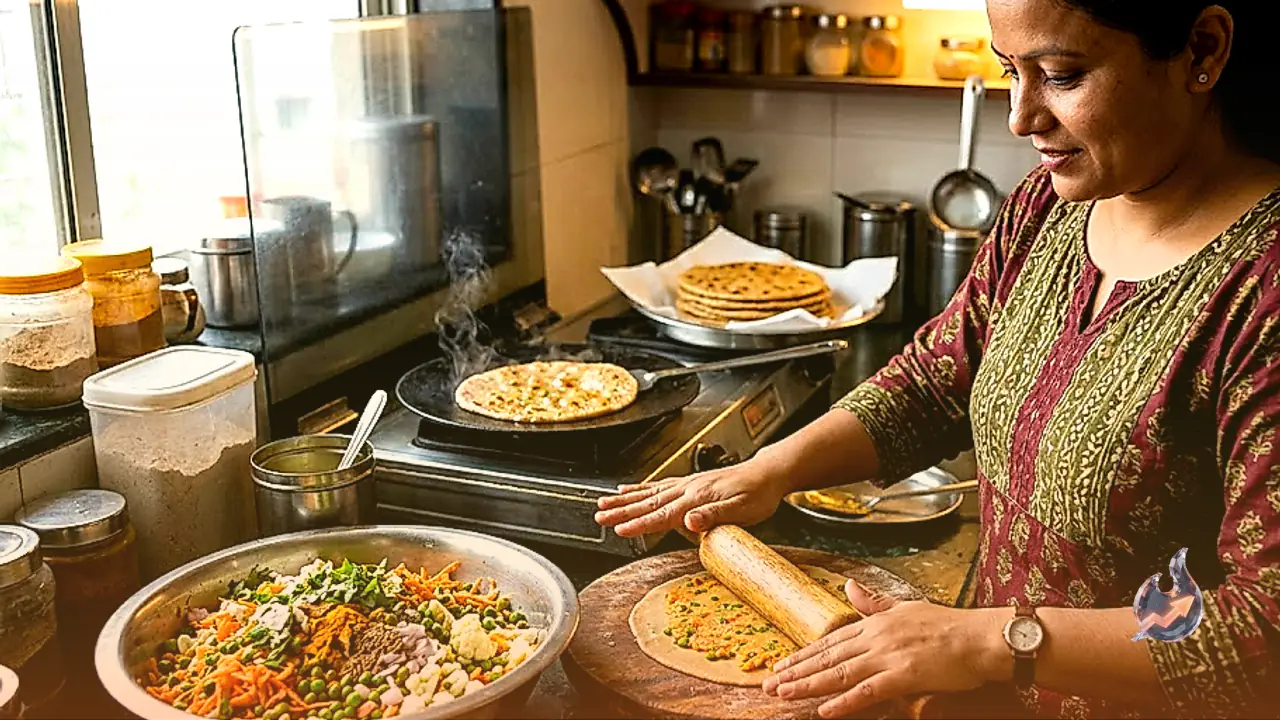
Making soft ragi rotis at home requires a specific approach because ragi flour lacks gluten and does not bind as easily as wheat flour. Using hot water and steam is the most effective technique to overcome this difficulty. To begin, heat water in a cooking vessel and add salt to taste along with a small amount of ghee. Once the water reaches a rolling boil, reduce the flame to low and stir in the ragi flour using a spoon until the flour absorbs all the water. Turn off the gas stove immediately and cover the vessel with a lid for about 5 minutes. Allowing the flour to sit in the trapped steam partially cooks it, making it far more pliable and significantly easier to knead.
Step by Step Process to Roll and Cook Soft Ragi Rotis
Transfer the warm, steamed flour onto a large shallow dish or parat. Moisten your hands with a little water or ghee and knead the dough continuously for 2 to 3 minutes until it becomes smooth and uniform. If the dough feels too dry during kneading, gradually sprinkle small amounts of lukewarm water until the desired soft texture is achieved. Next, divide the dough into small portion balls. Since rolling ragi dough directly with a rolling pin can cause it to tear, shape the rotis by gently patting the dough balls with your hands on a plastic sheet or a damp cloth. Place the shaped roti onto a heated tawa and cook both sides thoroughly until well done. Finish by applying a light spread of ghee on top before serving hot.