

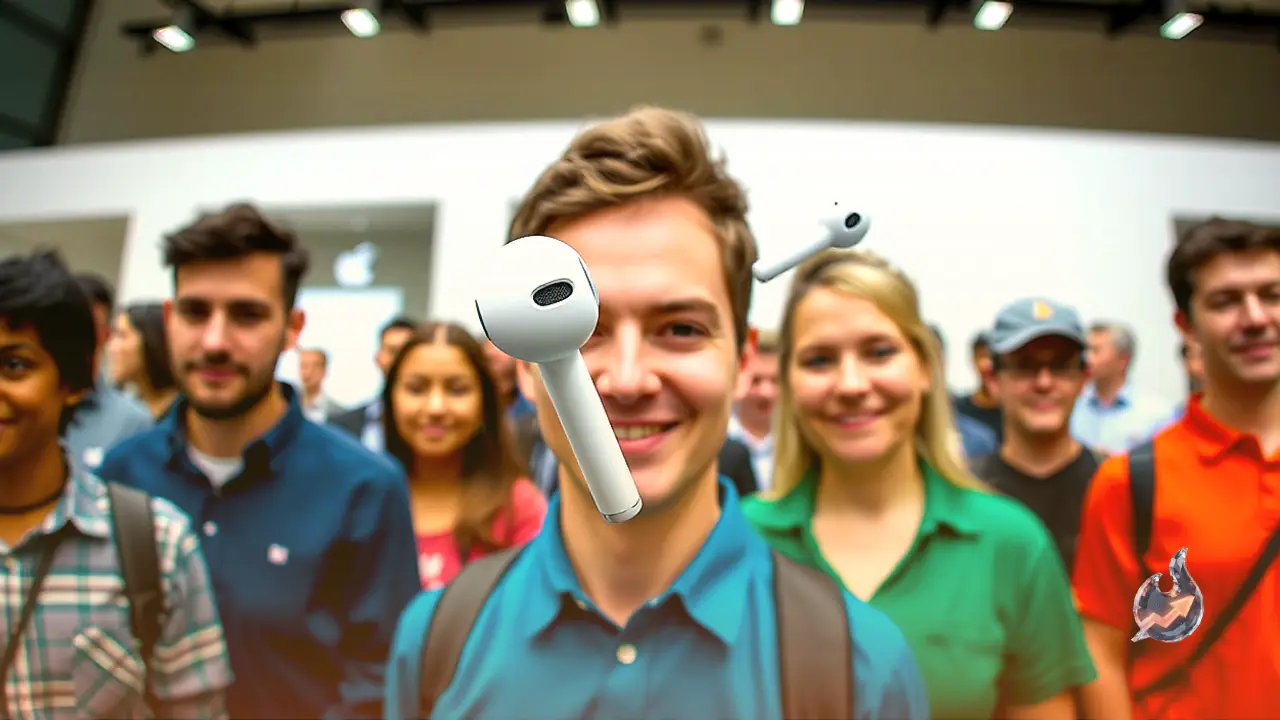





















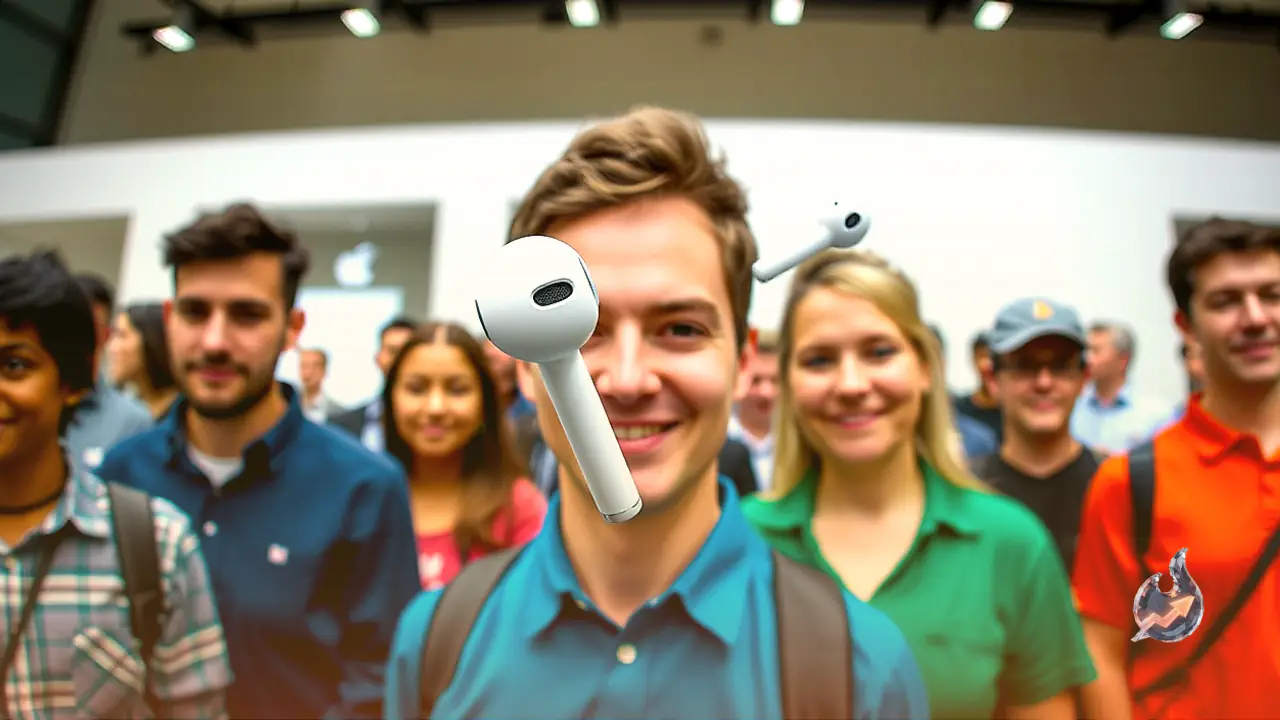

Apple has updated its foundational true wireless lineup with the launch of the Apple AirPods 5, serving as the direct replacement for the previous Apple AirPods 4. While the outgoing generation was divided between a standard open edition and a separate variant featuring Active Noise Cancellation, the new AirPods 5 family incorporates ANC across all of its variants. Despite this unified noise cancellation feature, Apple still segments the range into two distinct tiers. The upgraded Apple AirPods 5 with Wireless Charging Case brings a wireless charging container, integrated tracking tools to locate misplaced earbuds, and physical on-stem volume swipe controls. Consistent with the brand's long-standing design philosophy, the deepest software integration and core functionalities remain strictly tied to the broader Apple hardware ecosystem.
Ergonomics, Stability, and Everyday Exercise
Weighing next to nothing, these earbuds settle loosely into the ear canal without the invasive pressure of silicone tips. During moderate physical activities like brisk walking or casual jogging, the fixed outer shells stay surprisingly planted. However, because the rigid unibody chassis comes in only a single fixed size, the overall fit stability can vary dramatically depending on individual ear anatomy. Dynamic physical exertion involving rapid head movements, such as sprints or burpees, quickly exposes the limitations of this open enclosure, making them far less reliable for intense fitness routines. On the durability front, Apple provides certified dust and water protection across both the individual buds and the carrying case, ensuring protection against sweat, damp weather, and unexpected rain. The compact footprint of the charging case also ensures easy pocketability throughout daily transit.
Commuting Performance and Real-World Battery Longevity
For daily travel and public transit, the earbuds deliver a remarkably capable acoustic isolation experience. Despite the absence of a passive acoustic seal, the active noise cancellation attenuates sound impressively across nearly the entire audible spectrum, competently handling passing street bustle, airplane cabin hum, and general pedestrian chatter. The primary acoustic weakness rests in the deep sub-bass frequencies, where heavy engine rumbles can still partially filter through. Long-distance comfort relies entirely on whether the one-size outer contour matches your cartilage. Regarding endurance, the version equipped with the wireless charging case delivers 5.1 hours of continuous playback before requiring a recharge. While this demands an occasional pause inside the case on prolonged cross-country flights, the case supplies additional reserves to extend overall playback up to 22.5 hours.
Workplace Utility, Audio Leakage, and Microphone Dynamics
Inside shared office environments, the earbuds provide strong utility by muting conversational chatter from nearby colleagues. Acoustic leakage is kept to an absolute minimum, ensuring that co-workers sitting at adjacent desks will not overhear playback unless audio is pushed to extreme volumes in a silent environment, where only a thin, treble-heavy whisper escapes. The biggest operational limitation lies in microphone fidelity across diverse platforms. When paired with standard non-Apple hardware such as a Windows laptop, voice pickup lacks full-bodied resonance and clarity, struggling to isolate human speech from loud background interruptions like passing trains. When linked to an iPhone, voice processing improves substantially, yielding balanced speech reproduction and effective ambient suppression. For those operating within the Apple ecosystem, seamless automatic switching among devices tied to the same Apple account adds considerable practical value.
Acoustic Profile, Tuning, and Frequency Consistency
Sound reproduction follows an intentionally flat, mid-forward tuning profile. Mid-range components, including vocal lines and acoustic instruments, are presented with natural clarity and accurate spatial placement across a tightly matched stereo field. On the other hand, the low bass frequency response sits at an underemphasized -5 dB, depriving heavy basslines and electronic kick drums of visceral thump, while treble frequencies are similarly dialed back by -5 dB, resulting in somewhat subdued high-end sparkle on percussion cymbals. Users connected to compatible Apple hardware benefit from Adaptive EQ, which dynamically lifts low and high frequencies during lower listening volumes. Furthermore, the earbuds exhibit exceptional frequency response consistency across reseats, ensuring that audio characteristics remain practically identical every time the buds are placed in the ear.
Gaming Latency and Connectivity Constraints
Gamers will find these wireless earbuds ill-suited for competitive or fast-paced gaming environments. The hardware lacks support for low-latency wireless adapters or proprietary non-Bluetooth connections, and standard Bluetooth transmission exhibits noticeable latency that disrupts visual-audio synchronization. While non-demanding casual mobile titles and turn-based role-playing games remain playable, fast-reaction titles suffer from audible delay. Additionally, the design provides zero support for wired listening modes, operating entirely as a truly wireless setup.