




















The arrival of the iPhone 18 Pro and iPhone 18 Pro Max introduces focused hardware refinements to Apple's top-tier smartphone family. While marketing material highlights sweeping advancements, a closer look at the devices shows a more calculated evolution. Rather than overhauling the core formula, the hardware targets refined daily performance and specific photographic controls aimed directly at serious creators.
Endurance and Everyday Battery Consistency
Battery reliability has served as a cornerstone of the Pro lineup over several generations, and that trend continues with these newest releases. The larger iPhone 18 Pro Max stands out due to its higher battery density. Under typical day-to-day handling involving approximately five hours of active screen time, the device retained roughly 50 percent charge by nighttime, comfortably powering through an entire second day on that original charge cycle.
The standard iPhone 18 Pro handles daily demands similarly well. After a standard routine of communication and browsing, the smaller model reached the evening with approximately 40 percent remaining capacity. While the progression over previous models feels evolutionary rather than revolutionary, battery endurance remains dependable across both sizes.
Processing Upgrades with the A20 Pro Silicon
Under the chassis sits the new A20 Pro processor, carrying forward Apple's custom silicon design. The hardware manages background multitasking, intensive applications, and navigation without hesitation or thermal stutter. In structured synthetic benchmark evaluations, the A20 Pro demonstrates a surprisingly wide performance gap over the A19 Pro silicon found in the previous 17 lineup, ensuring headroom for demanding software workflows.
Refined Dynamic Island and Aesthetic Changes
On the front display, the Dynamic Island enclosure housing the front-facing camera and Face ID hardware appears visibly smaller. Taking advantage of the modified cutout, Apple expanded its Live Activities interface to accommodate three concurrent services simultaneously, an increase from the previous limit of two. This change allows users to check navigation routes via Apple Maps, maintain an active phone call, and track an incoming DoorDash delivery without cluttering the screen.
Cosmetically, the lineup introduces a deep burgundy finish. While understated, it contrasts with the more vibrant, playful finishes of the past, such as the Cosmic Orange seen on the preceding generation. The most consequential industrial design shift, however, rests inside the primary rear camera module.
The Mechanics of Variable Aperture and Optical Depth
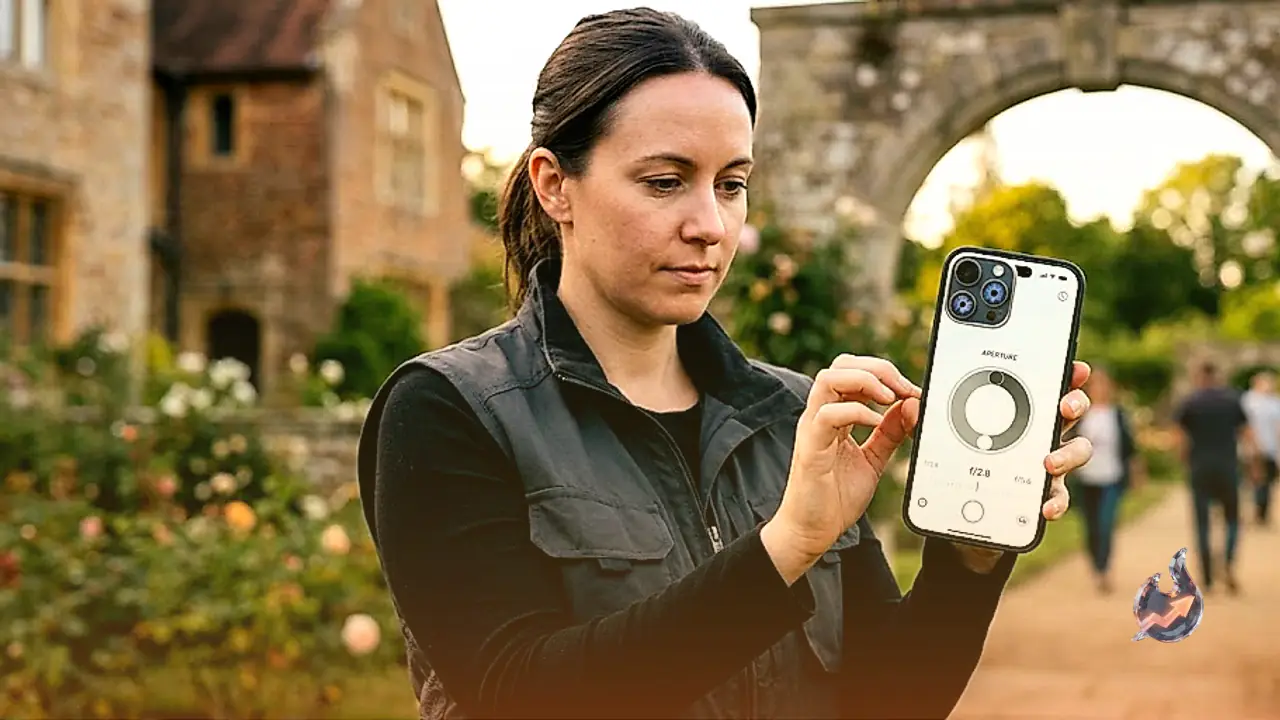
The headline feature of the iPhone 18 Pro series is the integration of a physical variable aperture inside the primary camera. Miniature mechanical blades adjust physically to regulate the volume of light hitting the imaging sensor. Widening the aperture fully to f/1.48 allows substantial light to flood the sensor, resulting in cleaner exposures in low-light environments and decreasing shutter wait times during Night Mode captures.
Crucially, opening the lens to f/1.48 produces true optical bokeh, generating a natural background blur directly from lens physics rather than artificial machine-learning algorithms. Dialing the mechanism down toward f/4 tightens the depth of field, bringing surrounding environment details into crisp, uniform focus. Because manual aperture values can confuse mainstream users, the camera software defaults to an automatic setting out of the box.
Native Shutter Controls and Real-World Camera Trade-Offs
For users accustomed to standalone cameras, the native Camera interface now offers immediate toggles for lens aperture and shutter speed. Utilizing the natural f/1.48 blur reduces the need for the computational Portrait mode, though the resulting narrow focal plane can make peripheral image areas appear slightly less sharp than on the iPhone 17 Pro. Apple still retains the software Portrait mode for instances where users want to introduce artificial blur after capturing the shot.
The built-in shutter speed adjustment also expands creative possibilities without requiring specialized third-party camera software. Selecting a one-second exposure enables motion blur and shutter drag effects directly from the stock application, though bright outdoor shooting requires an external neutral density filter to prevent overexposure.
Comparative Performance Against Pixel 11 Pro
Side-by-side photographic comparisons between the iPhone 18 Pro and Google's Pixel 11 Pro reveal distinct image processing philosophies. The iPhone exhibits a tendency to over-brighten naturally dark environments, which can wash out intentional moody shadows. In contrast, the Pixel 11 Pro preserves ambient shadows more accurately, albeit with slightly elevated black levels that produce a matte look. The iPhone also faces challenges in high-contrast backlit scenarios where the Pixel maintains better tonal balance.
Users can manually step the aperture across four distinct stops or leave the system on automatic. Supported by customizable Photographic Styles and post-capture depth editing for photos and video, the camera delivers rewarding flexibility. Without completely reinventing sensor sizes or optical glass, the inclusion of adjustable physical aperture blades provides creative shooters with genuine tactile control.