























Smart bird feeding technology has undergone a notable shift toward affordability, transforming what was once an expensive backyard hobby into an accessible pastime. Birdbuddy pioneered the category in November 2020 through a Kickstarter campaign that introduced the first app-connected, AI-powered smart feeder. Birdfy entered the fray in 2021 with its initial camera-equipped feeder. Today, both brands dominate the smart backyard wildlife segment, offering extensive lineups that include smart bird baths and connected nesting boxes. Recent product launches from both manufacturers now allow enthusiasts to secure a capable smart feeder experience for under $100, a category where comparable hardware previously commanded $200 or more.
The Entry-Level Contenders
Designed primarily for beginners and price-conscious consumers, Birdfy’s Rookie and Birdbuddy’s Nook present two distinct approaches to entry-level hardware. The Birdbuddy Nook retails at $99, sitting roughly $20 above the Birdfy Rookie. Across a four-week backyard evaluation period, both feeders demonstrated distinct design philosophies, balancing unique strengths against notable trade-offs. While the Rookie offers a straightforward setup with zero-cost automated identification, the Nook delivers superior weatherproofing and significantly better optical performance, despite occasionally missing quick visits from birds.
Birdfy Rookie: Practical Seed Capacity and Hardware Flaws
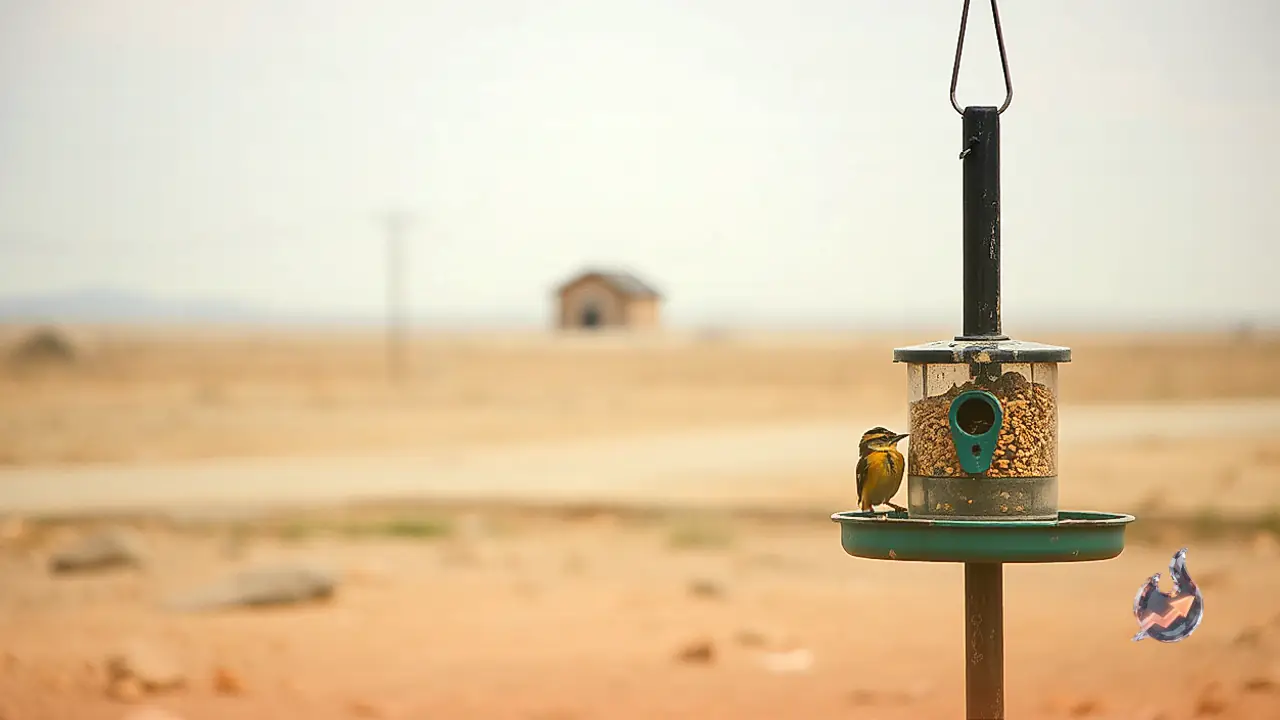
Launched in October of last year, the Birdfy Rookie operates essentially as an uncomplicated gravity pet feeder fitted with a side-facing camera. It features a simple snap-together construction composed of three primary pieces. The unit relies strictly on USB-C recharging, omitting solar support in its base configuration, though a higher-tier solar-equipped variant is sold separately. Mounting options are limited to a pole or exterior wall, with no provision for hanging.
While the Rookie holds an IP66 water resistance rating, its physical design exhibits several practical vulnerabilities. The roof lacks any protective overhang, allowing rainwater to penetrate the seed basin during sustained downpours and spoil the food. Furthermore, the upper lid rests loosely over the hopper without a latching mechanism, causing it to detach repeatedly in strong wind gusts. Battery longevity also falls short of promotional metrics: while Birdfy markets up to seven weeks of operation from its 5,200 mAh cell, actual testing yielded less than two weeks before requiring a recharge.
Rookie Optics and Software Ecosystem
The Rookie positions its camera along the side of the feeding area rather than directly in front. This configuration keeps the lens cleaner by distancing it from active feeding activity and frames smaller visitors decently. However, larger birds struggle to fit comfortably within the frame. The 1080p sensor produces modest visual fidelity that pales in comparison to higher-resolution alternatives, and its motion sensor triggers frequent false alarms from background movement.
Software functionality remains the Rookie’s standout asset. As of November 1, Birdfy enabled unlimited, automatic AI-driven species identification without requiring an active subscription. During evaluation, this identification engine performed reliably with virtually zero recognition errors. The mobile application organizes daily bird logs cleanly, and users operating televisions with Roku OS 15.1 or later can stream the feeder camera directly to their screens. The free tier includes 5 GB of cloud storage and clips up to 20 seconds. Users seeking expanded clip lengths or added storage capacity can upgrade to Birdfy Plus for $80 annually or Birdfy Pro for $150 annually. In terms of capacity, the Rookie holds 1.3 liters of seed, slightly below the 1.5-liter volume of Birdfy’s standard original model and well behind their 3.5-liter Bamboo feeder.
Birdbuddy Nook: Robust Enclosure and Premium Features
Introduced in late October of this year, the Birdbuddy Nook presents a compact, squat silhouette reminiscent of the brand’s flagship Home model (previously known as the 2 Pro). Constructed from thick, durable plastic, it features a functional rain canopy and a convenient hinged lid that streamlines seed refilling. The base $99 package excludes the optional extended perch and solar panel roof.
The Nook carries an IP67 rating and provides dual installation options, accommodating both hanging mounts and pole installations. When placed on a standard 1-inch-diameter pole, the lack of an integrated tightening fastener allows the feeder to swivel when heavy birds touch down, making hanging the preferable setup. Its hopper holds 0.9 liters (roughly 3.8 cups) of seed. Despite being only moderately smaller on paper than the Rookie’s 1.3-liter reservoir, seed levels depleted rapidly during testing, occasionally emptying within a single day.
Nook Imaging, Audio ID, and Subscription Constraints
Imaging on the Nook is handled by a magnetic, ping-pong-ball-sized half-sphere camera that slots into the center of the housing. The module can be positioned horizontally or vertically to match user preference. Outputting in 2K HDR, the camera captures crisp visuals and rich audio. Because the sensor sits dead-center directly over the perch, visitors are framed cleanly, though the lens requires regular cleaning due to close contact with debris and feeding birds.
The internal battery delivers 3,900 mAh, smaller than the Rookie’s capacity. Birdbuddy has reduced camera wake-up latency, and while the Nook produced zero false triggers, it still missed a noticeable portion of bird arrivals. The companion app features polished gallery presentation and free AI identification, though users must trigger the identification process manually on individual captures rather than viewing an automated summary.
A standout addition in the Birdbuddy software is ambient sound identification, functioning similarly to the Merlin ID application developed by the Cornell Lab of Ornithology. Powered by the Nook’s clear microphone, the tool detects and identifies bird calls occurring outside the camera’s immediate field of view. While currently accessible as a free preview, the feature will likely require a subscription down the line. Advanced capabilities such as Ultra resolution, guest streaming permissions, and individual bird naming are restricted to paid tiers, with Birdbuddy Premium priced at $70 per year and Birdbuddy Family at $99 per year. A $40 Extended Perch accessory is available for species like Steller’s jays and crows, though larger birds frequently manage to feed from the standard perch without modification.
Final Buying Considerations
For backyards where simple installation, automated species tracking without recurring fees, and generous seed capacity are the main priorities, the Birdfy Rookie delivers practical utility under $100. However, for enthusiasts seeking superior physical resilience, sharper 2K HDR image quality, and advanced audio recognition, the Birdbuddy Nook justifies its $20 premium as the more refined all-around device.