





















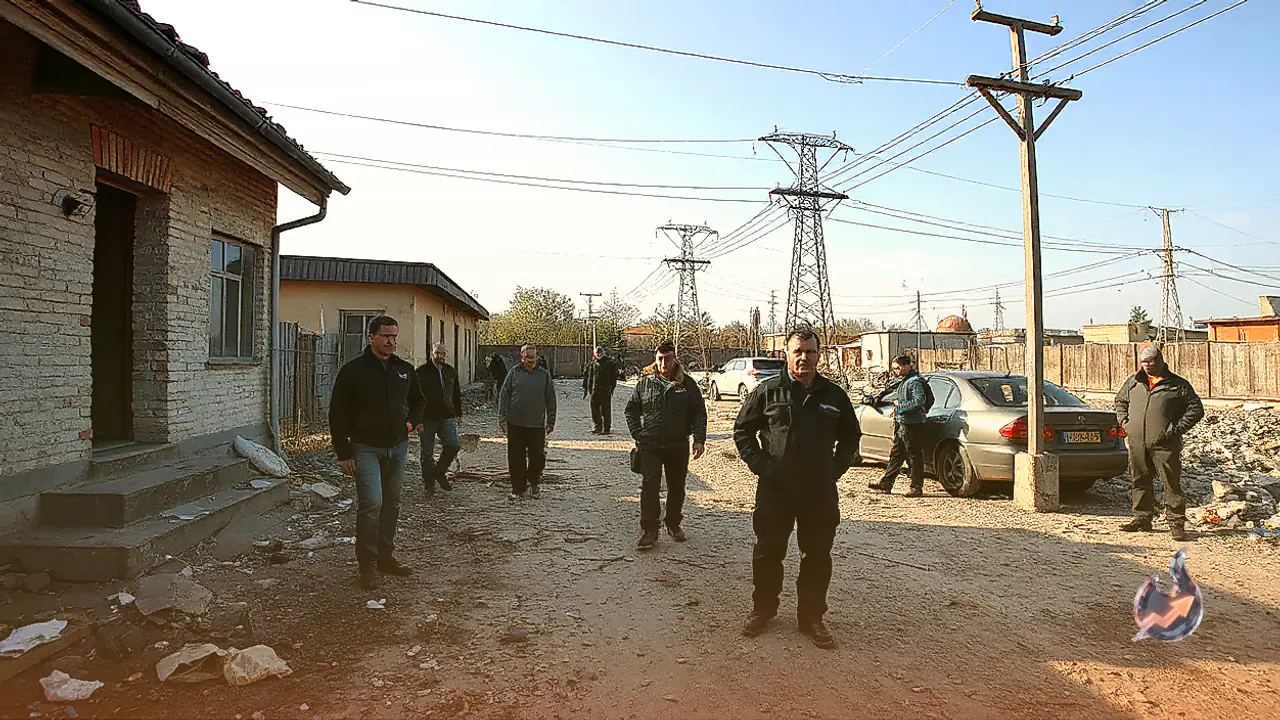

A wave of devastating Russian bombardments targeting civilian infrastructure across Ukraine has claimed the lives of at least 38 civilians and left scores of others injured over a single 24-hour period. The strikes directly hit a humanitarian distribution point, a medical hospice, and a hospital, deepening an already catastrophic humanitarian crisis. The assaults come shortly after the United Nations stated last month that civilian casualties in the country had reached a record level, driven by renewed and systematic attacks against critical public utilities.
Devastation at Komyshuvakha Aid Point
The deadliest single incident took place on Monday night in the village of Komyshuvakha, situated in the Zaporizhzhia region, where a destructive glide bomb assault killed at least 31 people. Ukrainian President Volodymyr Zelensky cautioned that the death toll is expected to climb further, noting that more than 50 individuals could still be trapped beneath the wreckage. Zelensky described the strike on Komyshuvakha as one of the largest mass killings carried out by Russia throughout the course of the war, calling the operation Moscow's direct response.
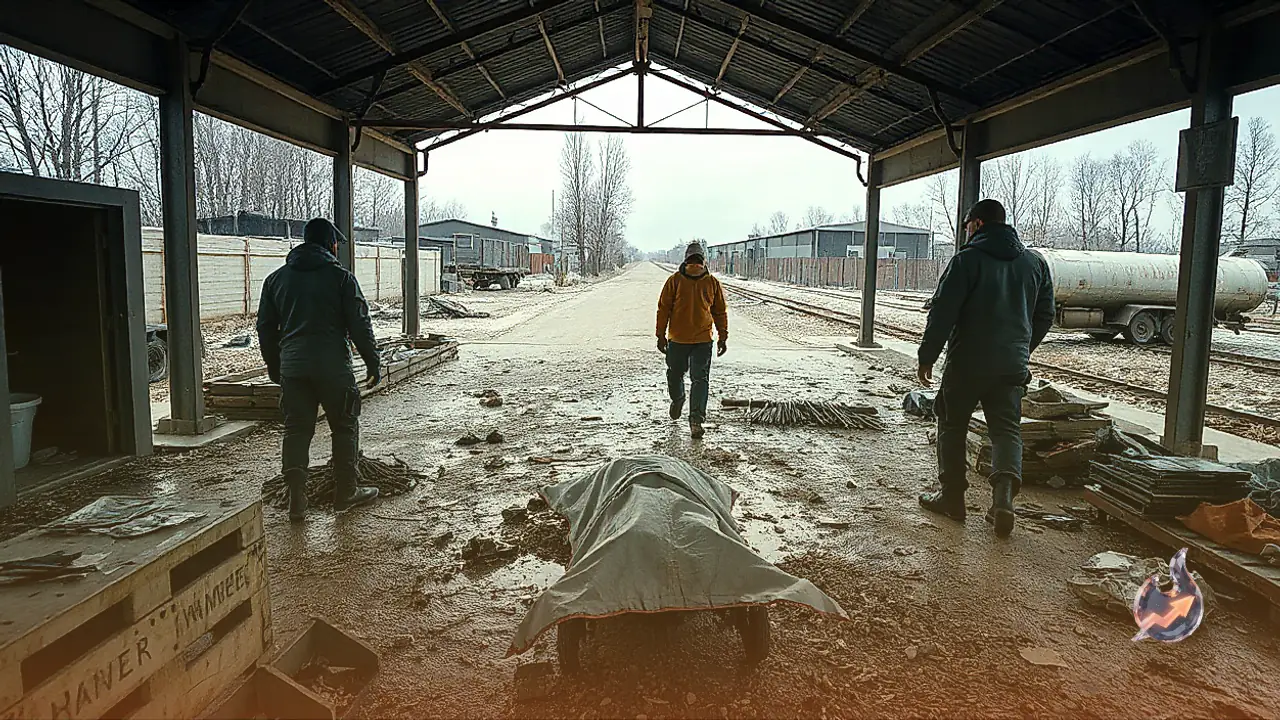
Local authorities explained that nine aerial bombs, each weighing 3,000 kilograms, struck the settlement just as local residents had gathered at a community hub to collect humanitarian aid. When the bombardment began, civilians rushed to take cover inside an underground school building. That shelter suffered a catastrophic failure when its roof collapsed under the blast pressure, burying dozens of people beneath concrete and dirt. Regional administrator Mykhailo Semikin emphasized the gravity of the event, stating that the scale of the tragedy is difficult to comprehend.
Contested Claims and Strategic Context
In official statements, the Russian defense ministry maintained that its operation had successfully hit Ukrainian military units, asserting that 25 servicemen were killed in the action. However, no credible evidence has surfaced to indicate that the site was being utilized for military operations, nor does the settlement of Komyshuvakha house any substantial military installations or industrial manufacturing complexes.
Geographically, Komyshuvakha lies to the south-east of the regional capital of Zaporizhzhia, an urban center subjected to persistent bombardment. Despite lacking garrison infrastructure, the village carries significant defensive and logistical value within Ukraine's transport grid along the approaches guarding the regional capital, making it a focal point in the wider conflict.
Assault on Dnipro Hospice and Eastern Regions
Further to the north, in the city of Dnipro, a Russian missile destroyed a care hospice on Monday night, forcing the emergency evacuation of nearly 50 terminally ill patients. Emergency crews scrambled to transfer these vulnerable individuals to alternative healthcare facilities across the district, with the oldest patient among them aged 90 years.
Dnipro Mayor Boris Filatov published photographs of the aftermath on Telegram, displaying bedridden senior citizens surrounded by shattered glass, collapsed masonry, and blown-out window frames. Filatov wrote that while he recognized he might be violating privacy norms by sharing such imagery, he felt compelled to do so so that the international community could witness the reality. He stressed that politicians, diplomats, and observers abroad must see that elderly, terminally ill patients were the victims of a Russian missile strike.
A separate attack in another quarter of Dnipro resulted in two deaths and left 18 people wounded. Concurrently, five additional individuals lost their lives across the eastern Donetsk region as a consequence of synchronized aerial bomb and drone deployments.
Grid Collapse and Capital Disruptions in Kyiv
Alongside direct hits on populated structures, Russian forces launched targeted raids against energy infrastructure across nine administrative regions, severely compromising water distribution and heating services. In the capital, municipal water company Kyivvodokanal announced that tap water supplies were completely cut off throughout Kyiv as a direct outcome of hostile strikes on energy hubs feeding the utility network.
The power deficit forced the complete suspension of the city's entire underground metro transit network on Tuesday. Kyiv Mayor Vitali Klitschko warned the public that the operational environment surrounding the capital's electricity and power supply had become exceptionally difficult, leaving municipal services struggling to maintain emergency continuity.
Defensive Shortages on the Air Front
The escalating destruction highlights a growing operational disparity in the conflict. While Russian territorial progress on the ground has largely ground to a halt along the front line, Moscow has ramped up air operations, launching large volumes of missiles and unmanned drones against civilian population centers. In contrast, Ukrainian forces are dealing with an acute shortage of air defense munitions, driven by pauses in Western arms shipments and an urgent deficit of American Patriot interceptor missiles.
Addressing the press in Berlin on Tuesday, President Zelensky acknowledged the contrast between ground stability and aerial vulnerability. He stated that while the front line remained stable, the balance in the air was far less positive, pointing specifically to Ukraine's degraded air defense capacity and the mounting difficulty of shielding civilians from heavy aerial munitions.
Trilateral Diplomacy Slated for Abu Dhabi
Against the backdrop of mounting casualties, the Kremlin announced plans to participate in three-way peace discussions involving Ukraine and the United States. The summit, scheduled to take place in Abu Dhabi on 10 and 11 November, represents the first trilateral diplomatic gathering of its kind since February. Direct engagement between Moscow and Washington has developed in recent months, underscored by US President Donald Trump announcing an agreement to import Russian diesel fuel.
Despite the scheduled summit, skepticism regarding real progress remains pronounced. Speaking from Berlin, Zelensky underscored that genuine Russian commitment to a ceasefire and a lasting peaceful settlement is vital, yet noted that he had observed no indication of such willingness from Moscow. Earlier negotiations conducted late last year dissolved without tangible outcomes, as Russian authorities have consistently adhered to maximalist demands that effectively require Ukrainian capitulation.