






















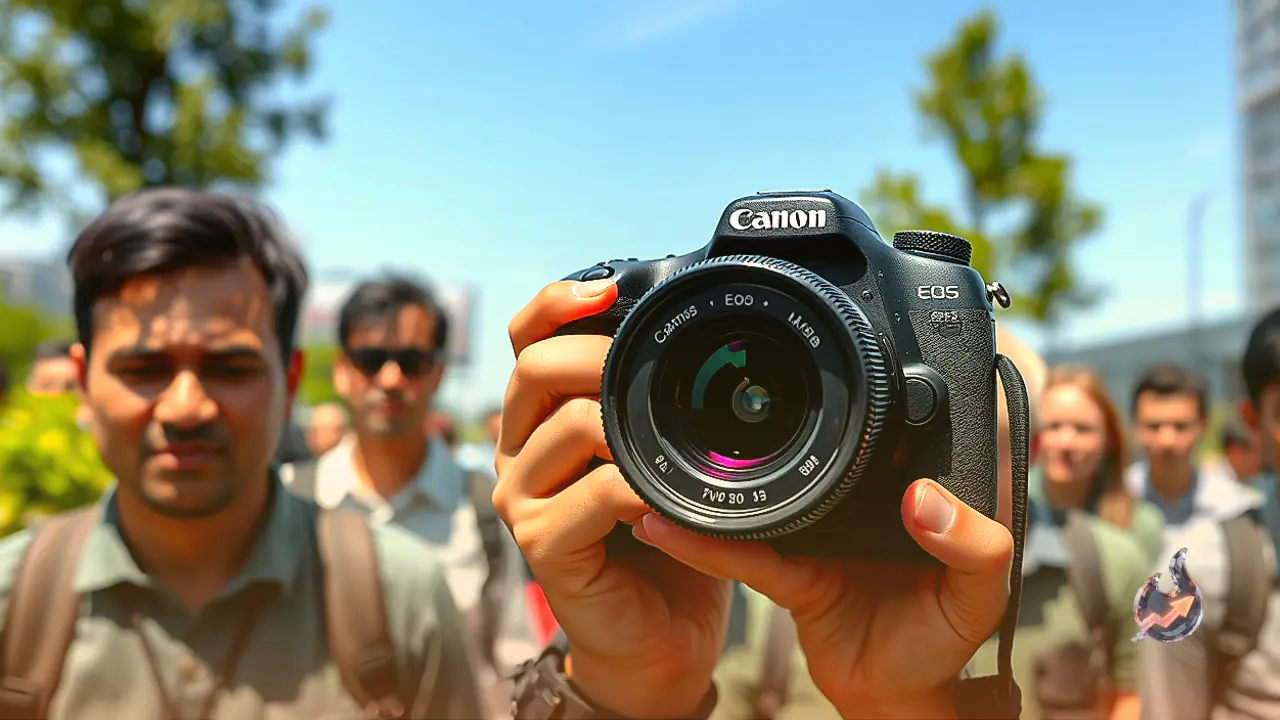

In the competitive arena of full-frame hybrid mirrorless cameras, the latest release from the brand represents a deliberate blend of familiar exterior design and substantial internal engineering upgrades. The Canon EOS R6 Mark III arrives as the direct successor to the popular Canon EOS R6 Mark II. Visually, very little has changed across the chassis; it retains the exact deep grip profile, weather-resistant structural shell, and intuitive physical control arrangement that long-time users are familiar with. The sole distinct external clue is the addition of a front-facing tally lamp that illuminates when video capture is underway. Under the hood, however, nearly every major imaging component has received a major technological refresh aimed at demanding hybrid creators.
Higher Resolution Imaging and Upgraded Card Architecture
At the center of this new model is a newly developed 32.5-megapixel full-frame image sensor, replacing the 24.2-megapixel sensor found on its predecessor. This notable boost in resolution delivers substantially finer image detail, providing landscape photographers and studio professionals with greater cropping flexibility and cleaner large-format reproduction. Base ISO dynamic range remains remarkably wide, ensuring balanced retention across extreme highlights and deep shadows in high-contrast compositions. To handle the significantly increased data throughput, the storage bay replaces one of the previous dual SD slots with a blazing-fast CFexpress Type B slot, while retaining a standard SD slot in the second bay. Additionally, connectivity sees a welcome professional upgrade with the inclusion of a full-size HDMI port rather than the fragile micro HDMI connector used previously.
Cinema-Grade Video Capabilities and Studio Reliability
Filmmakers benefit from the most pronounced enhancements in this generation. The camera records internal 7K RAW video as well as full open-gate footage, giving editors immense creative latitude when reframing for various aspect ratios. In standard Ultra HD resolutions, it records 4k video at up to 120 fps without any sensor crop, delivering pristine slow-motion footage without sacrificing lens focal length. For rigorous studio productions, internal 10-bit 4:2:2 recording is available in both Canon Log 2 and Canon Log 3 profiles. These logarithmic curves unlock extensive color-grading leeway across deep shadows and highlights. Long-form video recording exhibits dependable thermal stability, showing no overheating interruptions or artificial recording time limits. Studio integration is further rounded out by dedicated microphone and headphone ports, together with continuous power delivery over USB-C.
High-Speed Capture, Autofocus, and Stabilization
For wildlife and sports photographers, the camera deploys an electronic shutter capable of continuous bursts at up to 40 fps. Backed by the massive throughput of the CFexpress Type B slot, the expansive buffer flushes rapidly to eliminate operational bottlenecks during crucial action sequences. An upgraded pre-continuous capture system now writes buffered pre-shutter frames into distinct individual files rather than bundling them into an unwieldy single roll. Subject tracking reliably identifies humans, animals, and moving vehicles, locking firmly onto subjects throughout rapid frame traversals. Meanwhile, the integrated in-body image stabilization (IBIS) is officially rated to provide up to 8.5 stops of shake compensation when paired with compatible stabilized RF-mount lenses. Image noise is kept well in check in low light, although dynamic range narrows somewhat more aggressively at elevated ISO sensitivities than on the Mark II.
Travel Practicality, Vlogging Limits, and Ergonomic Realities
In terms of practical deployment, the camera shines in landscape, studio, and wildlife settings where its rugged, weather-sealed SLR-style chassis provides dependable structural confidence. The fully articulating rear touchscreen and high-definition electronic viewfinder make extreme low-angle or overhead framing completely effortless. However, weighing in at 1.55 lbs (0.70 kg) for the body alone, its substantial mass makes it noticeably cumbersome for casual carry or handheld vlogging over prolonged stretches. While the tally lamp and articulating display assist solo content creators, face tracking can exhibit slight inconsistency when subjects move abruptly across the frame or temporarily step out of view. Battery longevity remains solid for still photography, but continuous video capture drains cells relatively quickly, requiring users to carry spares. Given its physical size and lack of waterproofing, it remains unsuited for action camera duties.