















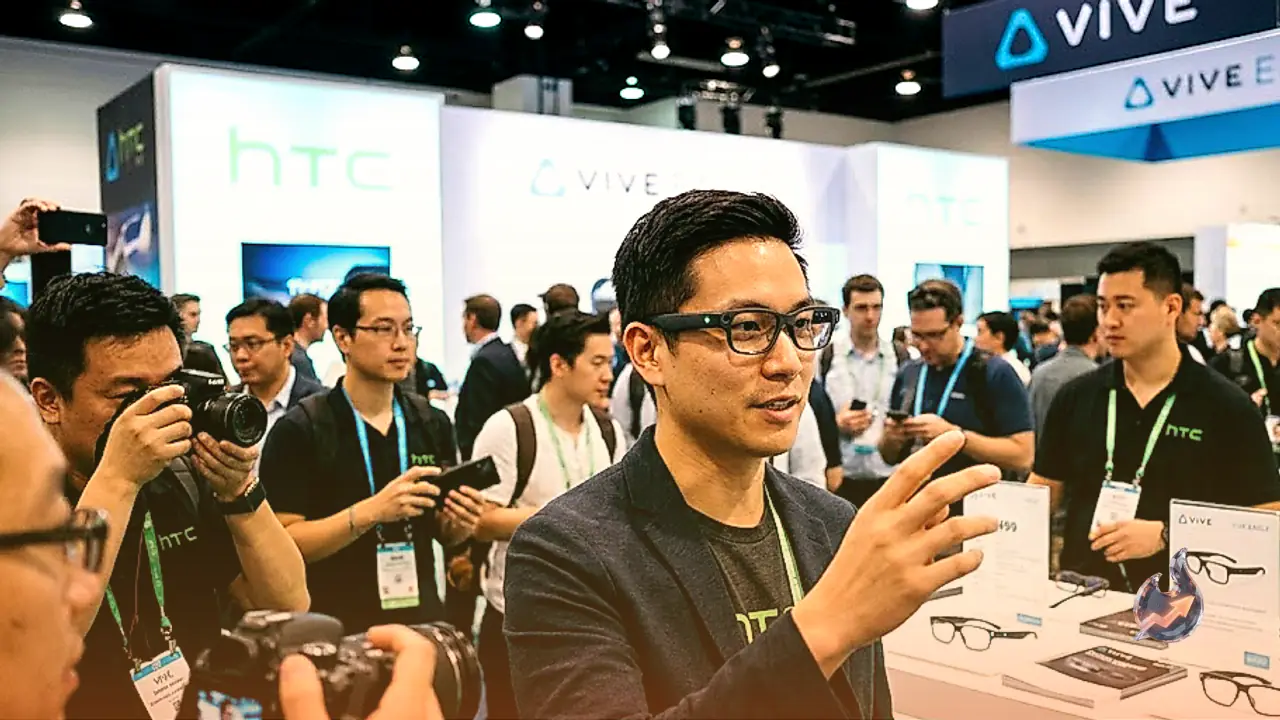

Wearable technology makers have spent years trying to convince the public that face-mounted cameras and microphones are both practical and socially acceptable. Stepping directly into this crowded landscape, HTC has launched its Vive Eagle smart glasses in the United States with a retail price of $499. The device packs familiar high-tech capabilities, including dual frame cameras for photos and videos, embedded open-ear speakers for music and phone calls, and an intelligent assistant capable of answering everyday queries or scanning refrigerator ingredients to recommend quick meal recipes. Yet unlike rivals that prioritize deep data integration, HTC is betting that strict privacy safeguards will make the difference for cautious shoppers.
Addressing the Shadow of Public Surveillance
Smart eyewear has long struggled against a reputation problem. Meta in particular has dealt with persistent public unease regarding wearable cameras, with ongoing concerns over potential facial recognition tools and complaints that recording people in public spaces feels intrusive. HTC recognizes this lingering stigma and wants to demonstrate that functional smart eyewear does not have to turn into a privacy liability.
Dan McDowell, who serves as the head of enterprise sales at HTC Vive, highlighted this philosophy: "It's not just about protecting the consumer, but it's also about protecting people around the consumer." In his view, providing strong protections reassures both the person wearing the hardware and the bystanders sharing the room with them.
Everyday Hardware, Fit, and Audio Performance
The Vive Eagle frames are designed to blend into daily wardrobes without standing out as bulky tech gear. Buyers can choose between two aesthetic profiles, including a structured square silhouette reminiscent of classic Wayfarers and an alternative rounded shape. Beyond UV protection for sunny days, the onboard optics reliably handle casual snapshots and short video clips. Voice dictation is also built into the system, allowing wearers to record quick thoughts and generate automated transcriptions.
Sound is delivered through miniature speakers integrated into the frame stems. While open acoustic drivers naturally lack the deep bass response and total isolation of dedicated over-ear or in-ear headphones, they provide adequate clarity for voice calls and ambient audio listening during daily commutes or outdoor walks.
Battery Expectations and the Power Boost Accessory
Under continuous audio streaming, the Vive Eagle delivers roughly 4.5 hours of playback on a single charge, while standby times can stretch up to 36 hours. To extend operational hours for heavy users, HTC introduced an optional clip-on battery module named Power Boost, priced at $49. The pack attaches directly onto the temple arm of the frame. Although visible when fastened, its compact build prevents the glasses from becoming overly awkward or unwieldy on the face.
Anonymous AI Assistants Without Compulsory Logins
Powering the conversational features is Vive AI, an onboard helper that can route queries to OpenAI's ChatGPT or Google's Gemini models. Crucially, the system functions without requiring personal account credentials. By de-identifying user sessions, the platform prevents AI service providers from logging or storing private identifying records.
This deliberate architectural choice does involve an intentional trade-off. Because the assistant cannot tap into personal email threads or calendar entries, users forgo the hyper-personalized predictive suggestions common on other platforms. Every purchase of the frames includes access to Vive AI Plus free for two years, after which keeping the service active requires an ongoing subscription fee of $2.50 per month.
Hardware Safeguards and Local Data Encryptions
One common critique of smart frames centers on recording indicators, with reports of users placing tape over LED lights to film surreptitiously. Meta previously issued software updates designed to shut off recording functions if an indicator light is blocked. HTC takes hardware compliance a step further by pairing a high-luminosity notification light with sensor detection; any physical covering placed over the bulb prevents the camera from capturing footage. Furthermore, if a person near the wearer audibly says stop recording, the hardware registers the voice input and terminates the session.
Data storage policies follow similarly conservative principles. All captured video files are encrypted directly inside the onboard flash memory of the frames rather than streaming automatically to mobile devices or remote servers. Users must open the companion smartphone application and execute a manual import to retrieve their media.
A Business Model Detached From Social Media
When asked how consumers can trust these privacy assertions over routine corporate talking points, McDowell underscored the structural differences between HTC and data-driven ad platforms. He pointed out: "We're not a social media company." He added that collecting user habits offers no commercial advantage to HTC, confirming that user interactions from the glasses are never utilized to train proprietary or third-party artificial intelligence engines.
Market Perception and Competing Visions
Despite these technological hurdles, public perception remains an uphill battle. Because most camera-bearing glasses share similar dark plastic styling, passersby often cannot tell a Vive Eagle apart from frames manufactured by Mark Zuckerberg's Meta. Mistaken assumptions regarding back-end surveillance can persist regardless of who engineered the specific hardware.
Elsewhere in the industry, alternative approaches are gaining traction. Hardware startups such as Even Realities, Viture, and Halliday are leaning toward entirely cameraless designs, opting instead for heads-up displays, privacy shields, or micro-projectors that assist wearers without capturing surrounding footage. Meta still maintains dominant market control, but HTC is hopeful that conscientious product design can gradually reshape wearable tech norms. As McDowell summarized, technological innovation ought to align with community expectations rather than forcing society to bend to intrusive engineering.