




















Palo Alto artificial intelligence venture Elorian has officially rolled out its inaugural system, entering the market after securing $55 million in seed capital at a $300 million valuation prior to shipping any product. Named Glimpse, the system debuted on Friday as a research preview offering both chat interactions and API integration. The driving premise behind the launch is straightforward: despite immense leaps in coding proficiency and natural language handling, contemporary AI architectures still lack genuine sight.
The Architecture of the Visual Scratch Space
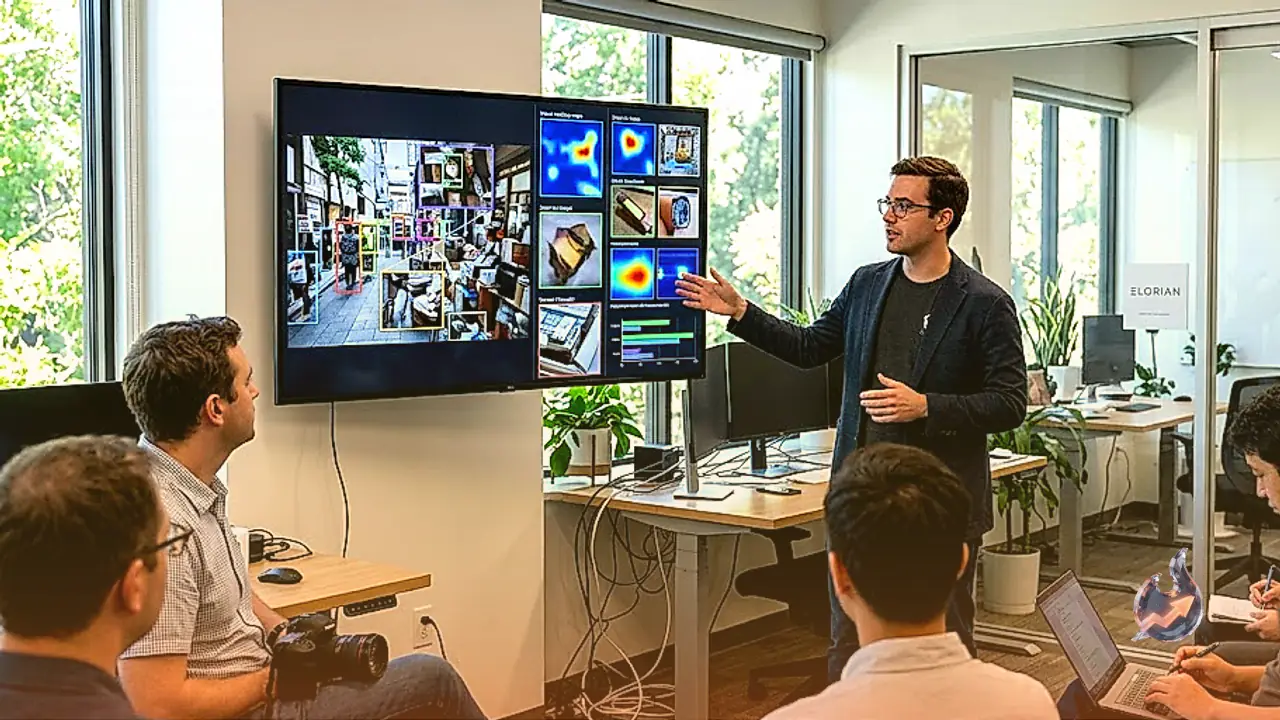
Standard multimodal architectures process an image by ingesting it a single time, converting the visual data into numerical tokens, and conducting subsequent deductions purely through text. The workflow mirrors a person attempting to describe a detailed scene solely from memory long after looking away. Glimpse breaks from this mold by treating visual input as an active reference. As the model thinks through a problem, it repeatedly cycles back to the raw source material, isolating key sections, grabbing discrete frames out of a video file, or executing custom scripts to verify scale and spatial relationships.
Elorian refers to this internal mechanism as a visual scratch space. In practical terms, the behavior replicates how a smartphone user pinches and expands an image on a touchscreen to confirm minute details before drawing a conclusion.
Board Games and Assembly Manuals: Spotting the Blind Spot
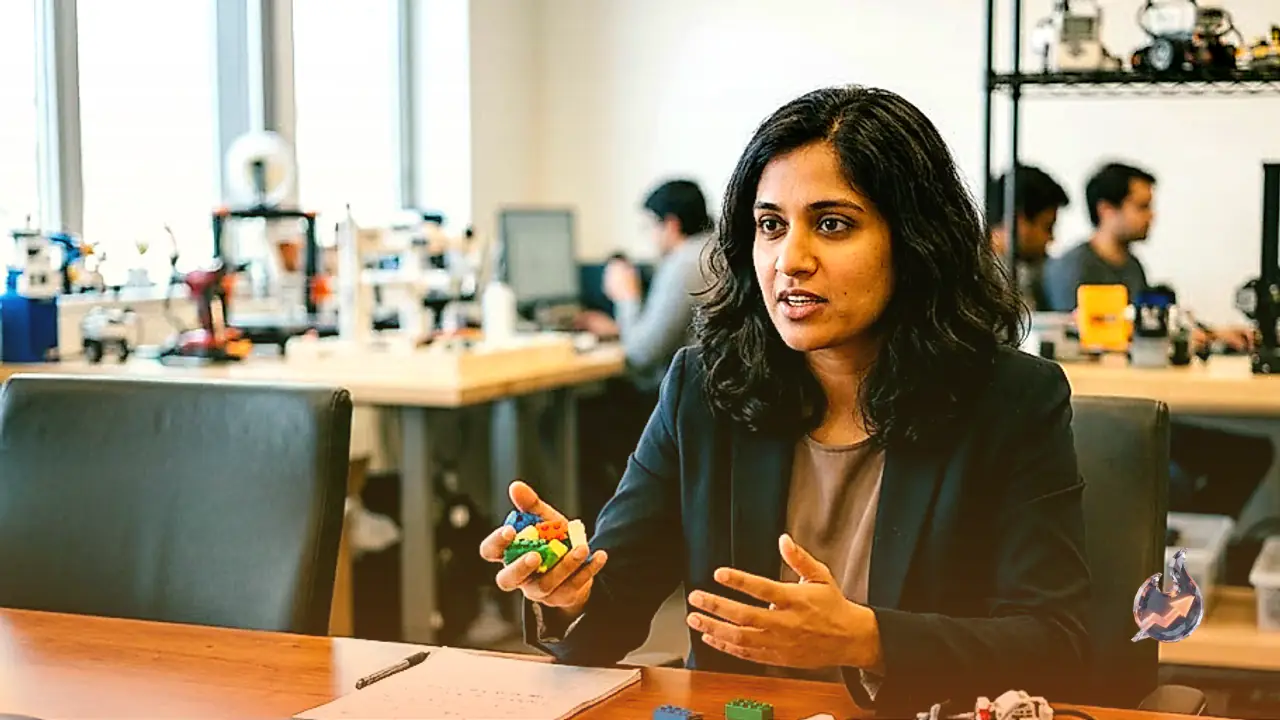
Andrew Dai, who previously served as a researcher at Google DeepMind and now leads Elorian as CEO, realized the depth of modern vision limitations during a casual game night. After finishing a tabletop session with friends last year, he snapped a photograph of the board and prompted an advanced frontier model to evaluate which participant was ahead. The system failed completely. Andrew Dai pointed out that every board game relies on a specialized visual grammar filled with bespoke iconography and layout rules. While an adult human decodes those relationships intuitively with minimal text, mainstream models fail to grasp what those graphic symbols convey.
Andrew Dai cited wordless Ikea assembly manuals to illustrate the contrast, asking why machines struggle to assemble flat-pack furniture using pictorial guides when human beings execute the same task routinely without reading sentences. That realization helped shape the foundation of Glimpse.
Budget-Conscious Training and Benchmark Metrics
Interleaved visual manipulation during deep reasoning is not wholly unprecedented, as OpenAI incorporated crop-and-zoom mechanisms into its o-series releases in 2025. Elorian differentiates its offering by designing its foundational architecture entirely around continuous visual feedback while drastically lowering compute requirements. The startup built and trained Glimpse using a small engineering team and several hundred GPUs, keeping the model significantly more compact than the massive frontier models it competes against.
API access reflects this architectural footprint, priced at $0.60 per million input tokens and $3 per million output tokens. That structure places Glimpse below mid-tier engines like Sonnet and Sol in cost, while staying above ultra-compact options such as Haiku and Luna. According to internal evaluation data shared by Elorian, Glimpse exceeded the performance of GPT-6 Astra when interpreting scientific charts and generating short-form video descriptions, alongside competitive scores across broader visual reasoning assessments.
Expansion Plans and Robotics Automation
Elorian emerged from stealth operations six months ago backed by a financing round co-led by Striker Venture Partners, Menlo Ventures, and Altimeter Capital. Strategic backing came from Nvidia alongside Google chief scientist Jeff Dean. Initial commercial outreach focuses on data-heavy sectors processing extensive video archives, including robotics operations, research laboratories, media platforms, and creative studios.
Over the longer term, the company intends to transition its vision models toward physical actuation. By constructing an operational spatial model of a physical environment, the system is designed to formulate decisions and directly operate robotic hardware. Andrew Dai stated that by next year, Elorian intends to deliver the preeminent visual reasoning model worldwide, targeting the top rank across every standard vision benchmark.