

















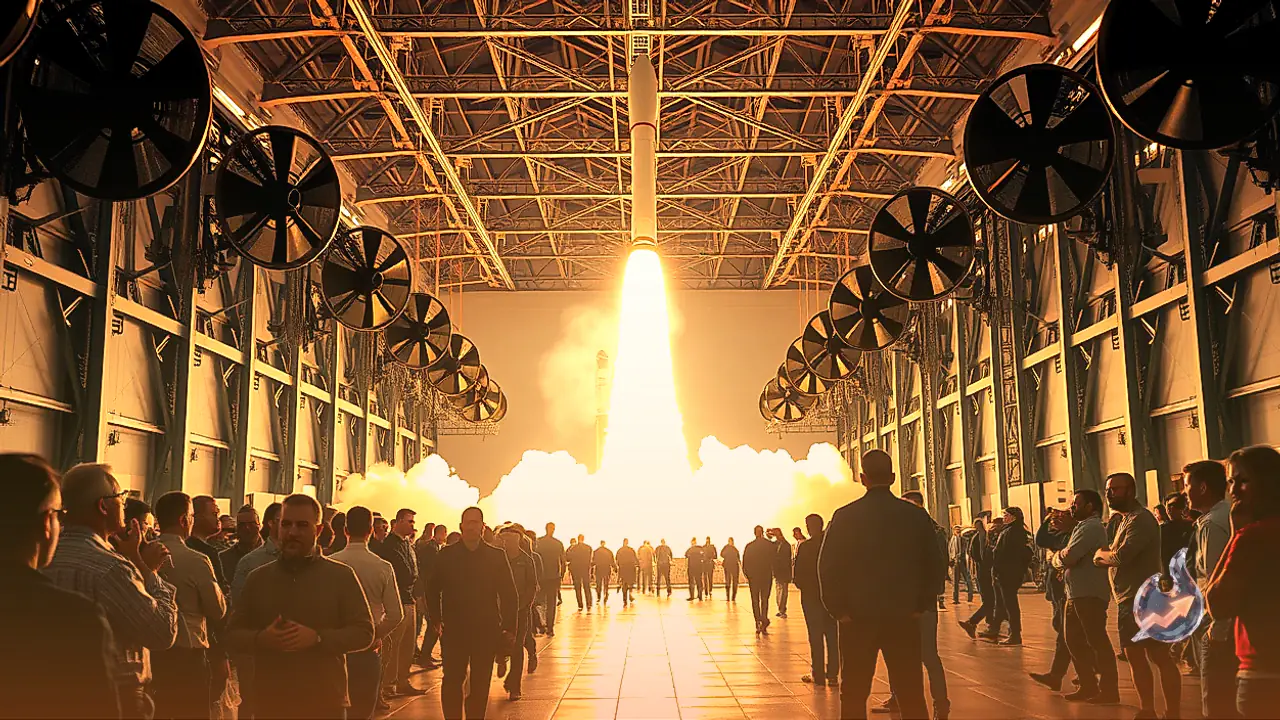

A remarkable engineering spectacle unfolded at the SpaceX rocket testing and development complex in McGregor, Texas, where Tesla showcased the capabilities of its next-generation Roadster 2 prototype. The two-seater electric machine demonstrated feats rarely seen in consumer automotive design, launching itself cleanly over the automaker’s entire current vehicle lineup and hitting 60 mph from a standstill in less than a single second. The machine proceeded to drive straight up and completely upside down across an elevated track ramp, rotated mid-air, and touched back down onto the tarmac while firing its integrated thrusters to cushion the rapid drop. While the company’s share price dipped following the public event, the visual display generated massive online attention. Vehicle engineering head Lars Moravy broke down the mechanical and aerodynamic secrets behind the prototype during an extensive walkthrough with Hagerty.
The angular, chiseled body lines of the vehicle were penned by Franz von Holzhausen, who has served as Tesla’s chief designer since 2008. His design portfolio already includes foundational company vehicles such as the Cybertruck, Model S, Model X, Model 3, Model Y, and the Class 8 Semi truck. During the dynamic run in Texas, heavily tinted, blacked-out glass prevented any sightlines into the passenger compartment. In fact, no human occupant sat behind the wheel for the high-risk demonstration, with Musk explaining that the choice was deliberate to ensure complete safety and avoid potential harm during a radical run that defied conventional gravity limits.
Rear-Wheel Drive Configuration and Weight Management
In a notable technical departure from the company’s established preference for multi-motor all-wheel drive platforms, the Roadster 2 operates strictly as a rear-wheel drive vehicle. Propulsion comes from two dedicated motors that pump out more than a megawatt of combined power, translating to 1,341 horsepower, alongside over 1,400 Newton-meters of torque. This output surpasses the raw torque and horsepower figures found in the tri-motor Plaid setups. The critical engineering challenge here is channeling that immense reserve of power exclusively through the rear tires rather than distributing it across four contact patches.
Despite its formidable power generation and expanded footprint, structural mass has been kept under strict check. Moravy revealed that the vehicle scales in at just under 1,700 kilograms, keeping it comfortably below the two-ton mark. That represents a modest increase over the 1,300-kilogram curb weight of the original first-generation Roadster, a significant achievement considering the complex pneumatic and battery apparatus packed beneath the body panels.
Range Expectations, Ultra-Fast Charging, and 007 Inspiration
Official estimates indicate a driving range of over 300 miles on a full charge. While 300 miles remains relatively modest within the premium electric segment, engineers sought to balance this figure by engineering the quickest-charging battery pack ever developed by the company. The onboard architecture is engineered to surge from a 15 percent charge state up to 80 percent within just 10 minutes, cutting highway charging stops down to brief pauses.
The conceptual foundation for the vehicle's aerodynamic wizardry draws directly from cinematic history. In 2013, Elon Musk paid just under $1 million at an auction to acquire the famous Wet Nellie, the customized Lotus Esprit S1 submarine vehicle featured in the 1977 James Bond film The Spy Who Loved Me. Musk’s enduring fascination with the cinematic prop directly shaped one of the central mechanical attributes of the Roadster 2.
The Four-Fan Sucker System and Inverted Traction
Taking a cue from the four rear-mounted marine propellers on Bond’s submersible Lotus, the engineering team fitted the Roadster 2 with four 20-kilowatt electric fans. According to Moravy, these high-output fans effectively bypass normal mechanical tire grip limits by creating an active underbody low-pressure zone, termed the sucker system. Four independent, replaceable skirts deploy downward along the perimeter of the chassis. This allows the car to firmly adhere to the road surface at lower velocity ranges where traditional passive aerodynamic spoilers and wings fail to generate meaningful downforce.
Moravy noted that the system is capable of producing more than two Gs of cornering force under hard acceleration even when traveling under 50 mph. A comparable approach to fan-assisted downforce exists on the track-only McMurtry Spéirling Pure, which utilizes twin high-speed electric fans turning at up to 23,000 revolutions per minute to evacuate air from beneath its chassis and generate up to 2,000 kilograms of downforce. This immense suction enabled the Roadster 2 prototype to scale the vertical ramp section in Texas and maintain continuous contact while hanging fully inverted.
Cold Gas Thrusters Derived from Aerospace Hardware
The ability to levitate briefly, stabilize mid-air, and bleed kinetic energy before touchdown comes courtesy of the SpaceX system, a collaborative engineering effort with Musk’s commercial space venture. Early concepts promised a 2+2 seating arrangement, but the production engineering compromises that layout entirely. The rear cabin area is now occupied by a 200-liter carbon-overwrapped pressure vessel capable of storing gas at up to 10,000 PSI. This high-pressure reservoir feeds cold gas thrusters that operate by venting compressed nitrogen gas, an established technology used for attitude control and spacecraft maneuvering.
Cold gas thrusters represent the most fundamental form of rocket propulsion. When working in unison with the active suction fans, the rear thrusters generate upwards of 80 kilonewtons of thrust during launch, an output matching the Dassault Falcon 10X business jet. This violent expulsion of gas helps propel the prototype from zero to 60 mph in under one second, pulling ahead of the McMurtry Spéirling Pure’s 1.3-second sprint. Drivers engaging this mode will face up to five Gs of longitudinal force.
Two Distinct Trim Packages and Single-Seat Flight Constraints
The consumer lineup will be divided into two performance tiers. The baseline Performance model will include the active suction fan system but will omit the rocket thrusters entirely. This version is rated for a zero-to-60 mph sprint of 1.6 seconds and reaches an electronically governed top speed of 210 mph. The flagship Thrust variant incorporates the complete thruster package and raises maximum velocity to 230 mph.
To access the fully capable flight system showcased during the stunt, substantial interior sacrifices are mandatory. Moravy explained that enabling sustained aerial dynamics requires an additional 400-liter nitrogen COPV that takes over the entire passenger side, transforming the car into a dedicated single-seater. Total nitrogen capacity expands to 600 liters, paired with six supplemental thrusters placed at each vehicle corner and two mounted upfront to manage yaw angle. Unlike in the vacuum of space where cold gas systems maintain steady exhaust velocity until depletion, atmospheric resistance causes the terrestrial flight system to lose thrust as internal cylinder pressure drops. Moravy compared the drop-off to air escaping an open balloon, noting that pressure rapidly tapers off. Replenishing the 600-liter nitrogen supply currently takes between six and seven hours, though ongoing development seeks to cut that window down to 30 minutes. Customer deliveries are not expected until 2028 at the earliest, a timeline that warrants skepticism given original projections that targeted a 2020 release. Regulatory hurdles with the Federal Aviation Administration also loom. Nevertheless, order books have opened, demanding a $5,000 deposit and $45,000 within 10 days for the Performance trim, and a $5,000 deposit backed by an additional $245,000 within 10 days for the top-tier Thrust edition.