






















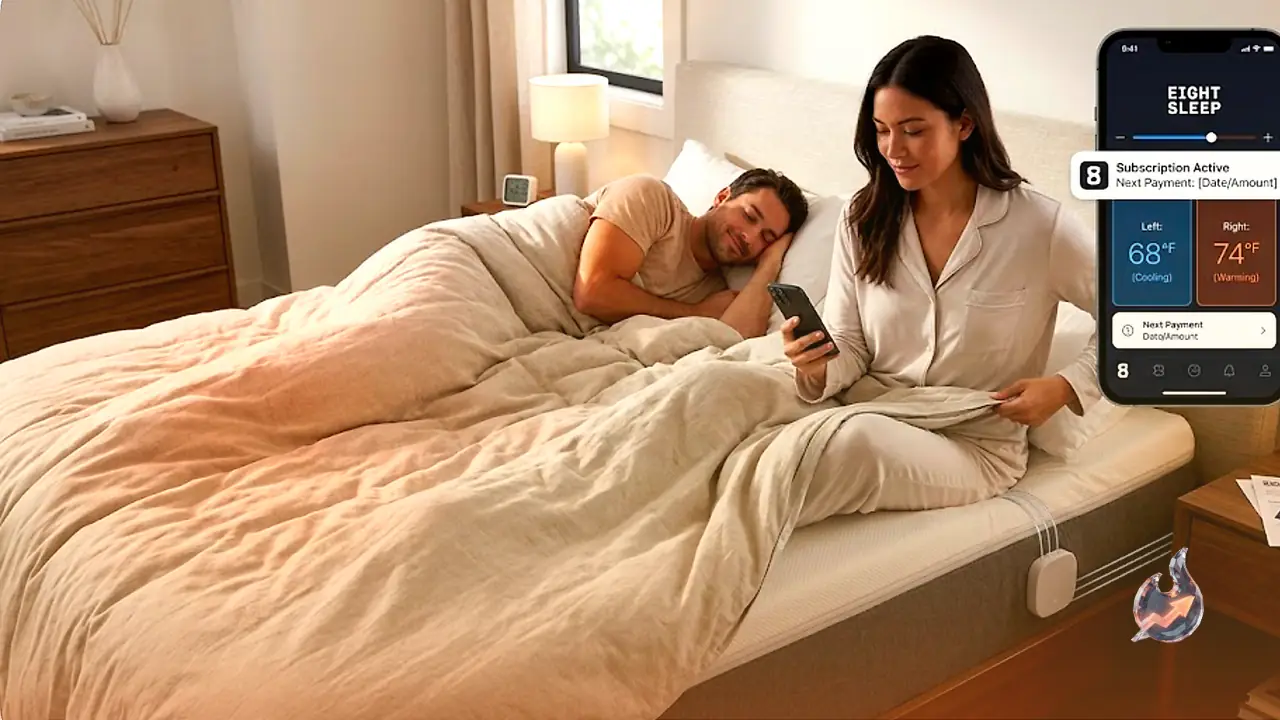

Three months of sleeping on Eight Sleep's Pod 5 raises a question that has nothing to do with whether the hardware works: it works. The real question is whether the version of sleep this company is selling, one built on constant sensors, an app and a recurring bill, is a lifestyle worth buying into.
What It Actually Feels Like In Bed
Strip away the technology and the Pod 5 behaves like a cushioned topper laid over an existing mattress, adding a layer that is plush on top yet firm underneath. The water channels running through the cover are invisible to the touch; lying down, the surface feels completely smooth, with no hint of the plumbing hidden inside. Pet owners will recognize one specific worry, whether a cat's claws could tear into the cover. Eight Sleep's guidance is that trimmed claws shouldn't pose a risk, but as a backup, keeping the Pod dressed in a fitted sheet and a comforter stops cats from ever touching its surface directly.
Getting It Running
Installation takes roughly 40 minutes from start to finish. The process involves scanning a QR code printed on one of two shipping boxes, installing the companion app, stretching the cover across the mattress, linking the tubing to the Hub unit, and priming the whole system by filling its water reservoir three separate times. Once that initial fill is done, the Hub sends an alert whenever the water needs topping up; after that first setup, the unit went two full months of nightly use before asking for a refill.
Two People, Two Very Different Temperatures
The feature that defines the Pod remains its ability to run each side of the bed at a different temperature, with a range spanning 55 to 110 degrees Fahrenheit. That range is wide enough that one partner can sleep on the cold end of the scale while the other stays warm, without either person compromising. Left running over time, the system studies sleep patterns and starts nudging the temperature up or down through the night on its own, rather than waiting for a manual adjustment.
Nights, Mornings and One Rough Week
For anyone who deals with night sweats, climbing into a bed that has already been cooled to a preferred setting changes the quality of sleep almost immediately, and on the hottest nights of summer that difference is hard to overstate. Mornings bring a choice of two alarms built into the Pod, one that vibrates and one that gradually warms the bed. The vibration alarm got switched off fairly quickly, since physical buzzing isn't an effective wake-up cue for everyone, but the thermal alarm, simply being roused by a bed that slowly gets warmer, became a genuinely welcome part of the morning routine.
The clearest argument for the Pod arrived during a week of being sick. When chills set in, cranking the temperature turned the bed into a warm cocoon within minutes. When night sweats followed roughly an hour later, the temperature could be dialed back down without having to throw off the comforter to cool down. Plenty of sleep trackers and wearables will report, in granular detail, that a night's sleep was poor; very few of them attempt to actually fix the problem while the sleeper is still in bed.
The Price Tag Doesn't Stop at the Mattress
None of this comes cheap. The Pod 5 Core Bundle alone runs from $2,848 for a full-size bed up to $3,248 for a Cal king, and that upfront cost is only the entry point into a three-tier subscription system that the entire experience is built around.
The standard tier, called Autopilot, costs $17 a month, or $199 if billed for the year, and comes with a mandatory 12-month commitment plus a two-year warranty. Skip the subscription entirely and the Pod still functions using its physical temperature buttons, but automatic adjustments, sleep reports, and both the vibration and thermal alarms all disappear.
Stepping up to the Enhanced membership, at $25 a month or $299 annually, stretches that warranty out to five years, a detail that matters given how much money is riding on the hardware. No hardware failures have shown up yet in this testing, but the Pod depends on pumps, tubing and sensors running every single night, which creates more potential points of failure than a mattress with no moving parts at all; other owners have reported needing warranty replacements over the years the product has been on the market. Once warranty coverage runs out, replacing failed components could get expensive fast. The newest tier, Elite, costs $33 a month or $399 a year, and bundles in the same five-year warranty alongside a Health Check feature.
The Verdict
Despite the cost, the subscription requirement and the surveillance built into sleeping on a bed full of sensors, the plan going forward is simple, keep using it. A range of accessories is also sold alongside the Pod, though none of them were part of this testing.