






















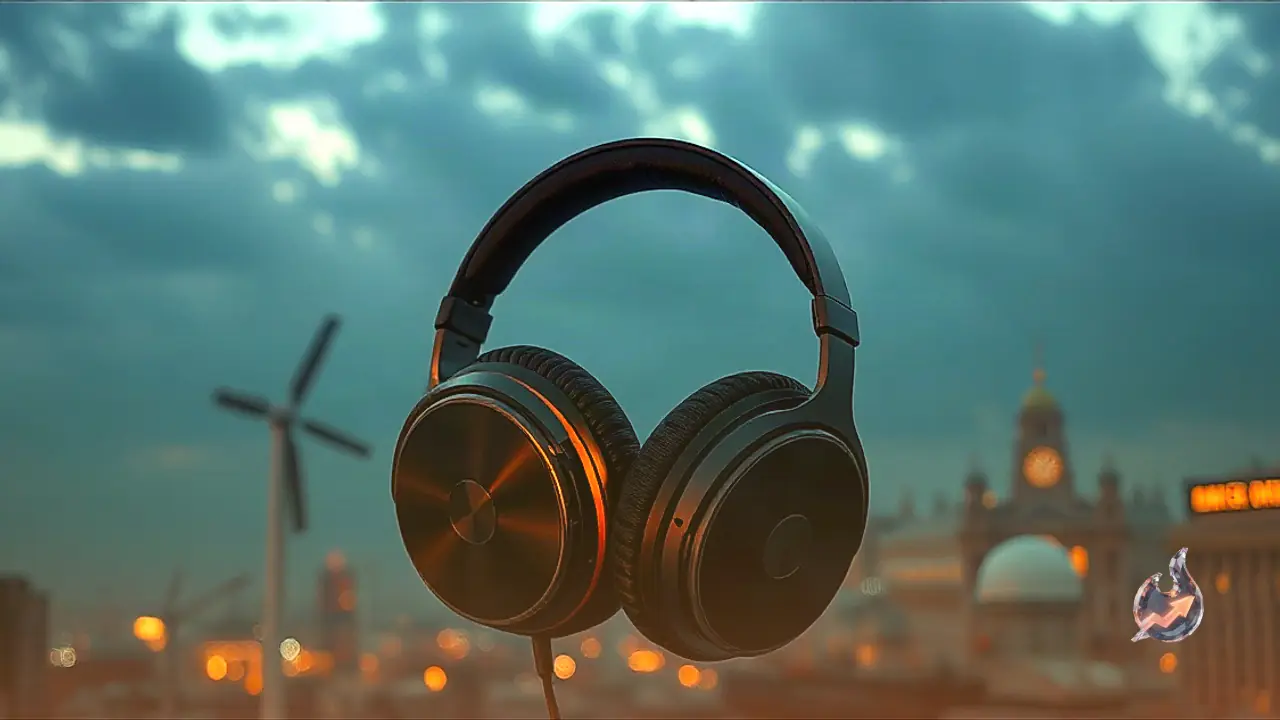

Venturing further into high-grade personal audio, Nothing has unveiled the Headphone (1) Pro with an ambitious acoustic redesign. While the bulk of over-ear headphones on the market rely on a standard 40-mm dynamic driver in each earcup to process the full sonic spectrum, this new flagship model integrates three separate drivers for each ear. Funneling low-end punch, mid-range instruments, and high frequencies through a lone speaker frequently creates muddiness and audible distortion. By partitioning specific frequency bands across dedicated drivers, audio tracks gain far more separation, natural headroom, and acoustic precision.
Detailed Anatomy of the Triple-Driver Array
The three drivers inside each chamber handle distinct portions of the audible spectrum. Lower octaves and bass notes are managed by a 40-mm bass dynamic driver. For mid-range elements such as human vocals, acoustic guitars, and pianos, Nothing incorporates a dedicated precision dynamic driver. According to the company, this particular unit is tuned to preserve fine articulation, specifically rendering sharp sibilants such as "S" and "T" sounds with heightened clarity. High frequencies are governed by a separate treble driver leveraging xMEMS silicon diaphragm technology. This hardware setup delivers swift transient response, ensuring that sharp percussion hits like cymbals and piercing synthesizer stabs land crisply without bleeding into adjacent frequencies.
Operating in unison, the three-way system is designed to yield a richer, more layered presentation across complex mixes. While virtually every personal audio manufacturer promises superlative fidelity, Nothing has backed its marketing by deploying tangible mechanical solutions rarely found in mainstream consumer cans.
Transparent Panda Glass Shells and Aluminum Chassis
Aesthetic transparency remains central to the product's identity. Listeners can peer directly into the triple-driver internal hardware thanks to dual exterior panels fashioned from 9H Panda glass. The remainder of the frame relies heavily on machined aluminum accented with titanium trim. Given the presence of exterior glass on a portable product, structural integrity is an immediate concern. The company maintains that the surface is built to resist cracks and scratches.
Philipp Von Lintel, associate principal industrial designer at Nothing, noted that the glass construction withstood durability testing that involved dropping the headphones 18 times from heights exceeding 1 meter. Servicing the device remains relatively straightforward for qualified technicians, who can apply external heat to peel the glass away and access the inner audio chamber for repairs. Philipp Von Lintel highlighted that even in the event of an impact crack, an internal plastic retention film keeps the chamber sealed and functional.
Weight, Ergonomics, and Battery Endurance
On the scale, the Headphone (1) Pro is 2 grams lighter than the base Headphone (1). To enhance comfort over extended sessions, it features a broader headband paired with noticeably thicker ear cushion padding. However, internal hardware demands have trimmed overall battery performance. With active noise canceling turned off, the listening duration drops to 68 hours, down from the 80 hours delivered by the non-Pro version. Moisture and dust protection is certified at IP52, meaning the device handles minor sweat and light splashes, though an umbrella or raised jacket hood remains advisable during moderate rain.
Flat EQ Tuned with Metropolis Studio and Flexible Connections
Hardware makers frequently attach a "Pro" tag to justify modest cosmetic tweaks alongside steep price increases. Retailing at $399, the Headphone (1) Pro carries a $100 price hike over the standard model. Nothing claims the premium reflects direct utility for professional mixing engineers and recording artists alongside audiophiles. A dedicated physical toggle on the earcups instantly triggers a flat equalization curve, providing the uncolored frequency response essential for critical studio monitoring.
To develop these tonal profiles, Nothing partnered directly with London's renowned Metropolis Studio. The software includes a specialized "Studio B" Dynamic Spatial Audio setting engineered to replicate the acoustic properties of Metropolis's premier mixing room. Users can also select from four additional custom EQ presets, including Concert Hall and Club modes. In addition to high-resolution wireless streaming and USB-C digital audio, the headphones incorporate a traditional 3.5-mm auxiliary jack for low-latency analog patching into studio interfaces.
10-Microphone Noise Cancellation and Retail Rollout
Charlie Smith, chief brand officer at Nothing, acknowledged that while everyday commuters will naturally buy the cans, the company designed them around mobile production workflows. He pointed out that creators frequently track and edit audio while traveling, requiring reference-grade acoustic accuracy away from fixed desks. To isolate listeners from ambient distractions, the headphones employ an active noise cancellation system powered by 10 separate microphones. For context, Apple's flagship AirPods Max utilizes eight microphones for noise suppression.
Charlie Smith described the cans as a signature flagship intended to demonstrate the company's engineering scope and elevate the brand's standing among industry professionals. Portability does involve one trade-off, as the earcups do not fold inward. Instead, Nothing has mirrored Apple's travel approach by providing a bra-style protective slipcase. The Headphone (1) Pro officially arrives in retail channels on September 29, launching through Nothing's direct web storefront, Amazon, and across North American physical stores via Best Buy.