



















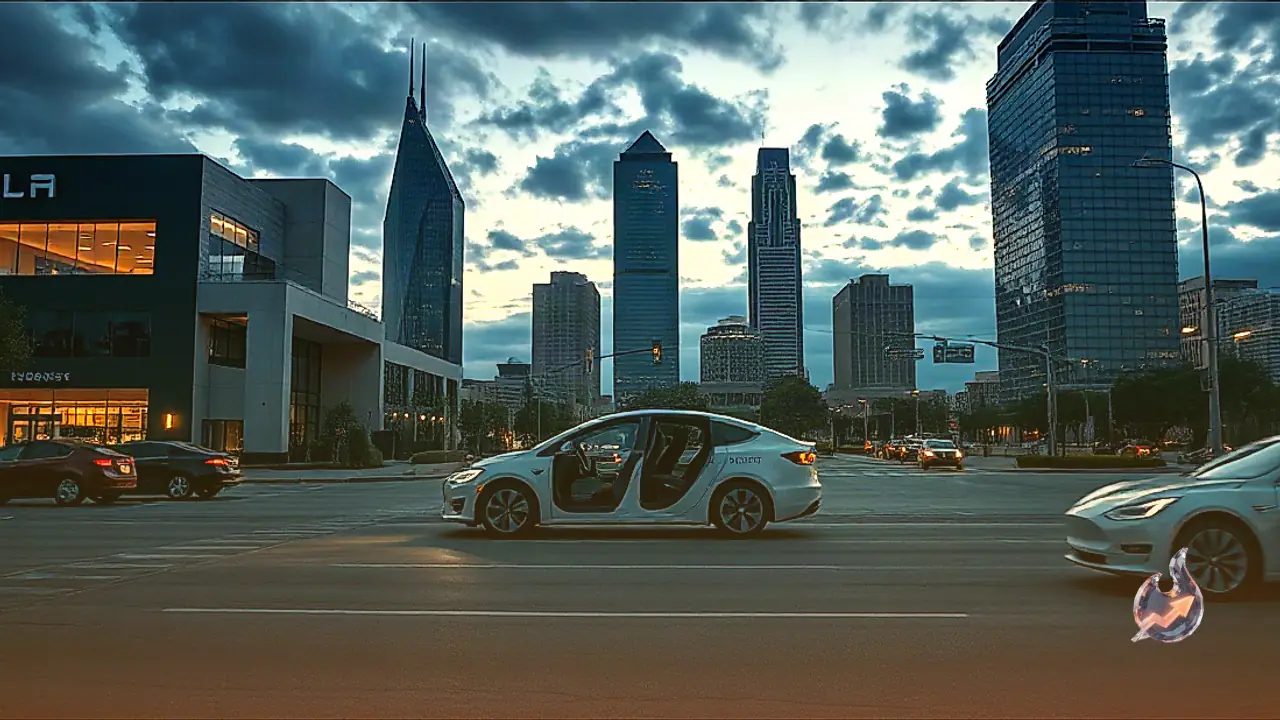

Tesla rolled out the autonomous Cybercab in Austin with minimal fanfare, foregoing the public livestream that usually accompanies major milestones for a vehicle the company touts as pivotal for both its own corporate trajectory and the global economy. Invitees, many of whom operate as prominent online advocates for the brand, faced strict posting restrictions that barred them from sharing details until hours after the gathering commenced. Chief Executive Officer Elon Musk was absent from the proceedings entirely.
The debut marked an unusual introduction for the matte gold two-seater, a design first unveiled in 2024. Currently, 45 of these automobiles, which lack both steering wheels and foot pedals, are officially registered to operate within the company autonomous fleet in Texas. Following the expiration of the news embargo on Thursday evening, the digital influencers in attendance began publishing favorable reviews and video excerpts detailing their initial passenger experiences.
The Cybercab represents a make-or-break proposition for the enterprise. Musk and other corporate leaders have repeatedly instructed stakeholders to view the prominent car manufacturer primarily through a different lens. The CEO asserted previously that observers should regard them as an artificial intelligence and robotics enterprise, adding that anyone doubting their ability to solve autonomy should divest. Musk has further suggested that successfully executing these ambitions could propel the firm past current market leader NVIDIA and elevate its overall valuation significantly.
However, translating these high-stakes autonomous vehicle goals into reality has proven challenging. Musk stated back in 2013 that company vehicles would achieve 90 percent autonomous travel within three years, a target that went unmet. He subsequently projected that 1 million self-driving cars would populate public roads by 2020, whereas current registration figures show 420 such vehicles in Texas. Additional targets included extending the network to cover half of the United States population by 2026, creating an urgent need for a major operational victory in robotics.
The commercial rollout officially commenced in Austin during June of last year utilizing a small fleet of Model Y electric vehicles. Initially, those units carried human safety monitors in the front passenger location to intervene if the software encountered errors. Since then, the company reports removing human monitors from numerous vehicles, with the service currently picking up paying customers across select municipalities in Texas and Florida alongside active operational permits in Arizona and Nevada. California operations continue to require human drivers behind the wheel due to a lack of driverless deployment permits in that state.
Corporate representatives maintain that their autonomous strategy holds a competitive advantage because the vehicles rely exclusively on affordable camera systems rather than the expensive radar and lidar configurations utilized by rivals such as Waymo and Zoox.
Despite these claims, internal metrics currently position the automaker behind competitors. Ashok Elluswamy, head of artificial intelligence software, disclosed at the recent event that company fleets had collectively accumulated 1 million driverless miles. By comparison, Waymo, which provides rides across 14 metropolitan areas nationwide, reached that exact passenger milestone in January 2023.
The broader vision for the Cybercab extends beyond traditional ride-hailing networks. Musk outlined plans months ago to offer steering-free automobiles directly to retail consumers before the end of 2026, an initiative that would necessitate substantial regulatory adjustments. Furthermore, the company intends to allow entrepreneurial enthusiasts to operate private fleets of autonomous vehicles, with a dedicated interest form recently appearing on corporate digital platforms to gauge consumer demand.
Significant questions persist regarding the legal framework governing public deployment. Federal regulations mandate that production automobiles include physical steering mechanisms, braking pedals, and the associated support systems. Last month, regulatory authorities granted a historic exemption to Amazon subsidiary Zoox for a custom-built autonomous vehicle lacking traditional driving controls. While federal officials indicated plans this summer to accelerate rulemaking for similar vehicles, those standards remain unfinalized.
A representative for the National Highway Traffic Safety Administration confirmed that Tesla has not formally submitted an exemption application for the Cybercab, noting that regulatory oversight and evaluation remain ongoing, while company executives have argued that such formal waivers are unnecessary.
The autonomous taxi initiative forms only one component of a broader technological roadmap. Musk has repeatedly emphasized the potential of the Optimus humanoid robot project, suggesting it could eventually surpass all previous corporate offerings in scale and usher in an era of unprecedented abundance that renders human labor obsolete.
Operational mechanics of the robotaxi service also involve unique elements. Similar to competing autonomous developers, Tesla employs remote human operators capable of intervening during navigation issues. However, the system permits remote drivers to directly pilot vehicles from afar at speeds up to 10 miles per hour. Government records indicate these remote interventions have contributed to at least three minor collisions, including an incident where a remote operator steered a Model Y into an obscured tree stump, though no injuries were reported.
Despite regulatory and technical hurdles, attendees at the Thursday gathering experienced the interior amenities, including the prominent 22-inch console display designed for entertainment and productivity during transit. Engineering director Silvio Brugada highlighted the shift, telling the crowd that passengers can choose between entertainment and productivity while secured by their seatbelts.