























A major shift in personal computing took center stage at the IFA 2026 tech show in Berlin, where manufacturers officially revealed the first wave of laptops and mini desktop PCs powered by Nvidia's new RTX Spark superchip. Driven by skyrocketing demand to run complex, agentic AI workflows like OpenClaw directly on local hardware, these systems are specifically engineered to eliminate cloud reliance, lower latency, and provide robust compute performance right on the user's desk.
Lenovo Yoga 9n 2-in-1 and the Battle with MacBook Pro
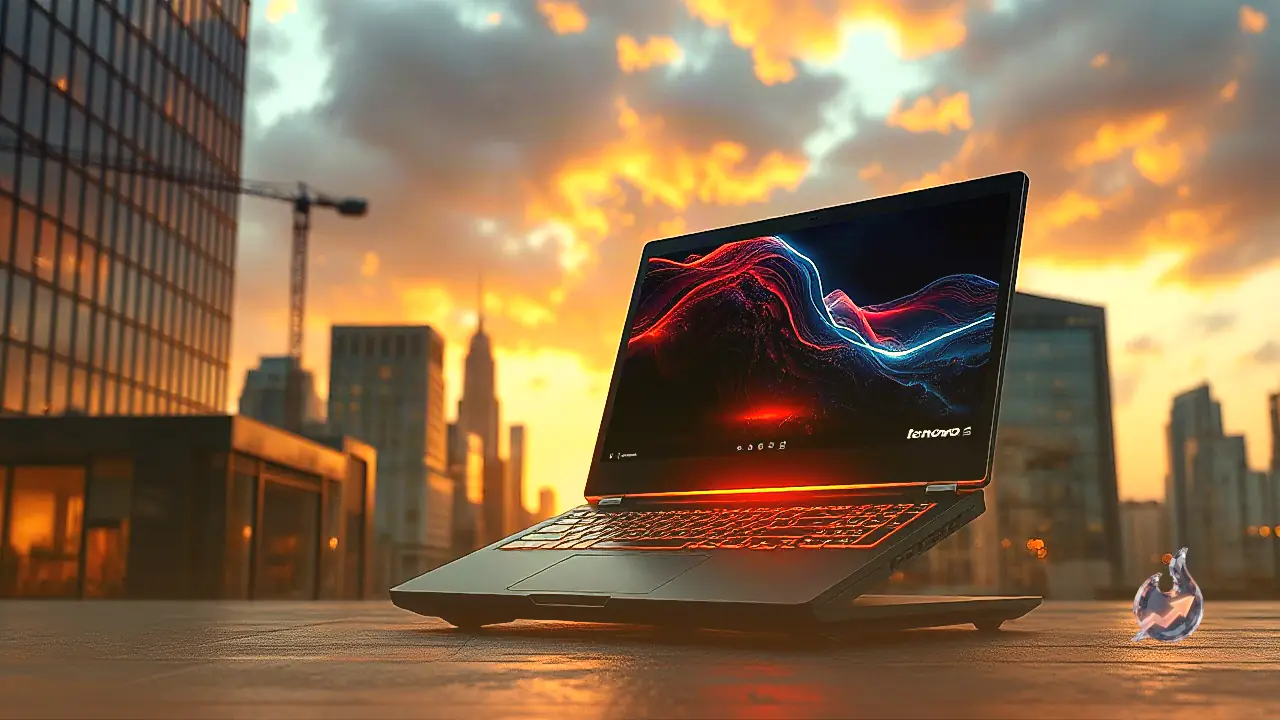
Leading the new laptop announcements is the Lenovo Yoga 9n 2-in-1, a 16-inch convertible laptop featuring a 360-degree hinge. Designed as a direct premium competitor to Apple's 16-inch MacBook Pro, the device features a high-end chassis with rounded metallic edges and ultra-thin bezels around its OLED touch display, which operates at a resolution of 2880 x 1800 with a 120-Hz refresh rate. Additional premium components include a six-speaker audio array and an integrated 9.2-megapixel webcam.
Despite its performance claims, the laptop measures just 0.69 inches thick, coming within 0.03 inches of the 16-inch MacBook Pro. This compact footprint is enabled by Nvidia's Arm-based system-on-a-chip (SoC) architecture, which integrates a Grace CPU with up to 20 cores alongside a Blackwell RTX GPU with up to 6,144 cores. By unifying CPU, GPU, and system memory onto a single SoC, the hardware mirrors Apple silicon rather than traditional x86 Windows laptop designs. Based on core count, the integrated graphics capability sits between current laptop-class RTX 5070 Ti and RTX 5080 discrete GPUs. The shift to an Arm-based SoC also promises notable power efficiency gains over discrete GPU setups, extending battery life during intensive tasks.
Yoga Pro 9n and Expanding Creator Laptop Lines
For users seeking a non-convertible option, Lenovo introduced the 15-inch Yoga Pro 9n. Sharing design elements with its 16-inch counterpart, such as the high-resolution webcam, rounded edges, and large haptic touchpad, the Yoga Pro 9n features a 2560 x 1600 OLED panel and a slimmer 0.66-inch profile at its thinnest point. It also incorporates a Force Pad touchpad that accepts direct input from styluses like the Yoga Pen Gen 2.
Memory configurations differentiate the two models: while the Yoga 9n 2-in-1 caps out at 64 GB of memory, the Yoga Pro 9n offers configurations up to 128 GB of RAM to accommodate large AI models. Other hardware brands are expanding the RTX Spark ecosystem this fall with upcoming models including the Dell XPS 16, Asus ProArt P16, and Microsoft Surface Laptop Ultra, alongside the compact 14-inch HP OmniBook X 14.
The Critical Role of On-Device AI and Privacy
The core objective of these RTX Spark systems is providing hardware capable of executing large AI models locally. On-device processing eliminates dependence on cloud infrastructure, reducing latency and ensuring data privacy. Local execution is particularly crucial when agentic AI tools interact with sensitive personal data, financial records, or private email accounts that users prefer not to process over remote servers.
Mini PCs and Competition from AMD and Apple
The desktop segment is also evolving with mini PCs designed for local AI processing. Acer introduced the Acer SFF RTX Spark, following Asus's previously revealed ProArt Mini PC. Similar in size to Apple's Mac Mini, these small-form-factor desktops pack the RTX Spark superchip, up to 128 GB of memory, and deliver a reported petaflop of AI performance. The launch follows Apple's recent updates to the M6 Mac mini and M5 Ultra Mac Studio line, underlining the growing importance of compact desktops in local AI deployment.
Nvidia faces active competition in the high-memory desktop space. Lenovo unveiled the AMD-powered ThinkCentre X Ultra, featuring AMD's Ryzen Max+ Pro 495 chip paired with up to 128 GB of memory. The same AMD silicon is featured in the Framework Desktop, while AMD's Developer Kit with 128 GB of RAM is already shipping to customers. The ThinkCentre X Ultra carries an expected base starting price of $3,699, underscoring the premium cost of these AI-focused setups.
Pricing and High-RAM Market Realities
Pricing remains a central challenge for local AI hardware adoption. High RAM requirements, combined with global memory costs, position RTX Spark computers at premium price tiers. For comparison, Apple's MacBook Pro lineup starts at $2,349 for the base M5 Pro model with 24 GB of RAM, scaling up to $6,139 for a fully configured 128 GB MacBook Pro model.