























The Apple Watch Series 12 has arrived, and its revamped suite of health tracking tools is undergoing extensive examination across real-world workout conditions. With the device on wrist over the initial 24 hours of use, several prominent modifications to daily wellness tracking have come into focus. The arrival of easily accessible step tallies directly on the display and the rollout of recovery HRV provide noticeable practical improvements. However, whether the company's bold marketing claims regarding industry-leading heart rate precision actually hold up under pressure remains an open question, particularly when paired against specialized chest sensors and dedicated athletic wearables.
Dedicated Step Tracking Arrives Directly on the Watch Face
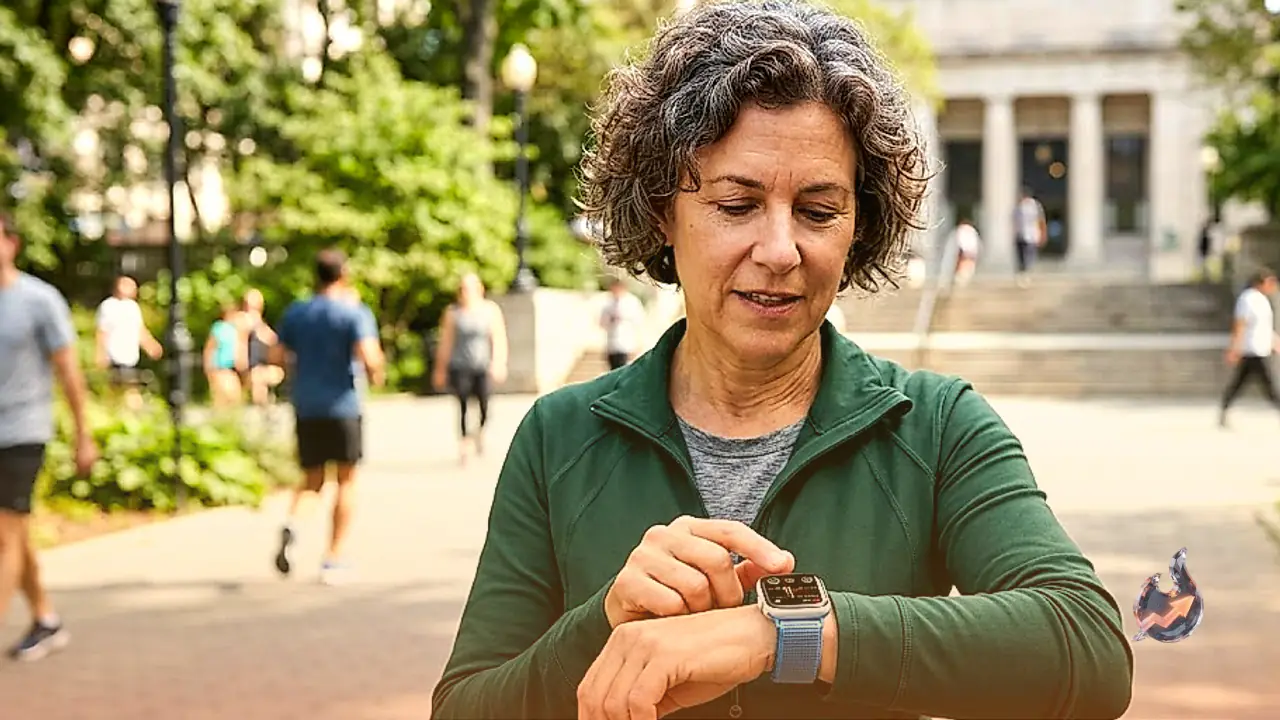
Users have waited an extraordinarily long time for Apple to offer straightforward, glanceable step counts directly on the watch hardware without requiring third-party tools, and that capability is finally integrated into the native experience. The smart stack can be launched hands-free using a double pinch of the fingers, bringing total daily steps right to the top of the interface. In addition, users can now place a dedicated step count complication straight onto the watch face through the Activity customization settings. The traditional activity rings remain accessible in that slot, but the platform now permits adding numerical steps or wheelchair pushes as alternative visual indicators.
In preliminary day-to-day use, the pedometer functions smoothly and registers movement rapidly. A manual count of nine steps between a desk and an office door reflected exactly nine paces on the screen. While Apple contends that this update delivers the most accurate pedometer system on the market, rigorous long-term trials will be required to confirm how it handles diverse walking cadences and terrain.
The major drawback of this rollout is its hardware exclusivity. The feature is completely unavailable on the Series 11 and earlier models. Apple has tied this calculation to a specialized pedometer model hardcoded into the new processing architecture found inside the Series 12. Because older hardware lacks the specific processing capabilities designated for these exact calculations, older devices are excluded from receiving the complication. Given that conventional fitness wearables have offered basic step counting on the wrist for years, gating such an elementary metric behind a processor upgrade has drawn justified criticism from longtime users.
Assessing the Sensor Redesign and Heart Rate Accuracy Claims
A central selling point for the Series 12 is the assertion that it features the most accurate heart rate monitoring of any wearable on the market. That assertion is particularly high-stakes given the historical performance of both prior models and specialized competitors. On the physical device, the underside reveals a noticeably redesigned optical sensor layout compared to the Series 11. To evaluate whether this hardware overhaul translates into tangible tracking gains, preliminary performance was mapped across three specific running sessions
- An interval running workout on a treadmill pairing the Series 11 alongside a chest strap.
- An identical treadmill interval run comparing the Series 12, a chest strap, and a Garmin Forerunner 570.
- An outdoor running session incorporating consistent jogging paces, rapid interval segments, and walking recovery with the Series 12, chest strap, and the 570 recording simultaneously.
The Garmin unit was brought into the mix due to its track record of matching chest-worn monitors almost beat-for-beat during athletic tests. When comparing the indoor running data from the Series 11 and Series 12 against the chest strap reference monitor, the newer watch demonstrated competent tracking, but failed to show an obvious generational leap over its predecessor. The primary limitation stems from Apple's continuing decision to sample workout heart rates only once every five seconds. In contrast, standard chest straps and competing devices like the Garmin log heart data continuously every single second. Consequently, Apple captures merely 12 discrete data points per minute of exercise while competitor systems collect 60.
This sparse five-second frequency became evident during outdoor workouts featuring varied paces. Graphing the output against the chest strap revealed several instances where the Series 12 completely skipped past the sharp peaks of quick cardiovascular surges. Although the Garmin also showed occasional blips during shifting movement, the absence of second-by-second sampling on the Apple Watch creates unavoidable blind spots during rapid interval efforts. Further varied athletic trials across multiple environments will be needed before reaching a definitive conclusion on the sensor's broader reliability.
Upcoming Health Metrics and Missing Intelligence Tools
Several heavily anticipated software tools announced for the Series 12 platform are not yet active out of the box. Running the base release of watchOS 27 without beta software means that tools such as Live Rewind and Siri Recaps remain inaccessible. Live Rewind is engineered to generate on-demand text transcripts covering ambient speech heard within the prior 15 seconds, while Recaps aims to synthesize lengthier events like business meetings. Both capabilities are scheduled for delivery through software patches later in the calendar year.
Similarly, the newly designed Readiness metric requires roughly seven consecutive nights of baseline sleep logs before generating a composite score. Early previews of recovery metrics are visible in the form of recovery-oriented HRV displayed alongside overnight sleep statistics. This metric shifts emphasis away from isolated clinical cardiac indicators toward general physical restoration. During one overnight tracking session, the watch logged an HRV reading of 45, whereas an Oura ring recorded a score of 50. Because distinct algorithms take readings at differing moments during rest cycles, tracking overarching longitudinal trends across days will be far more telling than comparing isolated single-point numbers.