























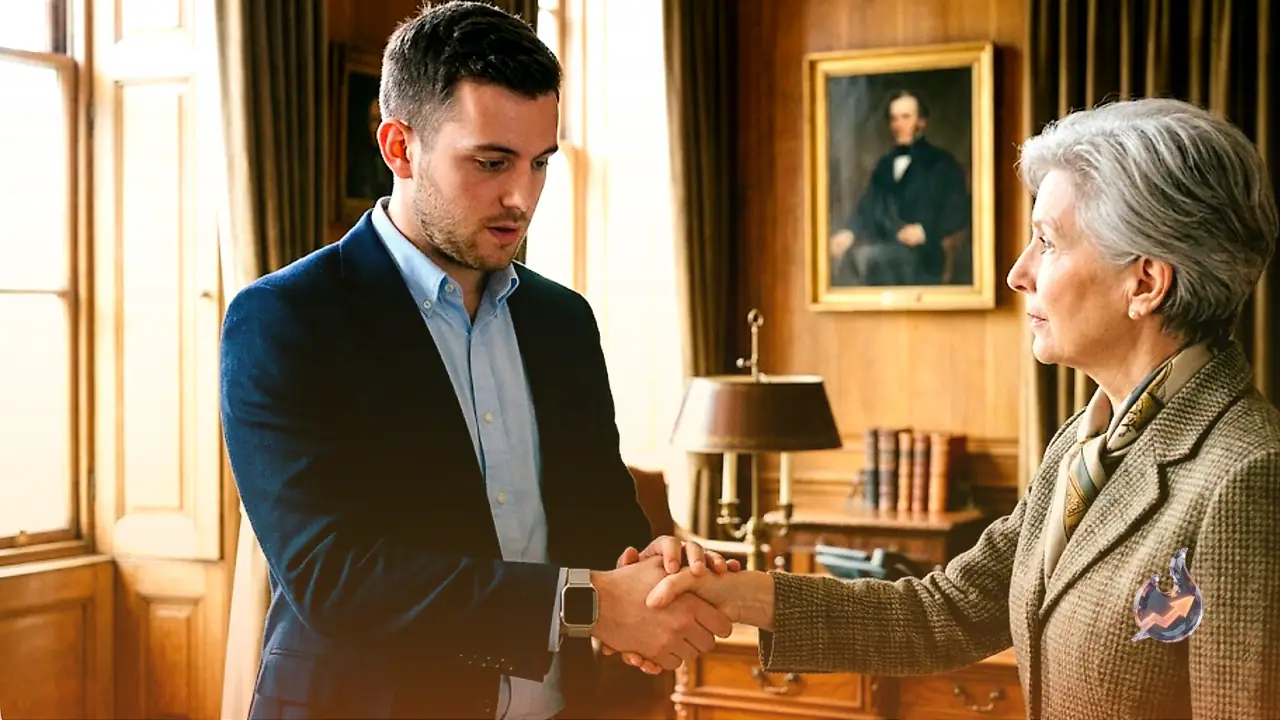

In November 2025, an unusual event took place at the prestigious Four Seasons hotel in San Francisco. A venture capital firm named Slow Ventures decided to host an Etiquette Finishing School. The curriculum was not about coding or scaling servers; instead, it focused on the traditional arts of the perfect handshake, public speaking, appropriate office style, and high-end dining. There was even a fashion show where models showcased proper business attire tailored for various corporate settings. The demand was immense. Hundreds of aspiring technology founders submitted applications, but only fifty selective individuals were accepted into the program. The Wall Street Journal covered this event, and the news quickly spread across the global technology ecosystem. Far from being a mere gimmick, this initiative touched a raw nerve in an industry undergoing a profound cultural transformation.
The momentum did not stop there. Slow Ventures organized a second session of the finishing school in New York City in March 2026. Alongside these classes, they published a modern etiquette handbook, which went on to sell seven hundred copies within its very first month. This growing interest in manners and presentation marks a significant cultural shift that deserves closer examination. It is a movement that goes far deeper than simply learning which fork to use at a formal dinner or how to tie a tie.
The End of the Disruptive Underdog Cliché
For decades, the technology sector prided itself on rejecting traditional corporate standards. The image of the brilliant but poorly dressed founder in a faded hoodie and flip-flops became the ultimate symbol of disruptive innovation. However, this anti-etiquette aesthetic has run its course. What once signaled creative genius is now widely viewed as a tired and disrespectful cliché. In a mature market, founders who present themselves with conscious respect, poise, and social grace are discovering they hold a massive competitive advantage over those who remain overly relaxed in their dress and behavior.
The general partner at Slow Ventures, Sam Lessin, articulated this reality with brutal clarity. He noted that the technology sector can no longer pretend to be a playful and cute underdog. It has grown into a massive force that is actively replacing human jobs, transforming local environments, and reshaping global systems. Because of this immense power, the public and traditional institutions often feel threatened by tech companies. In such a high-stakes environment, arriving at a meeting with intentional disrespect or complete ignorance of social norms is a liability. Founders must learn to show up with deep respect for their counterparts if they want to build lasting trust, especially since personal likability is now directly tied to professional credibility.
Global Capital and the Room Where It Happens
This realization may feel like a sudden revelation in Silicon Valley, but for professionals who have operated internationally over the last two decades, it is basic common sense. Experienced operators who have navigated high-stakes negotiations in the Gulf region, built institutional partnerships across Europe, or collaborated with sovereign wealth funds know a fundamental truth: the way you present yourself in a room is inseparable from your professional credibility.
In the global arena, institutions writing the largest checks operate on a different set of rules. They do not look at a pitch deck in isolation; they evaluate the human being sitting across the table first. Whether negotiating with a minister of finance in Riyadh, a principal of a prominent family office in Milan, or a trustee of a major pension fund in London, the process of building trust begins long before the first slide is projected on the screen.
These sophisticated global allocators look at specific, subtle cues. They observe the quality and firmness of your handshake. They note whether you arrived thoroughly prepared, having read all background materials in advance. They watch whether you can engage in a broad, intelligent conversation that extends beyond your own product or startup. They even notice if you possess cultural literacy, such as knowing something about fine French or Italian wines. For years, American tech culture treated these social graces as optional luxuries. The rest of the world, however, never stopped treating them as essential indicators of character and reliability.
The High Cost of Digital Isolation
The sudden demand for etiquette schools highlights a much deeper systemic problem within the modern workforce, one that a brief three-hour class cannot fully resolve. A whole generation of young professionals and entrepreneurs has grown up defaulting to digital-first communication. They choose Slack messages over direct phone calls, Zoom links instead of shared lunches, and endless email threads instead of face-to-face conversations. While these digital tools are undeniably efficient, the habit of over-relying on them has become incredibly expensive in terms of human connection.
Social competence is not a static trait; it is a perishable skill that rapidly deteriorates when it is not actively practiced. Ironically, the very founders now paying to learn basic social etiquette are the ones who spent the last decade building digital products designed to eliminate human friction. By removing friction, they also inadvertently stripped away the depth of human interaction. A grid of muted faces on a video screen cannot teach you how to read the subtle energy of a room. Artificial intelligence cannot replicate genuine warmth, eye contact, or authentic interest in a chat thread.
Bella Figura and the Italian Advantage
To understand how social codes function at their highest level, Italy serves as an exceptional case study. In Italian society, the rules are ancient, explicit, and deeply integrated into daily life. The concept of bella figura, the idea that how one presents oneself in public is a fundamental civic and professional responsibility, is far from a superficial social affectation. It is a highly practical operating principle.
In Italy, professionals do not separate a person's personal behavior from their technical competence. The ability to read a room, control the tempo of a negotiation, and show up having carefully considered the other party's perspective are treated as core professional capabilities, not optional soft skills. This is not charm deployed for superficial reasons; it is the very infrastructure of trust.
This philosophy is what experts in Italian business culture refer to as the Italian Advantage. The social protocols embedded in Italian commerce, from the deliberate structure of negotiations to the sacred ritual of a shared meal, are deeply functional. They represent centuries of accumulated wisdom on how to build resilient, long-term relationships across complex cultural and institutional boundaries.
The Return of Relational Capital
The shifting landscape of global finance has made these social skills more critical than ever. Capital is increasingly concentrated in specific geographies and institutions that place an immense premium on personal, relational trust. Regions like the Gulf, Europe, and major parts of Asia operate on long-cycle relationship models. In these markets, a single breach of protocol, an overly rushed meeting, or a missed social cue can permanently close a door that might take years of effort to reopen.
The sudden interest in etiquette within the technology sector is a clear warning sign. Founders and executives are starting to realize that they can no longer operate as if the rules of the physical world do not apply to them. Being present, respectful, and genuinely likable is a core competitive advantage that no software application can automate.
This need for interpersonal trust and stability is particularly evident when we observe how professional networks operate under broader market pressures, such as those currently being felt in the highly volatile cryptocurrency and digital asset spaces.
Market Dynamics and the Cryptocurrency Landscape
While traditional markets emphasize structured relationships, the digital asset ecosystem is currently grappling with its own trust and valuation challenges. The broader cryptocurrency market has remained under significant pressure, with Bitcoin trading below the crucial $60,000 threshold on Tuesday. This downward trend follows a sharp decline on Monday, leaving the benchmark digital currency struggling to mount a convincing recovery. Market analysts point out that digital assets remain firmly in a defensive posture as participants look for stronger signs of institutional demand.
This cautious sentiment is reflected in retail behavior, with the Fear and Greed Index hovering around a score of 17. This extremely low reading maintains an Extreme Fear signal across the market. Over the past week, Bitcoin has shed more than 5% of its value, driven in large part by traders reacting to highly volatile and mixed signals from various parties involved in the Middle East conflict. Geopolitical tensions have historically weighed heavily on risk assets, and the digital currency market has proven highly sensitive to these global disruptions.
Amid this market weakness, certain assets have managed to stand out. Solana, Zcash, and Hyperliquid have emerged as top performers over the past 24 hours, showing resilient gains despite the broader market downturn.
At the corporate level, major players are adjusting their financial structures to navigate this challenging environment. MicroStrategy, represented by its stock ticker MSTR, has unveiled a new Digital Credit Framework. This framework represents a major strategic shift for the world's largest corporate holder of Bitcoin. Rather than continuing its aggressive accumulation strategy, MicroStrategy plans to pivot under this new framework. The company will now look to sell BTC in order to enhance its overall liquidity, fund dividend payments to shareholders, execute stock buybacks, and significantly strengthen its cash reserves.
Ultimately, whether in the high-stakes world of venture capital networking or the volatile trading desks of digital assets, the core lesson remains unchanged. The quality of presence, structured risk management, and the ability to build durable, trust-based frameworks are what separate successful long-term operators from temporary players. Andrea Zanon, a seasoned professional with twenty years of experience in disaster risk management, sustainability, and entrepreneurship who has advised international institutions across the Middle East and North Africa, has long emphasized that managing risks and understanding human protocols are fundamental to surviving complex global shifts. In both finance and technology, the human element still matters.