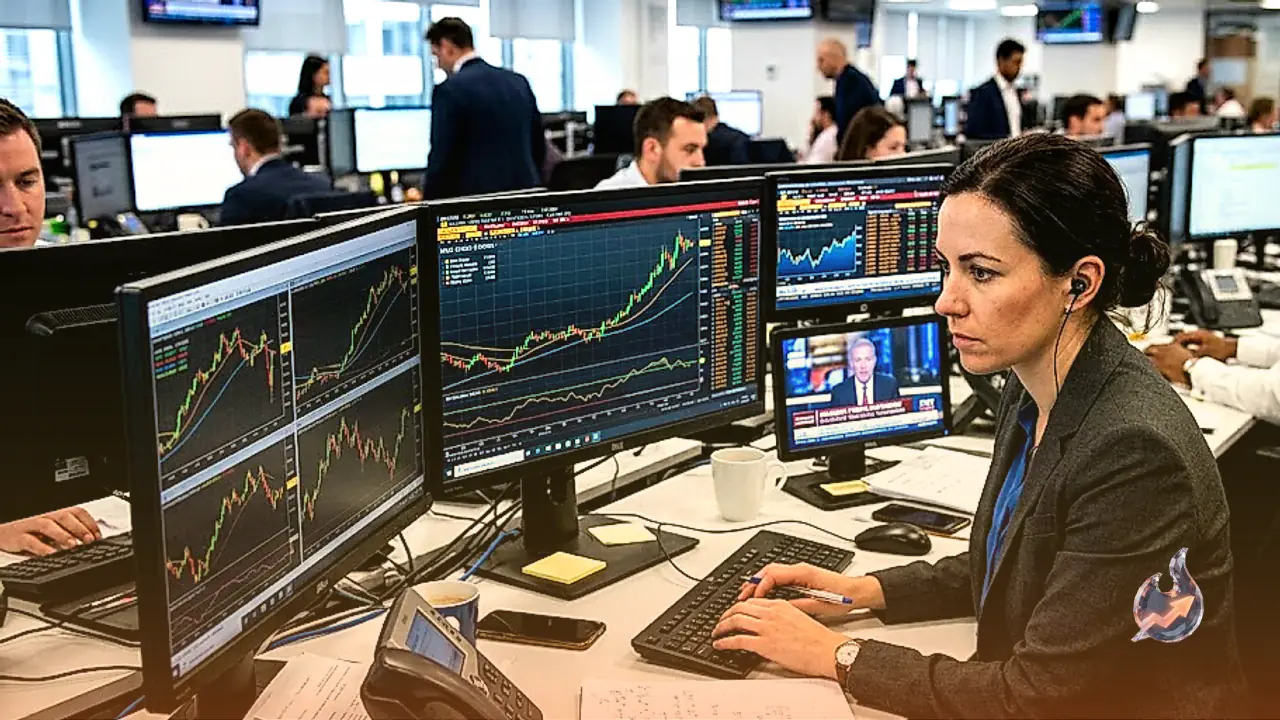























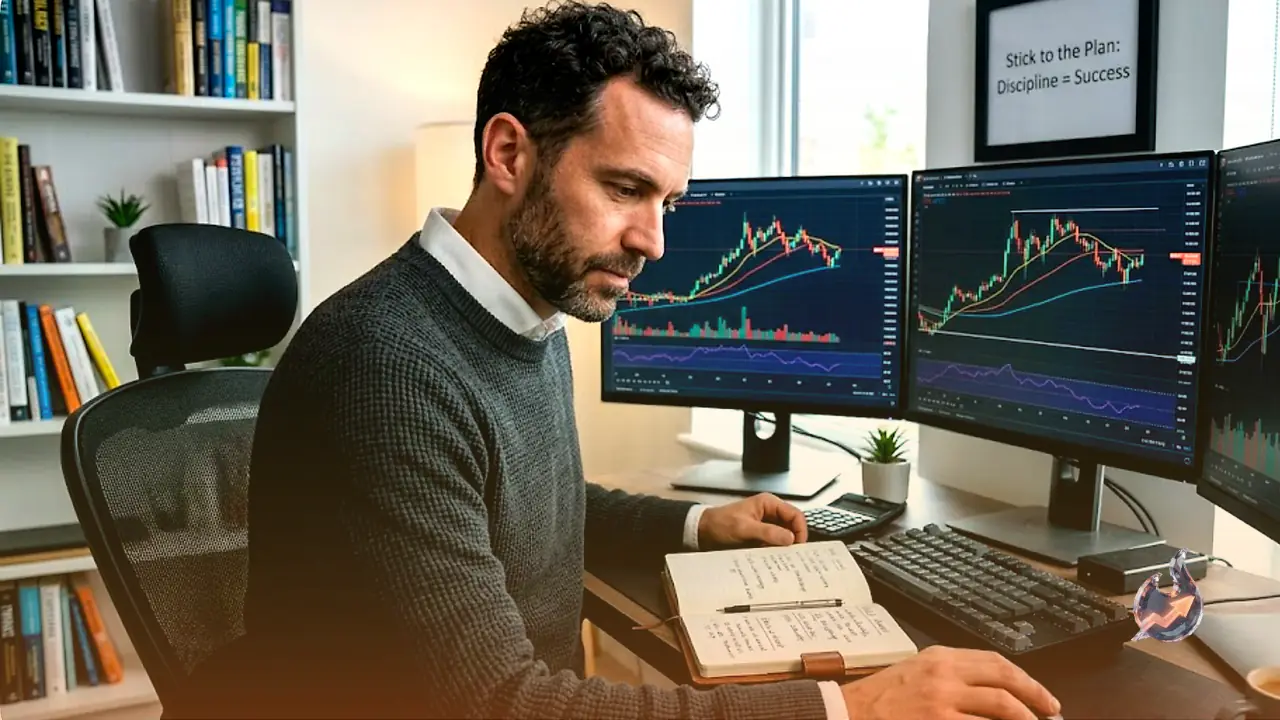

Every trader has been the version of themselves that wakes up at 3 a.m., staring at the ceiling and replaying a trade that concluded six hours earlier. They find themselves recalculating the sequence of events, knowing deep down that their strategy wasn't the core issue. The markets act as a stress test for the nervous system, far more than for a technical edge. Managing patience, keeping the ego in check, and ensuring the thumb stays away from the buy button when candles turn red—these are the real tests. The urge to act when the market becomes volatile is often the loudest voice in the room.
The Role of Psychology
Trading psychology is the invisible engine beneath every session and every decision. Habits centered on attention, emotion, and risk management shape an account just as significantly as chart analysis does. Given enough time, these habits compound into a stable foundation or slowly grind a trader down until they reach burnout. Many traders erroneously expect consistency to look like a straight line of upward growth, and when reality fails to meet that expectation, they panic and begin improvising mid-session. Consistent traders, by contrast, adhere strictly to a process. They arrive with a plan written before the market bell, not one invented on the fly. Their results are not contingent on adrenaline or the occasional hot streak, but on behaviors that recur even on the most boring days.
The Science of Regulation
Research into mindfulness suggests it can alter brain structures linked to emotion regulation and focus, which are critical when a live position is flashing on the screen. Studies show that mindfulness practice is linked to increased gray matter in areas associated with learning, memory, and emotional control. Sleep is equally vital; sleep-deprived individuals tend to take disproportionately large risks and make poorer decisions, precisely what one wants to avoid before a volatile session. Burnout usually emerges through small, repeating patterns. Every click carries a cost, whether through slippage, fees, or the accumulation of small mistakes made when setups are forced rather than discovered. Individual investors who trade with high frequency consistently underperform compared to those with a more measured pace.
FOMO and Risk Asymmetry
Fear of missing out, or FOMO, is purely a stress response. The CFA Institute has identified FOMO as a primary driver that pulls traders away from disciplined decision-making and toward momentum-chasing—buying because a price has moved rather than because a thesis supports the entry. This typically ends in a late entry and a loss that feels personal because the trader knew better from the start. Prospect theory highlights an uncomfortable truth: losses are felt more intensely than equivalent gains, and this asymmetry warps real-time choices. This is how small drawdowns evolve into significant losses. When a stop-loss is moved or size is added to an existing loser to average down, risk management has effectively ended, replaced by the desperate need to avoid the feeling of being wrong.
Designing the Routine
A structured routine prevents the day from controlling the trader. Pre-market: review levels, catalysts, and scenarios. Define what an A+ setup looks like, and just as importantly, define the conditions that dictate staying flat. Brandy Hastings, an SEO Strategist at SmartSites, notes that the strongest performers are rarely those making dramatic daily decisions. Instead, they are the ones following a repeatable process long enough to identify what actually works. Documentation creates accountability. Once a process is recorded, it becomes much easier to identify emotional choices before they become expensive mistakes. During the session, maintain a checklist and schedule breaks. After the close, review and record lessons while they remain fresh, before the mind rationalizes them into something more flattering.
Technique and Evolution
Consistent traders plan the downside before they ever consider if they like the setup. Position sizing is derived from predetermined risk per trade, and stops are placed where the thesis breaks, not where pain becomes tolerable. Daily loss limits are respected regardless of the feeling that the next trade will be the "one." Knowing the exact loss tolerance before entry removes the emotional weight that wrecks judgment during the trade. This is the true purpose of risk management—removing the decision from the moment a trader is least equipped to handle it. Samuel Charmetant, Founder of ArtMajeur, emphasizes that a vital skill in any decision-driven environment is the ability to adapt without abandoning your process. True consistency is applying the same principles while adjusting to new conditions. The most successful individuals are those who can recalibrate without becoming emotionally attached to yesterday's assumptions.
Current Market Snapshot
Bitcoin (BTC), Ethereum (ETH), and Ripple (XRP) are trading in the red on Friday following three consecutive days of losses, testing crucial support levels. Bitcoin is trading at $66,000 on Friday, having touched a yearly low of $58,115 earlier this week, its weakest level since October 2024. Institutional selling has intensified, with spot ETFs recording $1.35 billion in net outflows through Thursday. Ripple is trading near the psychological support of $1 at the time of writing, down more than 8% for the week. CoinGlass liquidation data indicates that over 97% of XRP long positions were liquidated in the last 24 hours. The Pi Network price is seeing a mild 3% recovery at press time, showing a potential rebound from a broken descending trendline.