























Financial market participants frequently attribute their capital erosion to inevitable market fluctuations, unexpected volatility, or simple bad luck. When reviewing trading logs with strict objectivity, however, a stark reality becomes apparent: the most devastating damage is rarely caused by the initial, planned loss. Instead, the real destruction stems from a series of self-inflicted tactical errors that occur in a highly concentrated time frame immediately following a losing trade.
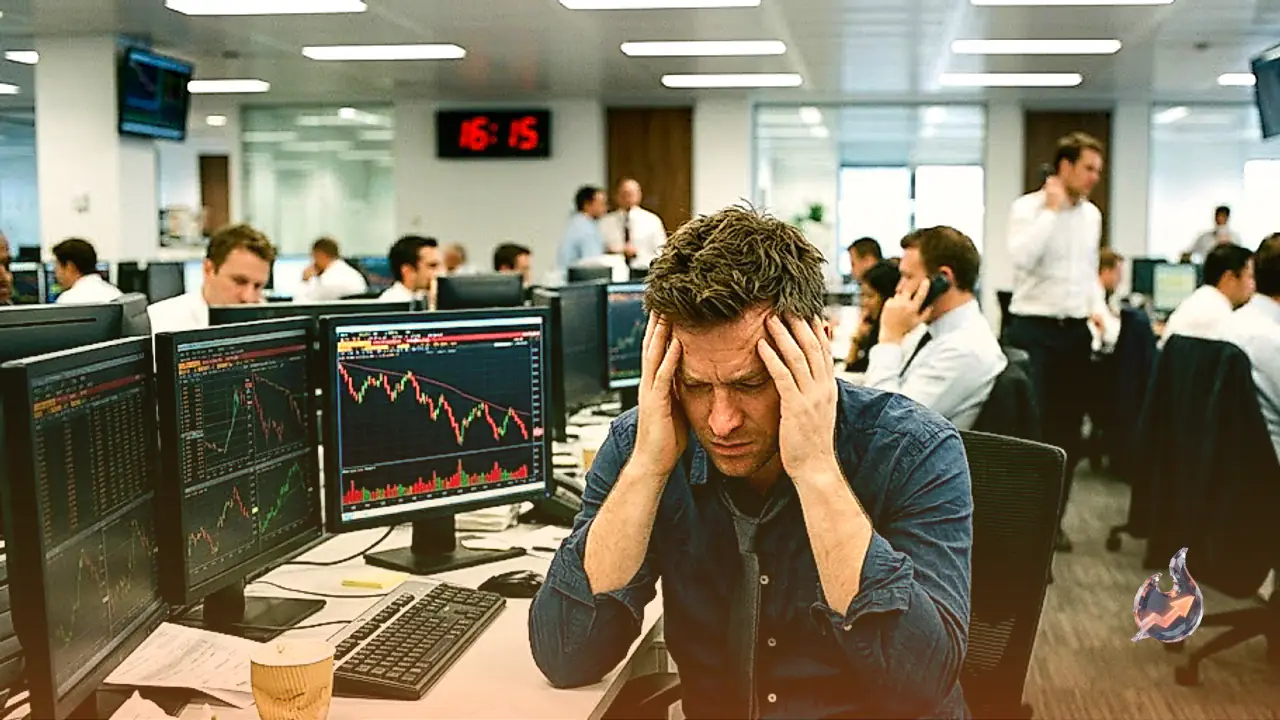
The original loss, in itself, is almost never the actual threat to an account. In any professional risk management framework, a single loss is merely a line item, an expected cost of doing business that was sized appropriately before execution. The genuine danger lies in the second trade: the one initiated in a state of agitation, executed with an inflated position size, and entered without a valid technical setup. A loss triggers a powerful neurochemical response in the human brain that demands immediate resolution. In that moment, the subsequent trade ceases to be an objective investment and becomes a form of emotional first aid disguised as a market position.
The Clustering of Costly Trading Errors
The vulnerability of this post-loss window is not caused by a lack of education or technical knowledge. Almost every trader who engages in revenge trading understands, intellectually, that doing so is a major strategic mistake. The necessary knowledge is fully present in their mind; however, it becomes completely inaccessible at the precise moment it is required for decision-making.
The cognitive state of an individual twenty seconds after a painful stop-out is fundamentally different from the calm state in which they drafted their trading plan over the weekend. Following a loss, cortisol levels surge rapidly. The prefrontal cortex, which is responsible for deliberate, logical decision-making, experiences reduced activity, while the reactive, survival-oriented structures of the brain become highly dominant. The trader who is in desperate need of structured rules is, at that exact moment, biologically unequipped to adhere to them.
Why Traditional Discipline Advice Fails Under Stress
Standard psychological advice in the trading industry often centers on personal willpower, encouraging individuals to be more disciplined, practice deep breathing, or maintain a detailed journal. These recommendations are flawed because they assume that the calm, rational version of the trader is the one making the decisions immediately after a financial setback. In reality, the version of the individual who actually needs to apply the rule is not the one who formulated it.
Willpower is a finite cognitive resource that depletes rapidly when subjected to market volatility and financial drawdowns. Relying entirely on self-discipline to navigate the highly volatile post-loss period is highly ineffective. The mental mechanism of control degrades under the exact high-stress conditions where its strength is most required. Successful market participants eventually realize that trying to fix the emotional human element is ineffective, and instead choose to remove human discretion from the execution process entirely.
The Power of a Rules-Based Systematic Process
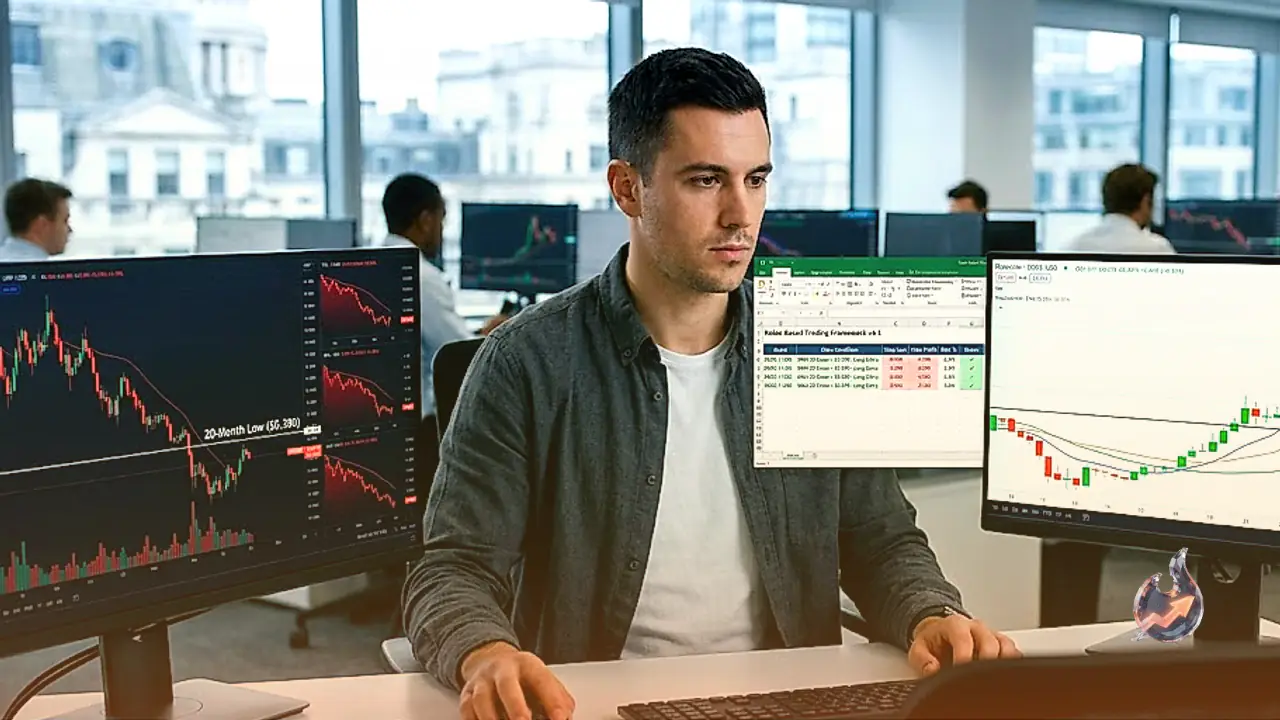
A systematic, rules-based trading structure is entirely immune to the emotional aftermath of a loss because it possesses no memory of previous psychological distress. Every element of execution, including entry points, stop-loss levels, position sizing, and profit targets, is calculated well before the session begins and executed precisely to specifications. A trade executed after a loss is generated by the exact same logic as a trade executed after a winning outcome, with the system completely indifferent to the prior result.
This is the fundamental advantage of a systematic framework. It does not attempt to manage anger or force calmness after a setback; it simply processes a loss as one predictable outcome within a wider statistical distribution. Because there is no emotional agent present to experience frustration, the destructive cycle of loss, emotional instability, revenge trading, and compounding losses is physically prevented from forming.
Reclaiming Mental Energy and Minimizing Exhaustion
There is an additional, less obvious benefit to eliminating human discretion from post-loss decisions: the preservation of mental energy. Discretionary traders often spend significant hours emotionally recovering from negative sessions, analyzing their mistakes, and attempting to return to a baseline cognitive state. This emotional recovery time represents a massive hidden cost that does not appear on an equity curve but severely limits productivity.
When reactive trading is structurally designed out of the system, this recovery period is completely eliminated. The trading account stops bleeding capital during the critical post-loss window, and the trader stops wasting valuable cognitive energy trying to recover from emotional distress.
For traders operating with funded and prop firm accounts, this structural approach is vital for survival. Prop firms employ strict, automated trailing drawdown limits that do not tolerate oversized, unplanned emotional trades. A single massive revenge trade can instantly breach these limits and result in the immediate forfeiture of a funded account. In this environment, transitioning to a highly structured system is not just an intellectual preference; it is the ultimate difference between a minor, survivable setback and complete account liquidation.
If your most critical trading errors consistently occur in the immediate aftermath of a loss, the core issue is not your market analysis. It is the twenty minutes of intense human reaction that follows a negative outcome. This is a structural vulnerability that cannot be solved by willpower alone. The solution must be structural: determine the parameters of your next trade before any loss occurs, and remove the decision-making power from the individual who has just been shaken by a negative market move.
The Puravida Edge Analysis Team focuses on researching systematic trading strategies for prop firm and funded traders, with a specific emphasis on volatility-based position sizing, drawdown control, and Monte Carlo risk modeling across various futures and forex markets.