


















Even after orchestrating a regime change in Venezuela and seeking control over its colossal energy reserves, Donald Trump faces a formidable logistical and technical barrier. The removal of Nicolas Maduro from power and his imprisonment in early 2026 was widely driven by Washington's ambition to dominate the Venezuelan oil landscape. Venezuela sits on the largest proven crude oil reserves on the planet, making it an indispensable target in American geopolitical calculations. However, turning geological abundance into tangible economic value has proven to be an uphill battle. The severe physical characteristics of Venezuelan petroleum have stalled the administration's commercial ambitions, shifting focus toward India's western coast, where the massive Jamnagar refining complex in Gujarat could provide the missing piece of the puzzle.
The Complex Processing Realities of Venezuelan Crude
Securing physical access to oil wells does not automatically translate into refined petroleum products or steady financial returns. Crude oil pumped directly from the ground must undergo thorough processing to yield marketable transportation fuels like gasoline and diesel. Unlike the lighter, sweeter crude grades typically extracted across the Arabian Peninsula, petroleum from Venezuela is exceptionally dense, sluggish, and heavy. Loaded with heavy metals, sediments, and exceptionally high sulfur concentrations, this grade of crude presents serious operational difficulties for standard oil refineries around the world.
Processing high-sulfur and sediment-heavy petroleum demands specialized engineering, resilient metallurgy, and sophisticated processing units designed to withstand intense corrosion and heat. When processed in standard refineries, such dense feedstock causes severe line fouling, accelerated hardware damage, and unsustainable maintenance costs. Without specialized, high-conversion refining facilities, turning this dense raw material into clean commercial fuel becomes prohibitively expensive. Consequently, despite effectively asserting influence over Venezuela's oil reserves, American plans to quickly commercialize these resources have hit a technical wall.
Domestic US Refining Limitations and Commercial Roadblocks
The United States does possess specialized refining capacity along the Gulf Coast that is theoretically capable of handling heavy sour crude. However, these facilities are constrained by capacity ceilings and existing supply commitments. The domestic refining network simply lacks the unallocated volume headroom required to process massive new streams of Venezuelan crude on a sustained commercial scale. Attempting to absorb such volumes within existing American facilities would necessitate massive capital expenditures and disruptions to established operational flows.
Furthermore, running heavy, sulfur-laden crude through American refineries carries a heavy financial penalty due to stringent environmental compliance standards, high domestic operational overheads, and logistical bottlenecks. If the processing costs exceed international market thresholds, the refined products lose their commercial viability. To extract genuine economic value from Venezuelan extraction, the crude must be refined at an installation capable of delivering economies of scale at competitive operating costs. This economic necessity has forced the Trump administration to look abroad for refining infrastructure that possesses the required technical depth.
Jamnagar's Technical Superiority and Massive Scale
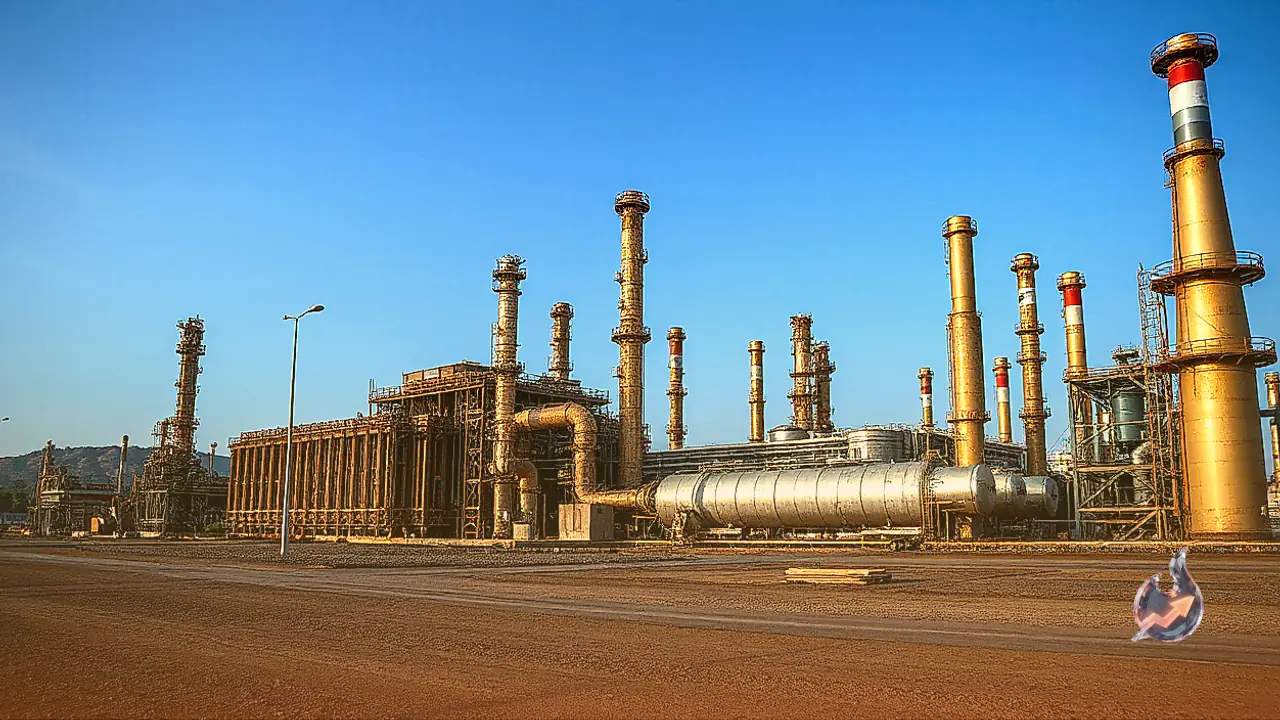
When seeking facilities capable of transforming extremely difficult, high-sulfur feedstocks into high-value petroleum products at high volume, the Jamnagar complex in Gujarat, India, stands unmatched. Owned and operated by Reliance Industries, Jamnagar ranks among the largest refining complexes in the world, boasting a combined processing capacity of approximately 1.4 million barrels per day. The facility was deliberately engineered from the ground up to accommodate the world's heaviest and most challenging crude varieties.
Equipped with advanced delayed cokers, severe hydrocracking units, and state-of-the-art desulfurization infrastructure, the Jamnagar complex possesses the precise technical architecture needed to break down dense Venezuelan crude. It can convert viscous, sulfur-laden residues into clean, market-ready transportation fuels and high-value petrochemicals at highly competitive cost structures. This specialized capability makes Jamnagar the most operationally suitable and financially viable refining destination for Venezuelan crude. The administration recognizes that channeling Venezuelan crude through Jamnagar could unlock the bottleneck that currently hampers its broader energy strategy.
Diplomatic Engagements and Marco Rubio's Strategic Visit
Underscoring the critical importance of Gujarat's refining capacity to Washington's energy agenda, US Secretary of State Marco Rubio conducted an official visit to Jamnagar. The visit centered on evaluating the practical mechanics of directing Venezuelan crude supplies to Indian processing units and deepening bilateral energy coordination. During his visit, Marco Rubio engaged in substantive discussions with Rahul Joshi on October 20, where he commended the advanced operational prowess of the Reliance complex and examined the prospects of processing significant volumes of Venezuelan oil there.
Their discussions went beyond refining logistics to touch upon wider commercial openings connected to the revival of Venezuelan oil production. Marco Rubio's presence in Jamnagar delivered a clear signal that American energy designs are closely linked to India's downstream industrial strength. Utilizing Jamnagar's colossal refining capacity allows the United States to secure an operational bridgehead, ensuring that heavy Venezuelan crude can be processed efficiently and channeled smoothly into the global marketplace without overwhelming domestic American facilities.
Overcoming Infrastructure Decay to Realize Value
Beyond the downstream challenge of refining, the broader task of reviving Venezuela's energy apparatus is fraught with systemic hurdles. Decades of chronic underinvestment, neglected maintenance, and institutional decay have severely damaged Venezuelan production wells, pumping facilities, pipelines, and export terminals. Restoring field output to robust commercial levels will require substantial capital injections, modern replacement hardware, and sustained technical oversight, alongside specialized marine transport capabilities.
Donald Trump's overarching plan cannot succeed through political control or leadership changes in Caracas alone. Transforming Venezuela's underground wealth into reliable revenue streams requires the synchronized recovery of upstream extraction, modern transport networks, strategic investment, and high-efficiency refining operations. Jamnagar represents an indispensable industrial hub in this chain, providing the processing power necessary to turn Venezuela's heavy crude into commercial reality.