





















With the festive season underway, commercial hubs and neighborhood markets are experiencing an extraordinary surge in consumer footfall. Among all the retail segments, traditional sweet shops and confectioneries witness the steepest rise in customer turnout during Diwali, as households stock up on treats made from condensed milk, clarified butter, cottage cheese, and nuts. For generations, an unwritten ritual has played out at every sweet counter across the country: whenever a customer asks whether a particular batch of milk cakes, gulab jamuns, or burfis is genuinely fresh, the vendor routinely responds with unwavering assurance that the batch arrived from the kitchen just minutes ago. The sheer volume of festival sales has traditionally allowed shopkeepers to claim that inventory moves so rapidly that stale products cannot possibly linger on their shelves. However, this established retail dynamic is facing a severe disruption in Uttar Pradesh and Uttarakhand, where food safety authorities have issued sweeping orders requiring vendors to explicitly declare the freshness window and expiry date on loose confections, triggering widespread panic across the confectionery sector.
Directives Issued for Open Trays and Counters
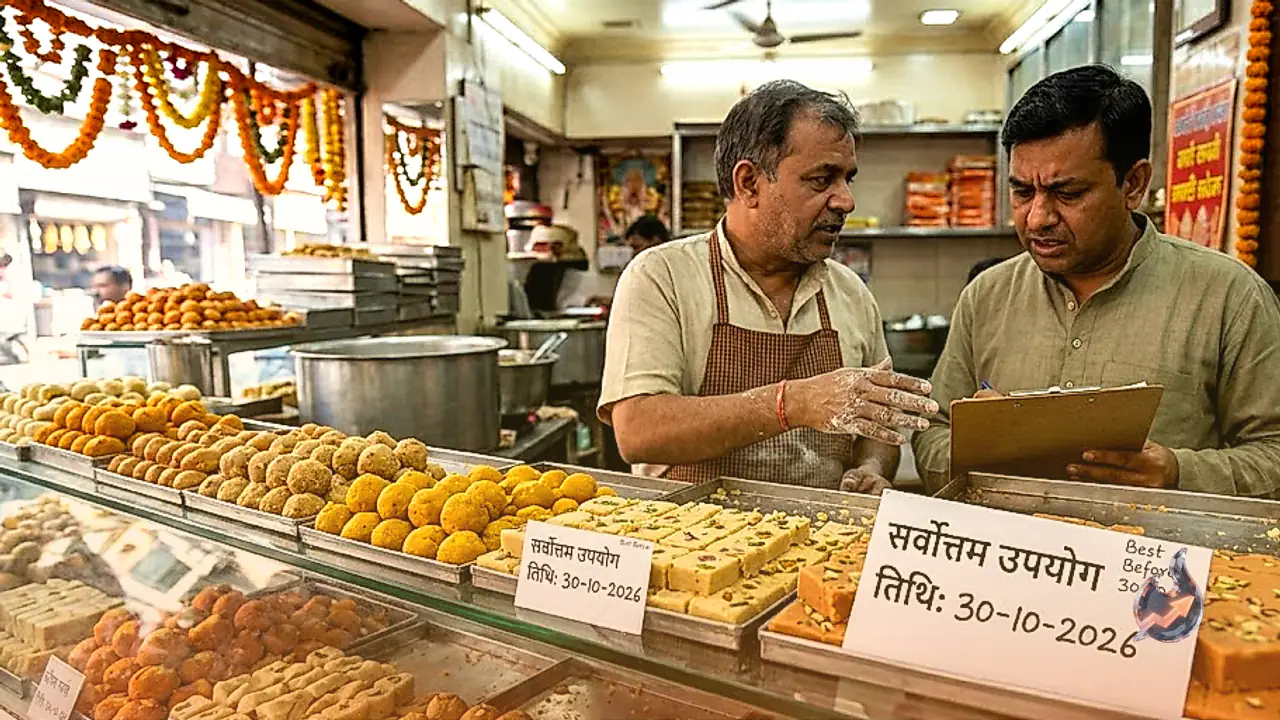
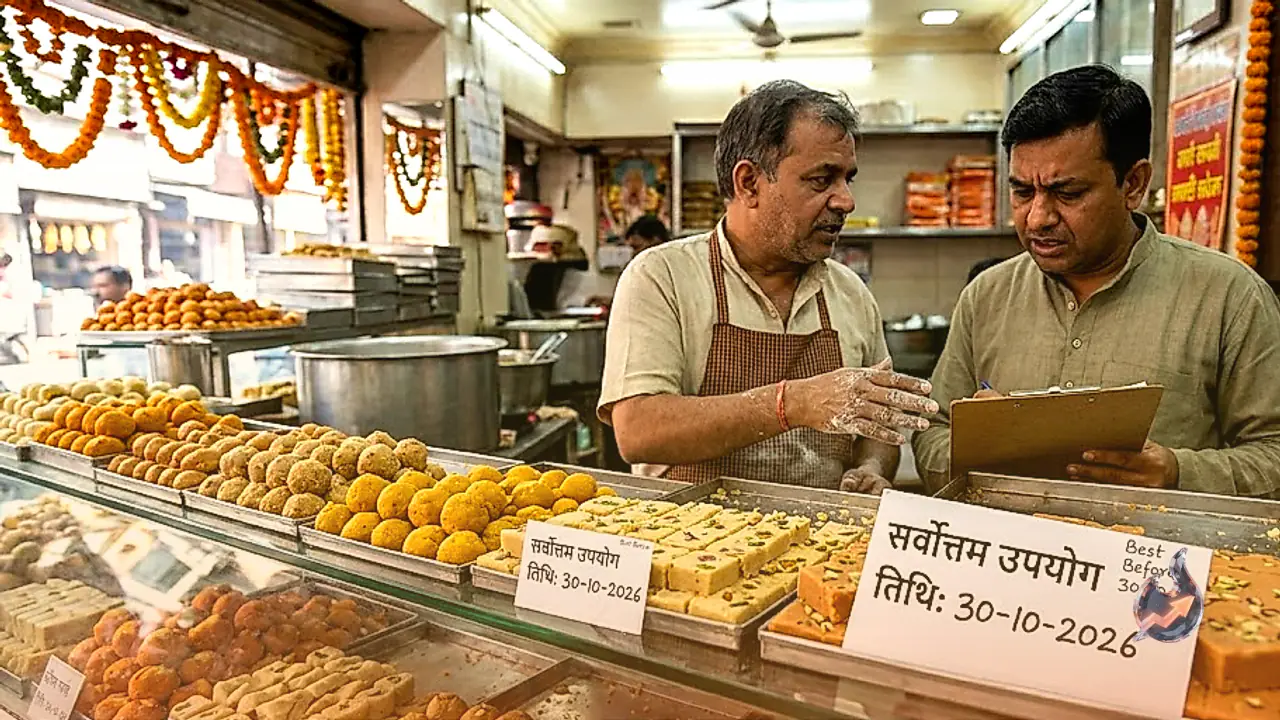
Under the freshly notified enforcement orders in Uttar Pradesh and Uttarakhand, the requirement to print expiry details is no longer restricted to pre packaged, factory sealed boxes. Sweetmakers are now legally obligated to display clear, legible signage on every tray, glass showcase, and counter holding loose sweets, indicating the exact date of preparation along with the final date by which the item should be consumed. In Uttarakhand, the regulatory scope has been extended further to cover loose bakery preparations as well. While national regulations have always enforced strict manufacturing and expiry labelling on packaged goods, the vast majority of sweets in India are prepared on site and sold loose by weight. By bringing loose confectioneries under the purview of mandatory date marking, the food administration aims to eliminate the information asymmetry between vendors and buyers, ensuring that citizens know exactly what they are serving to their families.
Sweetmakers Flag Operational Hurdles and Staff Constraints
The sudden implementation of this directive right before Diwali has drawn sharp reactions from sweetmaker unions and trader associations across both northern states. Business owners argue that adhering to such an exacting protocol during the peak festive rush is logistically unfeasible. Their primary practical contention revolves around inventory velocity. During peak festive hours, display trays do not sit static for long; customer demand empties them every couple of hours. As soon as a tray is cleared, a fresh batch is brought in from the production area to replenish the display. Confectioners argue that constantly updating labels, recalculating consumption limits, and applying fresh stickers to each tray multiple times a day will paralyze counter operations. Furthermore, small and medium enterprises emphasize that they already operate under severe workforce constraints. Assigning dedicated personnel solely to track timestamps and swap display stickers appears economically and operationally burdensome for modest neighborhood establishments. Consequently, trade bodies have submitted representations urging authorities to defer enforcement until after the festive rush concludes, though regulators appear reluctant to grant concessions during the very period when consumption peaks.
The Six Year Policy Tug of War and National Rollback
The push to display consumption timelines on unpackaged sweets is far from a spontaneous bureaucratic whim; it represents the revival of a contentious six-year policy battle. Back in 2020, the apex regulatory authority, the Food Safety and Standards Authority of India, officially formulated rules directing state administrations to mandate expiry dates on loose confections nationwide. The national body instructed regional commissioners to establish strict monitoring frameworks. However, that notification triggered an immense backlash from confectionery confederations and retail lobbies across multiple states. Confronted with sustained trade pushback, claims of operational impossibility, and enforcement challenges, the central regulatory authority ultimately withdrew the directive in 2023. The broader public remained largely oblivious to the fact that a major consumer protection mandate had been conceived, contested, and quietly shelved behind administrative doors. By resurrecting this policy at the state level, authorities in Uttar Pradesh and Uttarakhand have reopened a structural debate over food governance.
Fears of Bureaucratic Overreach Versus Public Health Necessities
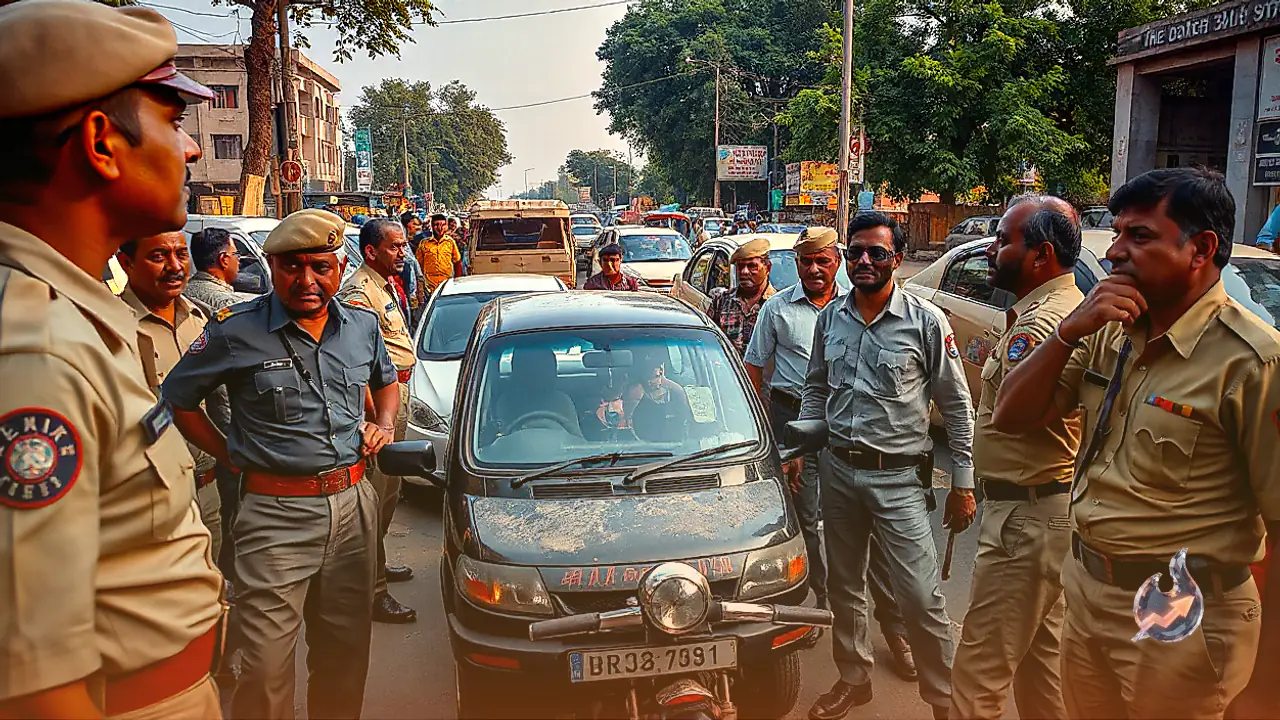
A primary driver of anxiety among sweet vendors is the prospect of arbitrary administrative inspections during their most lucrative commercial window. Retailers argue that ambiguous enforcement criteria will empower ground level food safety inspectors to intimidate businesses and solicit unlawful settlements under the pretext of minor labelling irregularities. Confectionery proprietors contend that rather than enhancing product safety, the measure risks becoming an instrument of extortion. Conversely, public health advocates point out that consumer welfare cannot be perpetually subordinated to procedural anxieties. While the logistical capacity of enforcement wings to monitor thousands of decentralized retail outlets remains a pertinent question, the presence of a binding statute establishes a vital legal deterrent. When shopkeepers know that displaying expired batches carries penal risks, the incentive to recycle leftover sweets diminishes significantly. Moreover, decisive regulatory implementation in two prominent states creates substantial momentum for surrounding regions to consider similar accountability measures.
Varied Shelf Life of Milk, Cottage Cheese, and Flour Formulations
The underlying rationale for tracking sweet freshness lies in the biochemical vulnerability of milk based confections. Traditional Indian delicacies heavily rely on mawa, chenna, and whole milk extracts, forming products like rasgullas, chamchams, and kalakands that have remarkably high moisture contents. Food scientists observe that such confections possess an exceptionally short shelf life, frequently deteriorating within 24 to 48 hours under non refrigerated ambient temperatures. Microbial proliferation in dairy preparations happens swiftly, creating acute hazards of foodborne illness and digestive infections. On the other hand, sweets prepared from dry fruits, roasted gram flour, and concentrated clarified butter, such as besan laddoos, pinni, or kaju katli, remain stable for significantly longer durations. Until now, consumers had no practical method to distinguish between a freshly prepared milk cake and one that had spent three days in a display warmer. Mandating visible expiration deadlines introduces a baseline layer of transparency essential for protecting digestive health.
Regulatory Ambiguities, Absence of Benchmarks, and Verification Loopholes
Despite its progressive intent, the mandate suffers from conspicuous regulatory gaps that could undermine its practical utility. Chief among these shortcomings is that neither state government has issued a standardized, scientific reference chart defining the precise shelf life for individual sweet varieties. Instead, the responsibility of determining the safe consumption window has been delegated entirely to the subjective judgment of individual shopkeepers. Consequently, if an unscrupulous vendor arbitrarily claims that a perishable cottage cheese sweet remains safe for seven days, field officers have limited immediate objective basis to penalize the claim on the spot. Moreover, tracing loose items after purchase presents an insurmountable evidential hurdle. Unlike packaged goods, which retain factory seals and printed batch identifiers, loose sweets are packed into unmarked cardboard boxes at the counter. Once a customer leaves the premises, establishing that a spoiled item originated from a specific display tray becomes virtually impossible, leaving consumers with limited recourse in the event of illness.
Cultivating Consumer Vigilance in Everyday Commerce
In most international retail environments, selling unlabelled perishable goods without documented safety timelines is strictly forbidden, yet domestic trade practices in India have long relied on informal trust. International travelers frequently exercise extreme caution regarding unpackaged local delicacies precisely because objective freshness verification has historically been absent. Regulatory authorities acknowledge that transformative change cannot rely exclusively on penal raids or punitive fines; it fundamentally depends on shifting consumer behavior. By institutionalizing date displays, the administration aims to empower ordinary citizens to actively inspect counters and question vendors whenever timestamps are missing. As festive shoppers transition from blind trust to informed scrutiny, the market will inevitably be forced to prioritize quality assurance, replacing age old ambiguity with verifiable hygiene standards.