




















A humanitarian mission undertaken by a dedicated medical team from Ambala, Haryana, recently brought vital healthcare relief to the flood-ravaged regions of Nepal. Facing treacherous terrains, blocked routes, and landslide-affected roads, five doctors from the Philadelphia Hospital in Ambala embarked on a self-driven road journey to provide free medical assistance to thousands of disaster survivors. Upon completing their intense three-day medical outreach, the emotional farewell from local residents, who asked when the doctors would return, highlighted the deep bond forged amidst tragedy.
Navigating Landslides and Broken Roads to Reach Survivors
The disaster in Nepal, caused by severe flooding and natural calamities, prompted the quick mobilization of the Philadelphia Hospital's medical relief team. On September 5, a group of five medical professionals, led by the hospital's Director, Dr. Sunil Kumar Sadiq, departed from Ambala. Recognizing the urgent demand for medicines in the disaster zones, they packed a massive inventory of essential drugs and healthcare supplies into their vehicle and set off by road. The journey was fraught with danger as the heavy monsoon rains had caused widespread landslides, washing away vital road links and leaving the mountainous pathways broken and unstable. Demonstrating remarkable resilience, the doctors decided against hiring an external driver; instead, they took turns driving the vehicle themselves through these hazardous routes to ensure they reached the affected communities without any delay.
Setting Up Emergency Camps in Hard To Reach Areas
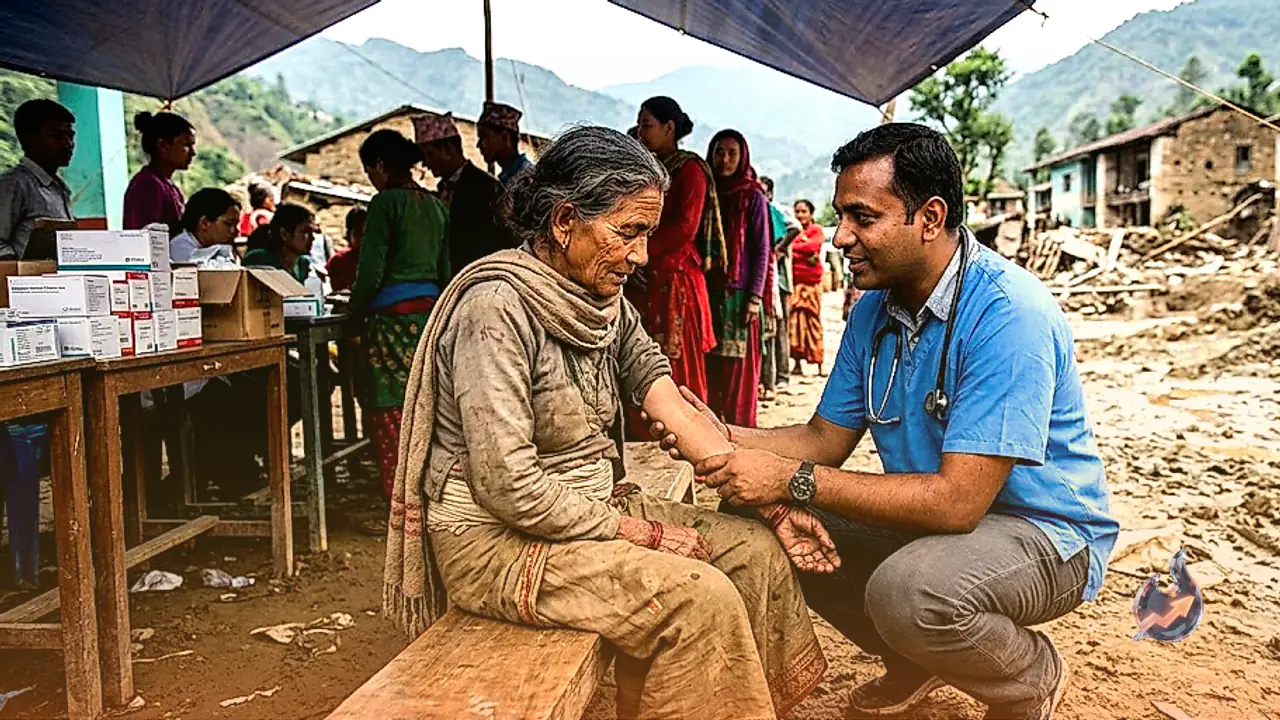
Upon arriving in the affected territories, the medical team immediately began their relief operations in regions like Trishuli Bazar and Rasuwa, which had borne the brunt of the floods and landslides. They established multiple temporary medical camps to cater to the displaced and injured populations. The doctors encountered a wide range of health issues, including high fevers, gastrointestinal infections causing vomiting, acute physical injuries from falling boulders, and various seasonal illnesses spreading due to contaminated water and poor sanitation. While national rescue teams had already evacuated the most critically injured survivors via helicopters to lower-altitude hospitals, a massive number of people remained stranded in remote pockets, desperately needing immediate clinical attention and primary healthcare services.
Delivering Essential Medical Care to Thousands
For three consecutive days, the medical team worked tirelessly from dawn to dusk, running high-capacity health camps. Over this brief but intensive period, they managed to diagnose, treat, and counsel between 2,500 and 3,000 patients. Every single patient who visited the camps received free clinical checkups and a supply of necessary prescription medicines, entirely funded and provided by the Philadelphia Hospital. The doctors put their own safety aside, working under extreme environmental stress to ensure no patient was turned away. Even on their journey back to Ambala, they halted at the Indo-Nepal border to set up a final, unscheduled medical camp to treat local border communities, ensuring that their mission of healing continued until the very last mile.
An Emotional Farewell and a Community's Gratitude
The scale of devastation and human suffering in Nepal left a deep impression on the visiting doctors. Dr. Sunil Kumar Sadiq reflected on the experience, noting that while they exerted their maximum capacity to help, the sheer volume of grief made their contribution feel like a drop in the ocean. However, the true impact of their work was felt in the emotional connections they established, reassuring the survivors that they were not abandoned in their time of crisis. As the team prepared to leave, many emotional patients tearfully asked when the medical team would return. The doctors brought back not just memories of destruction, but also the prayers and goodwill of the people of Ambala, who had supported the mission from afar. Following their return, the entire staff of Philadelphia Hospital, including doctors, nurses, and administrative workers, gathered for a special prayer session dedicated to the recovery of the flood victims in Nepal, with the team expressing their readiness to return to the neighboring country whenever duty calls.