


















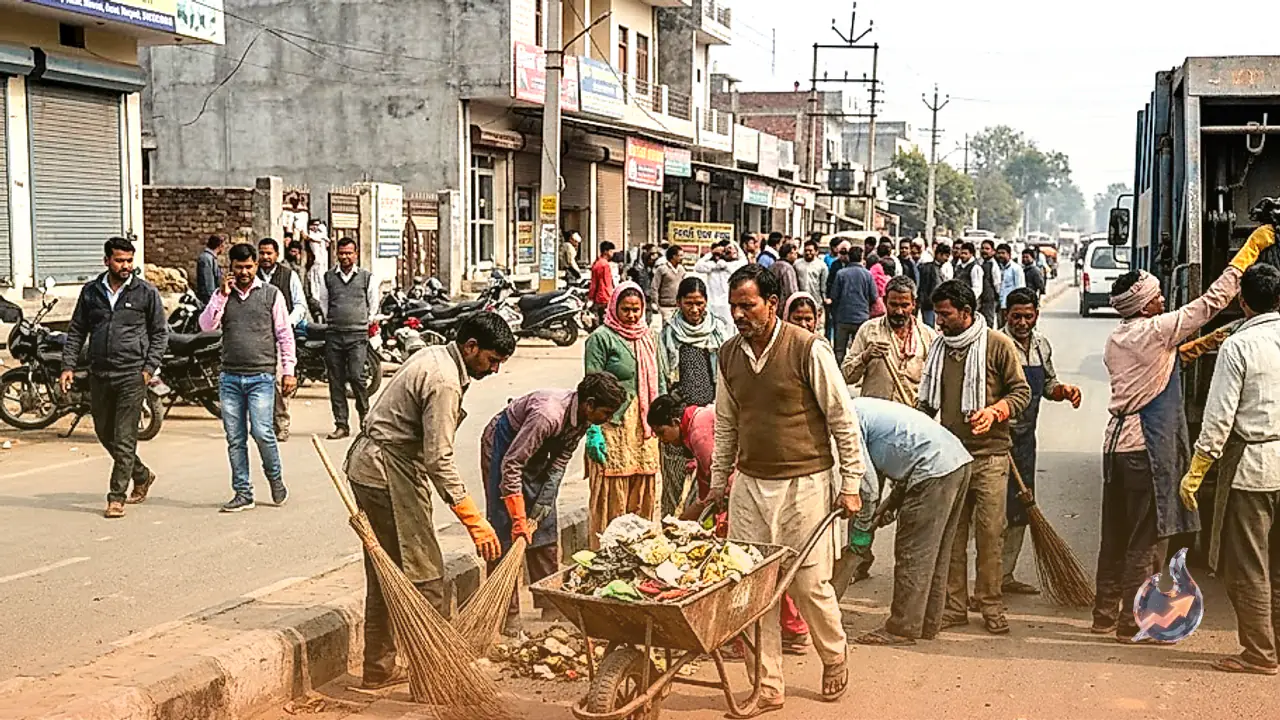

The ongoing agitation by sanitation workers in Haryana has witnessed a significant split as nearly 357 employees abandoned the strike and resumed their duties. Concurrently, the state administration took a major step concerning municipal roll sanitation workers by deciding to grant a monthly risk allowance of two thousand rupees per employee. This financial benefit immediately replaces the performance-based annual incentive that was previously provided.
Implementation Guidelines And Conditions
According to the directives issued by the Urban Local Bodies Department on September 7, 2026, this risk allowance will benefit all personnel currently performing their duties. Meanwhile, workers continuing with the strike will receive this allowance only after rejoining their work. Cabinet Minister Vipul Goyal stated that the administration stands firmly with its sanitation workforce at every step. He appealed to the remaining protesting workers to return to work promptly and ensure active participation in maintaining the hygiene standards of the state.
Municipal Bodies To Bear Expenses
The government order explicitly clarifies that the entire expenditure for the risk allowance must be borne by the respective municipal body using its own funds. No grants, loans, or financial assistance will be provided by the state administration for this head. Commissioners of all municipal corporations, district municipal commissioners, along with executive officers and secretaries of municipal councils and committees across the state, have been instructed to strictly follow these guidelines.
Protests And Termination Backlash In Charkhi Dadri
On the other hand, Charkhi Dadri municipal council sanitation workers expressed strong opposition to the orders terminating the services of protesting employees, calling it an oppressive measure. Several worker organizations extended their support to the ongoing strike, declaring a decisive battle. Union President Suraj Kumar stated that employees have been struggling for their legitimate demands for a long time. He accused the administration of avoiding the issuance of notifications on demands agreed upon during discussions, while attempting to intimidate workers who raise their voices by terminating them. He made it clear that the workers will not call off the protest under any pressure. The union demanded that the services of all terminated sanitation workers be restored immediately and departmental actions against them be withdrawn.