
















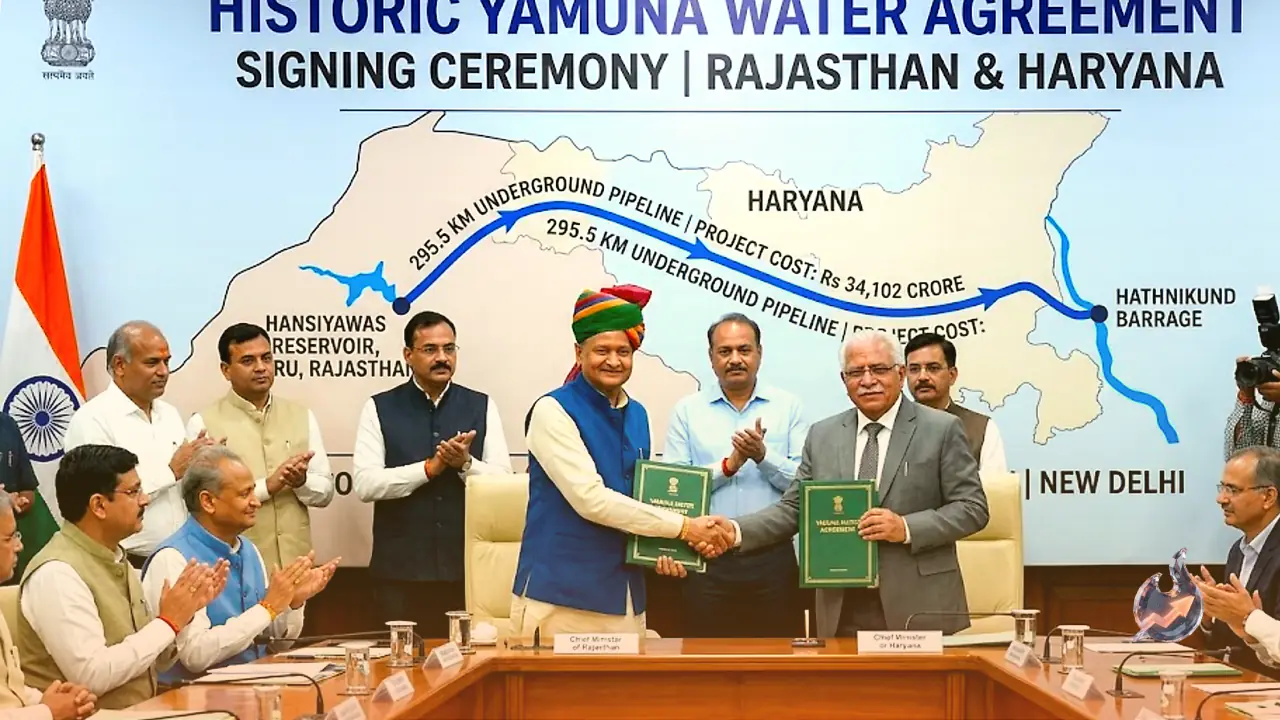

A water-sharing deal that had been stuck in limbo for nearly three decades finally moved toward reality on Monday, when Rajasthan and Haryana signed a landmark agreement in New Delhi to share Yamuna river water. The project, long delayed in negotiations, has now entered a decisive phase of implementation, backed by an estimated outlay of Rs 34,102 crore and poised to become a turning point in Rajasthan's water history.
Senior Leaders Present at the Signing
The signing ceremony brought together key figures from both states and the Union government. Union Home and Cooperation Minister Amit Shah and Union Jal Shakti Minister CR Patil represented the Centre. Rajasthan Chief Minister Bhajan Lal Sharma and Haryana Chief Minister Nayab Singh Saini were also present at the occasion. Senior officials from both state administrations as well as the central government attended the event.
From Hathnikund Barrage to Churu: A 295.5 km Underground Pipeline
Under the agreement, Rajasthan will receive its allocated share of 577 MCM of Yamuna water. This water will be transported from the Hathnikund Barrage in Haryana through a 295.5 kilometre-long underground pipeline system, eventually reaching the Hansiyawas Reservoir in Churu district of Rajasthan. The total estimated cost of this infrastructure is Rs 34,102 crore.
What Gets Built Under This Project
The project involves laying three underground pipelines, each with a diameter of 3.6 metres. Supporting infrastructure will include an inspection road, an artificial reservoir, and a modern water management system. Notably, provisions have also been made to supply drinking water at ten locations within Haryana, ensuring that both states draw concrete, direct benefits from this shared undertaking.
Another Step in Securing Water for Rajasthan
The Yamuna water project takes its place alongside the Ram Jal Setu Link Project and the Jal Jeevan Mission as part of a broader push to secure water access for eastern Rajasthan. Earlier, representatives from Haryana and Rajasthan had also convened in Delhi to discuss the Kishau Dam project, reflecting a sustained pattern of inter-state cooperation on water resource management between the two neighbours.